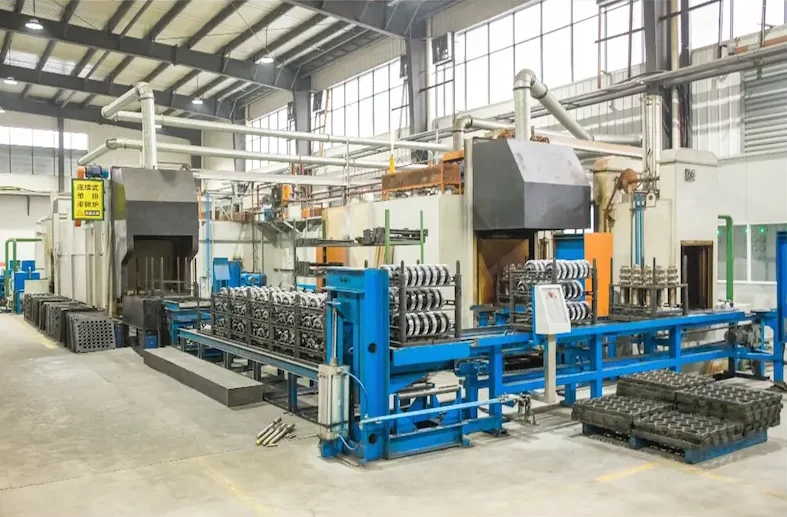
quenching & tempering plant - Wenlio Gear

Gear Machining Process:

Blank → Heating (normalizing) → Gear cutting → Surface hardening (quenching, carburizing, nitriding etc.) → Finishing (grinding)

Wenlio Heat Treatment Center

Founded in 2004, PairGears LTD (Wenlio Gear is a subsidiary of PairGears LTD) run a dedicated heat treatment center that keeps the whole production flow on time and under control. Over the years, with expansion and upgrades, our workshops now run on digital systems.
We design heat-treat plans by material, downstream machining, and end-use needs. Our range covers almost all common metal heat-treat methods, and we can handle parts up to Ø 6,800 mm. Since 2010, we have increased plasma nitriding capacity to meet higher performance requirements. With modern equipment, we can process single parts or large batches quickly.
Beyond supporting our bevel gear production, Wenlio Gear also take stand-alone heat-treat orders for the global market. Contact us to discuss your parts and lead times.

How to choose heat treatment methods?

  • First, select the material and load/size, then decide on the heat treatment route (whether high surface hardness vs. high core toughness is required).
  • If high precision and low distortion are required, prioritize ion nitriding or cryogenic processes. If maximum contact strength is required, choose carburizing, quenching, and grinding.
  • For large diameters and low stresses, normalizing is more economical. For general enhancement, quenching and tempering are recommended. For impact and wear resistance, case hardening or carburizing is recommended.
quenching & tempering - Wenlio Gear

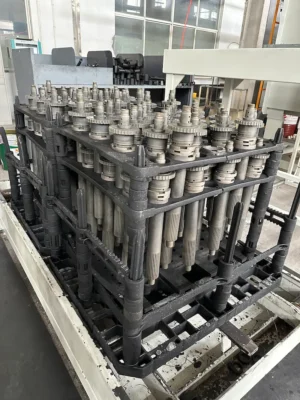
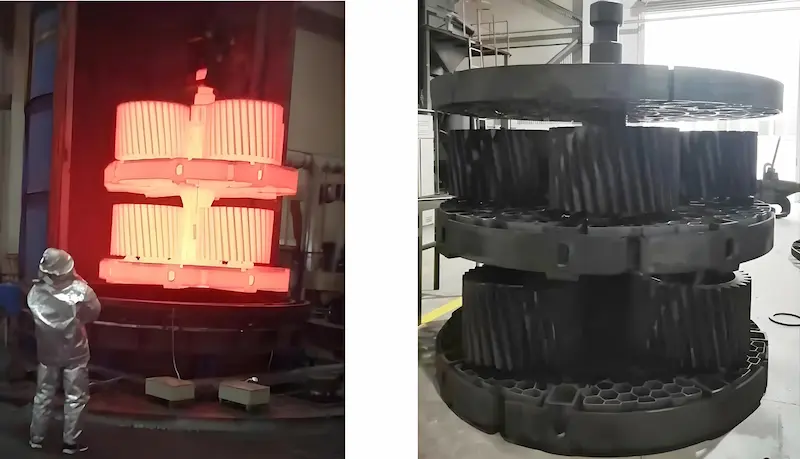
Gears after Quenching & Tempering


Heat Treatment – Quick Comparison

Process Typical Tooth/Surface Hardness Core Toughness Distortion Risk Best For
Normalizing HB 163–217 High Low Large/low-load gears, pre-machining
Quenched & Tempered HB 220–285 Medium–High Medium General-purpose strength; small/medium gears
Surface Hardening HRC 45–55 (surface) Tough core (pre-treated) Medium Impact load; higher surface wear
Carburizing + Quench HRC 58–63 (case) Tough core Higher (finish grind needed) Heavy-duty / high load & shock
Ion Nitriding High surface hardness (thin case) Good (low-temp process) Low Precision parts; wear/corrosion resistance
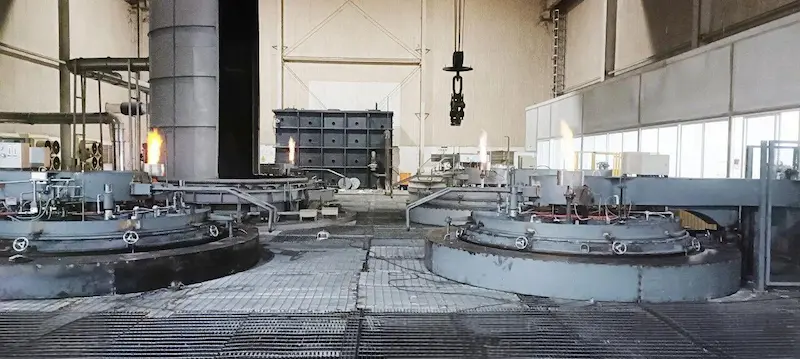
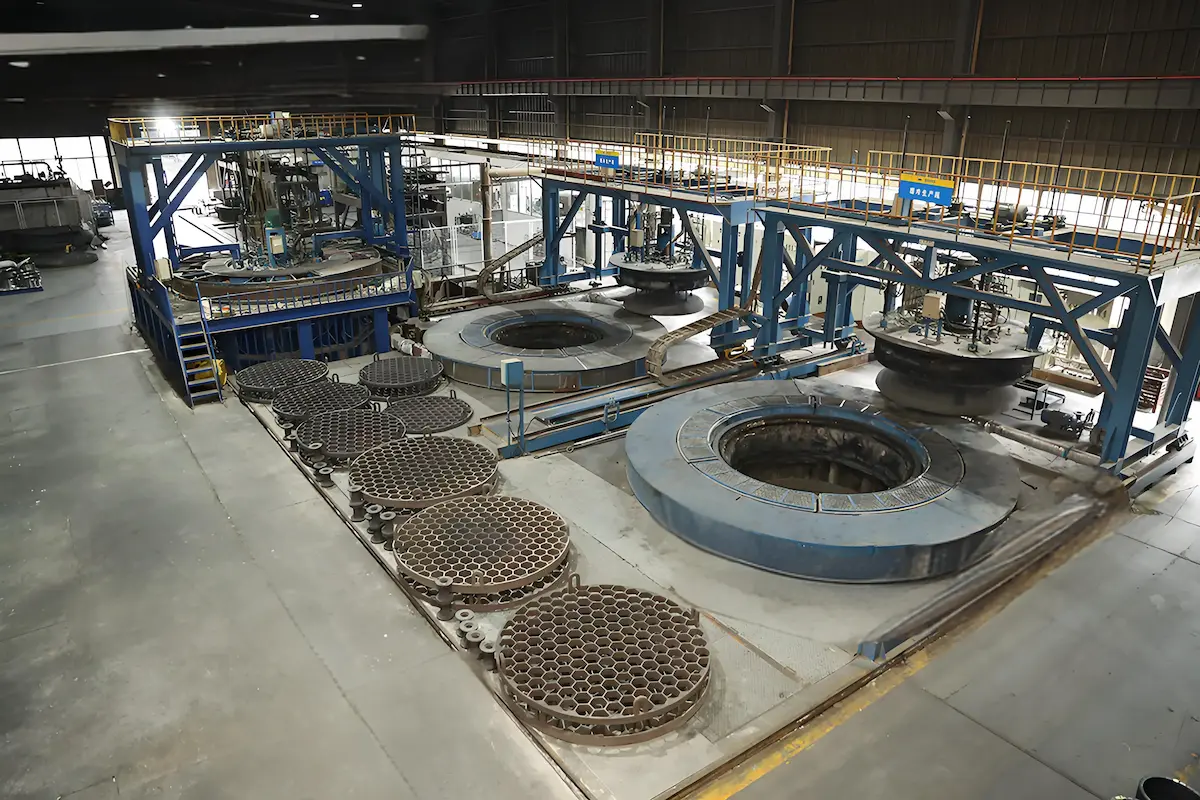
Wenlio large pit-type carburizing furnace

Large Pit-type Carburizing Furnace – Wenlio Gear

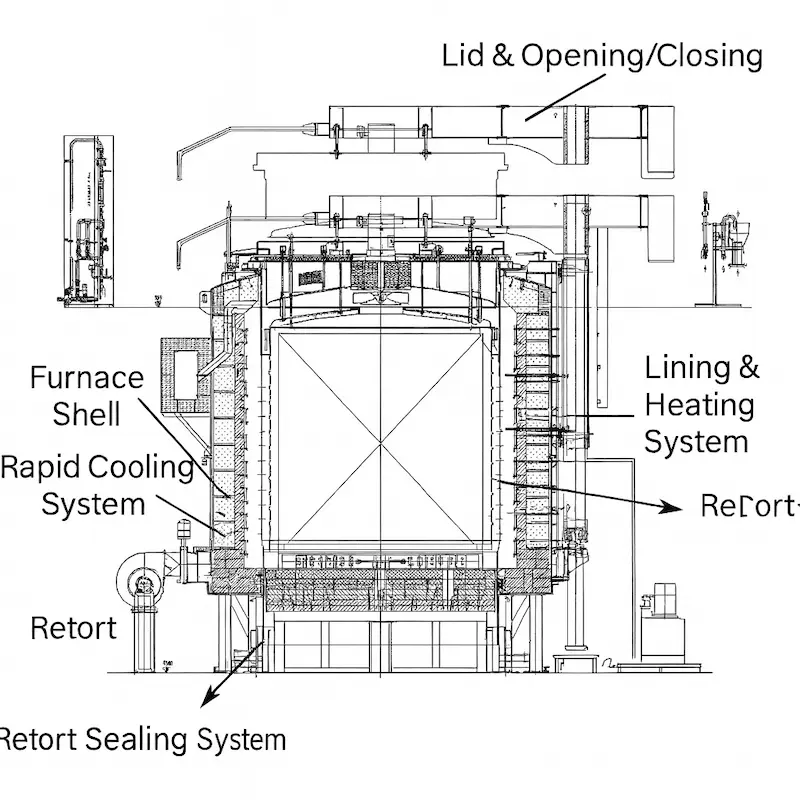
Structural diagram of the large pit-type carburizing furnace

Structural Diagram of the Large Pit-type Carburizing Furnace

  • Furnace shell
    The shell is cylindrical, welded from 12 mm Q235 steel plate and installed vertically. The interior is lined with lightweight insulation bricks, high-strength anti-carburizing refractory bricks, and ceramic fiber modules. Heating elements are arranged in three zones and controlled by power regulators using PID control.
  • Retort
    The retort body is cylindrical and made of high-temperature-resistant stainless steel (SUS310S). The shell is roll-formed into a corrugated profile to increase strength. An oil groove is integrated into the base for retort sealing. The retort can freely extend downward into the oil groove, ensuring sealing performance under high-temperature thermal expansion.
  • Furnace lid
    The sealing flange of the lid adopts a water-cooled design, keeping the rim seal at low temperature to ensure tightness. The lid is equipped with a lifting guide, a pressure-holding valve, an exhaust gas afterburner, a flame detector, a circulation fan, and an automatic lifting and rotation mechanism.
  • Process inlets
    Multiple gas/liquid inlets are provided on the top of the lid for introducing methanol, propane, air, nitrogen, and other media. All media are adjustable via flowmeters and controlled by solenoid valves, with manual bypass circuits available for abnormal conditions.

Temperature and Carbon-Potential Control

Temperature control
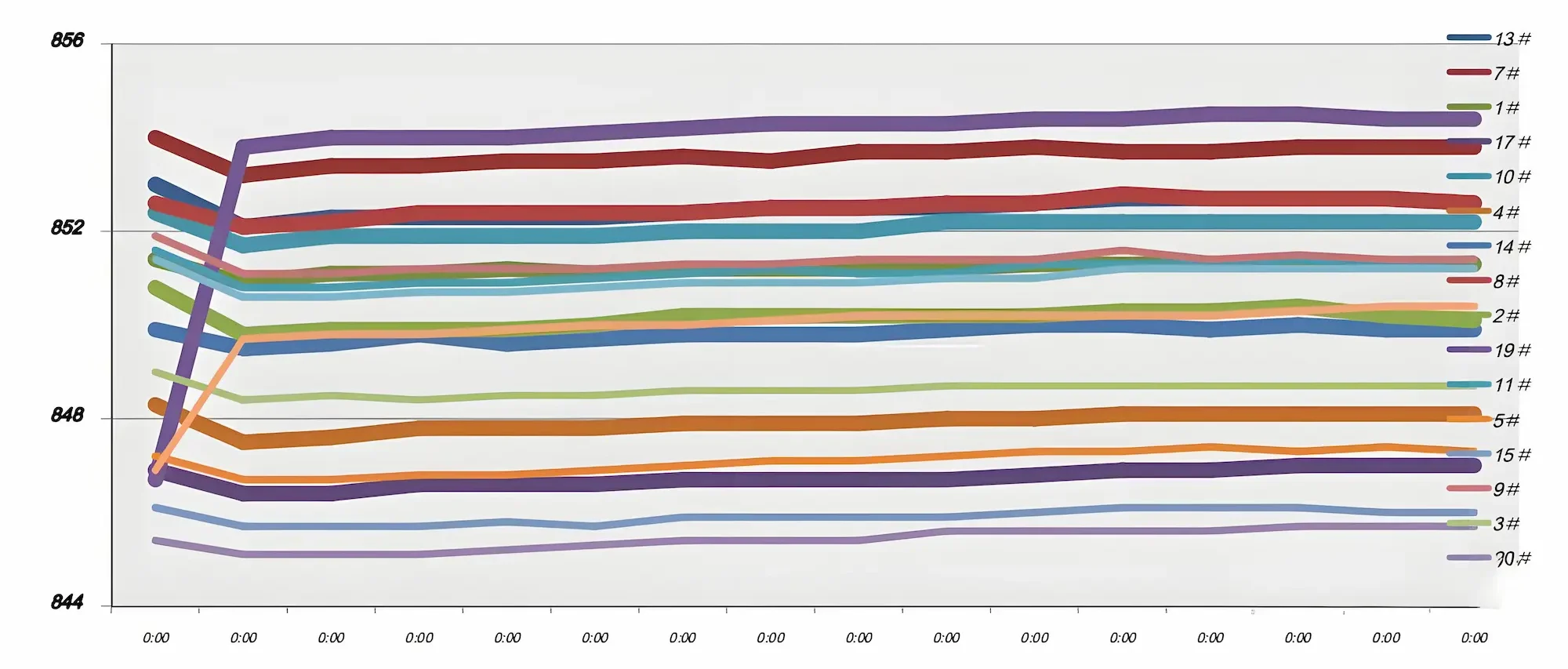
Electric heating is used. A primary control thermocouple is inserted from the lid to a position close to the effective work zone; each heating zone also has a tracking thermocouple. Zone power output is regulated based on the readings of the master thermocouple and the corresponding zone thermocouples to achieve uniform temperature in the effective chamber. TUS (Temperature Uniformity Survey) results show that temperature uniformity within the φ2500 mm × 2700 mm effective space can be controlled within ±5 °C. Figure below presents the measured TUS results for the FPQ250270 furnace.
Original Time and Temperature Curves of TUS

Original Time and Temperature Curves of TUS

Carbon-potential control
A nitrogen-based controllable atmosphere (nitrogen–methanol) is used. Control adopts dual-loop monitoring with an oxygen probe and an infrared analyzer. The oxygen probe measures the oxygen partial pressure in the furnace, while the infrared analyzer monitors CO in real time. The PT700 carbon controller calculates the in-furnace carbon potential in real time, enabling precise measurement. In addition, the infrared analyzer can also measure CO₂ at any time to calibrate the oxygen probe.
Carbon-potential test checklist for specimens

Carbon-potential Test Checklist for Specimens

Product Processing

Product: Wind-turbine gear
Material: CrNiMo7-6
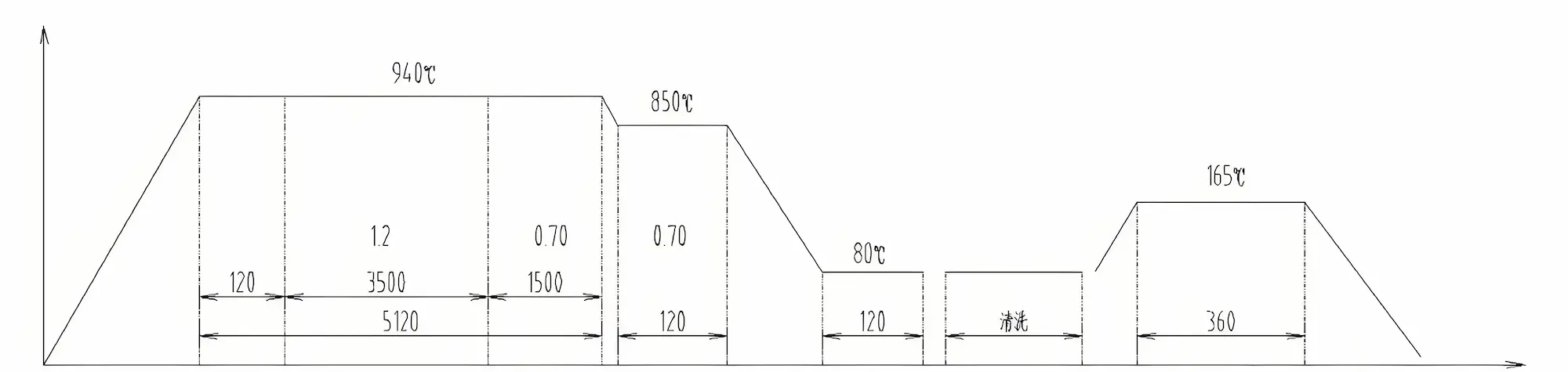
Heat-treatment requirements: Surface hardness 58–62 HRC; effective case depth 2.5–3.8 mm.
Wenlio Gear on-site production

Gear On-site Production – Wenlio Gear

Final results: Surface hardness 59–60 HRC; retained austenite ≤ 25%; carbide grade 1; effective case depth 3.1–3.3 mm — fully meeting customer requirements.

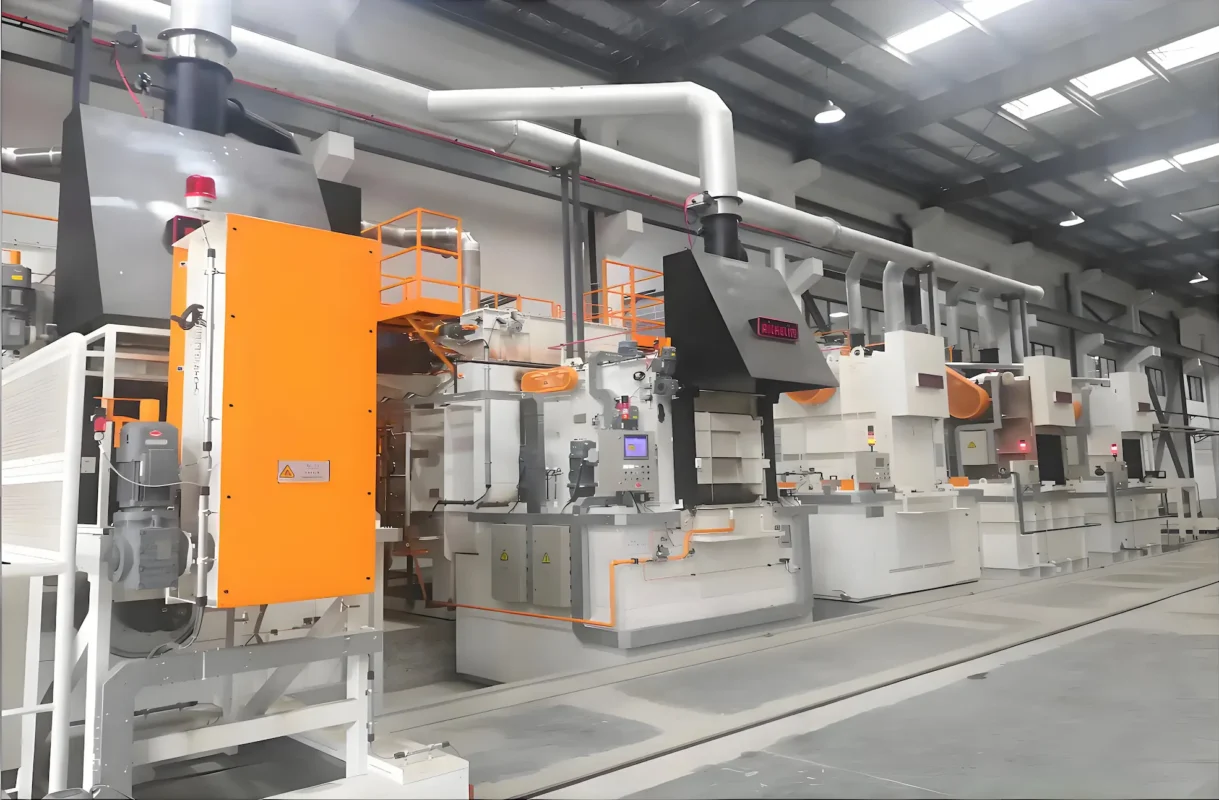
The large pit-type carburizing furnace can be configured, per user needs, into a production line together with a quench oil tank, slow-cooling pit, tempering furnace, etc. The complete system offers a high degree of automation, high precision in furnace temperature and carbon-potential control, safety and reliability, high efficiency and energy savings, simple and convenient operation and maintenance, and long service life—supporting “green,” “intelligent,” and “precise” development of heat-treatment equipment and processes for wind-turbine gears.

gear heat treatment process flow

Gear Heat Treatment Process Flow – Wenlio Gear