
Bevel Gear
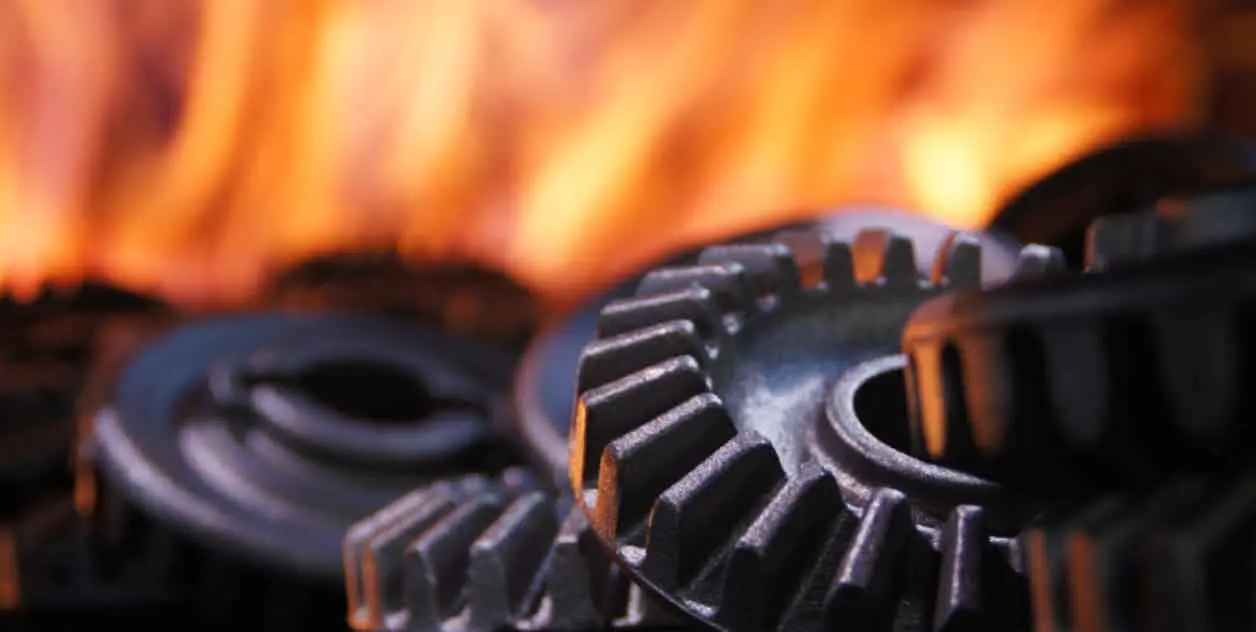
Bevel Gear Heat Treatment: How We Prevent Launch Risks
Dec
1. Introduction
A bevel gear project usually looks fine on paper: the drawing is clear, the machining plan is set, and the lead time is agreed. The real pressure shows up later—when the gearbox is commissioned and the contact behavior becomes visible. If the gearset fails at that stage, the cost is never limited to the part itself; it hits your schedule, your downstream customer, and your team’s credibility.
This is why we treat heat treatment as a risk-prevention step, not a “final operation.” NASA’s gear-manufacturing guidance notes that many case-hardened gears require finishing after heat treatment, and that process choices (including nitriding in suitable cases) can strongly affect distortion outcomes.

2. Who we are: Wenlio Gear, focused on bevel gears
Wenlio Gear is a precision gear brand specializing in bevel gears, built around the value “precise transmission, reliable performance.” We serve global power-transmission needs across agricultural machinery, heavy-duty trucks, construction equipment, electric vehicles, and industrial automation. If you already have a drawing or a sample, the fastest entry is our Custom Gears page.
3. First question: “Is it manufacturable?” Second question: “Why?”
When we evaluate heat treatment for bevel gears, we first ask whether the requirement is manufacturable across the full chain—blank, cutting, heat treatment, finishing, and inspection. Only then do we ask why each target is needed (wear, pitting resistance, shock load, geometry stability, or cost).
That order matters because many RFQs specify heat treatment as a single line—“HRC 58–62”—without connecting it to case depth, core toughness, distortion allowance, and post-heat-treat finishing. In bevel gears, those missing pieces often become the real project risks.
To align on terminology and decision logic, you can reference Wenlio’s own overview: Gear Heat Treatment Process
4. What we “front-load” before we name the process
Instead of starting with furnace types, we start with four practical inputs:
A. Failure mode priority
Surface durability (pitting / micropitting risk)
Wear or scuffing (lubrication, sliding conditions)
Bending fatigue / tooth break
Shock events (frequent overloads, debris, impact)
B. Geometry stability requirements
Bevel gears are sensitive to changes in:
mounting distance and runout
tooth geometry (profile/lead)
contact pattern position
If geometry stability is a top constraint, the heat-treat route and finishing plan must be designed as one package, not two separate steps.
C. Blank condition and upstream stability
Heat treatment cannot “repair” an unstable blank. Residual stress, forging structure, and machining sequence all influence distortion. Wenlio shares our blank-stage thinking here:Gear Blank Forging Process

D. Inspection gate (what you will actually accept)
If acceptance cannot be measured, it cannot be controlled. We aim to define outputs that your team can review and sign off.
5. Common heat-treatment routes for precision bevel gears
Below are the routes we most often discuss with customers, with emphasis on what each route helps you control.
5.1 Carburizing + Quench + Temper (case hardening)
This route is widely used for gears because it produces a hard, wear-resistant case with a tougher core. ASM describes the primary objective as achieving a hard case and a relatively soft but tough core—exactly the balance many loaded gears require.
When it fits well
high contact stress and long service life targets
you need both flank durability and core toughness
you have a plan for post-heat-treat finishing (grinding/lapping as needed)
What must be specified
surface hardness target and tolerance
effective case depth (ECD) requirement and definition
core hardness / toughness requirement (if needed)
distortion allowance + finishing stock plan
5.2 Low-pressure / vacuum carburizing (LPC) + gas quench
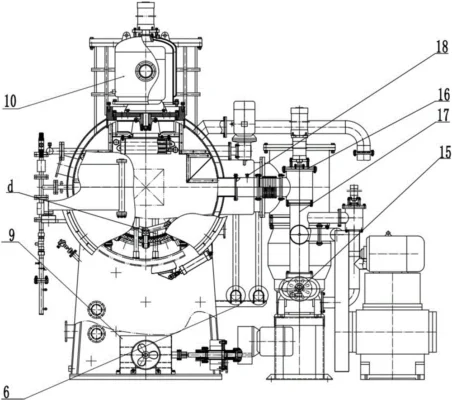
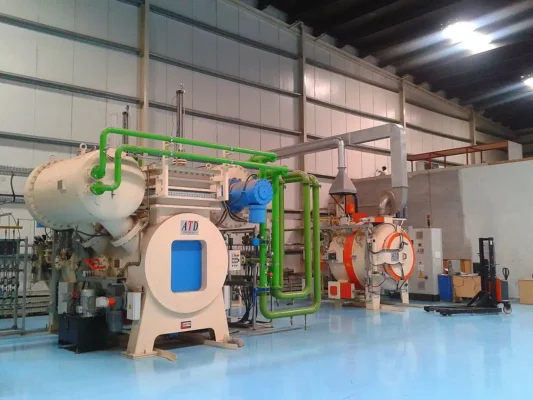
When repeatability and dimensional control dominate total cost (scrap risk + finishing time), LPC becomes a frequent discussion point. The key is not the label—it’s the controlled carbon potential, cleaner process environment, and quench approach that can improve consistency in suitable use cases.
5.3 Nitriding (gas or plasma)
Nitriding is often selected when distortion risk must be minimized and the design/material supports it. NASA’s guidance notes that nitriding steels can be case hardened with very little distortion under appropriate conditions.
5.4 Induction hardening (selective hardening)
Induction can be effective when you want localized hardening and short cycles, but it still needs a distortion and verification plan—especially for tooth geometry-sensitive designs.
6. Turning “quality” into a deliverable: our route sheet + acceptance package
A manufacturable answer is not a promise. It is a route sheet with measurable outputs, typically including:
A. Heat-treatment targets (measurable)
surface hardness (location, number of points, tolerance)
core hardness (location/method, if required)
ECD / layer depth (definition threshold + method)
metallurgical requirements if applicable (microstructure checks)
B. Post-heat-treat finishing plan
For many case-hardened gearsets, finishing is not optional; it is how geometry and surface integrity are finalized.
We connect this to the full manufacturing chain described in:
Bevel Gear Manufacturing Process: Step-by-Step Guide
C. Final inspection outputs (what you can review)
tooth geometry inspection (profile/lead as applicable)
runout and mounting-related checks
surface integrity controls (avoid heat damage in finishing)
documentation package aligned to your gate
If you want a standard reference that covers materials, heat treatment, processing, and documentation expectations, AGMA’s ANSI/AGMA 2004-C08 is a widely recognized manual for gear materials and heat-treat processing.
For bevel gear accuracy language, ISO 17485 provides a classification system to communicate geometrical accuracy specifications of unassembled bevel gears and gear pairs.
7. From prototype to production: the change most teams underestimate
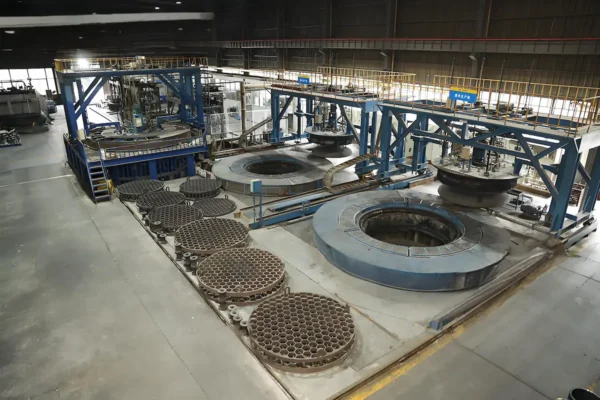
A prototype can succeed while hiding production risk. What changes in production is not only volume—it’s variation.
process windows must be tighter
fixturing, batch loading, and quench repeatability become dominant
inspection shifts from “pass once” to “stay stable”
That’s why we emphasize a closed-loop view across design, blank, cutting, heat treatment, finishing, and inspection—rather than treating heat treatment as a standalone subcontract operation.
If your engineering workflow involves comparing gear designs under load, ISO’s ISO 6336-1 provides the basic principles and influence factors for load capacity calculation of spur and helical gears (often referenced in broader gearing discussions and standards stacks).
8. What we need from you to reply fast
To reduce back-and-forth, send:
1.drawing (or sample + key dimensions)
2.material preference (or “recommend”)
3.target accuracy / inspection requirement (if any)
4.load case (torque, speed, duty cycle)
5.lubrication + environment (contamination, temperature)
6.target lead time + expected volume
Then we respond with something you can actually use: recommended route, target ranges, distortion-risk notes, finishing suggestion, and an acceptance checklist aligned to your inspection gate.
9. A note on promises: what we will not claim
We avoid absolute statements like “zero distortion” or “never fails,” because they are not engineering controls. Instead, we commit to:
making requirements measurable
identifying distortion risk early
validating with inspection results and documentation
This is how “reliable performance” is built into a process—step by step.
10.Conclusion
Heat treatment issues are expensive because they surface late. The practical solution is to move the hard questions to the beginning: define the real failure risks, choose a route that fits the load and geometry, plan distortion and finishing, and make every key requirement measurable at inspection.
Ready to Contact Us to start with a drawing and receive a manufacturable route sheet?
