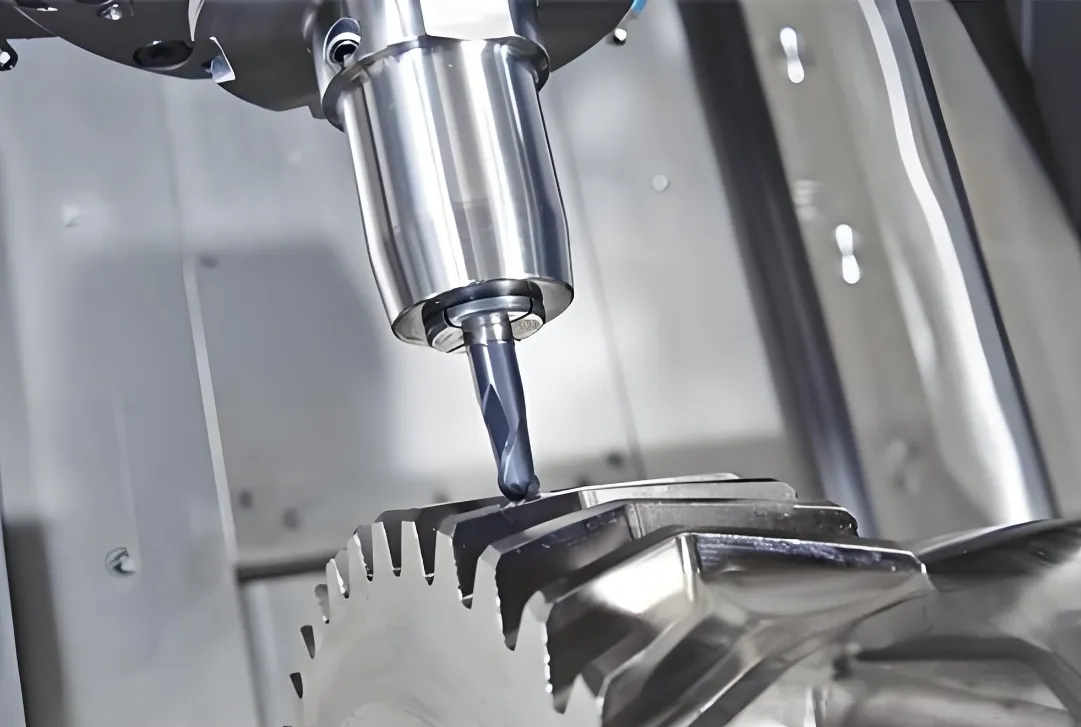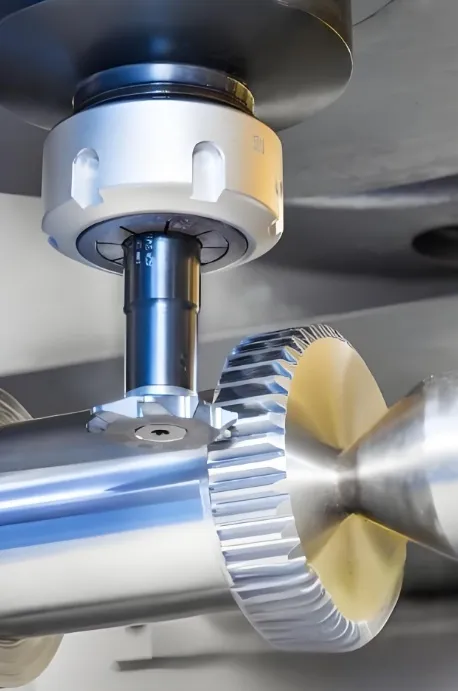
CNC Gear Milling Services: Tool Selection, Tolerance & Quality Control

Wenlio provide professional CNC gear milling services, focusing on every step from tool selection to final quality control, ensuring the production of high-precision, high-performance gear products for you.

Quality Assurance

Our quality control process runs throughout production. From raw material inspection to final product verification, every step undergoes rigorous inspection and testing to ensure delivered gears have exceptional performance, reliability, and consistency.

Tolerance Control

We use advanced measurement equipment and defined machining strategies to verify key gear features to the accuracy standard specified on your drawing (e.g., ISO/AGMA gear inspection requirements), and provide inspection records when needed.
Tool Selection for Gear Milling

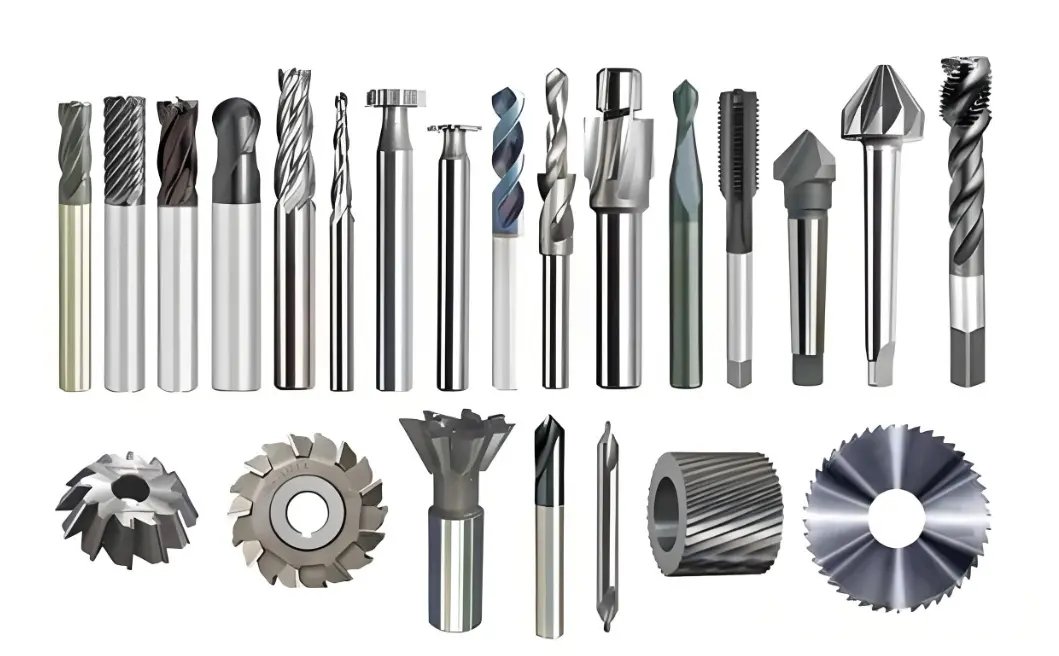
Gear milling can be divided into standard cutter milling and form cutter milling. Standard cutters have lower tooling cost, but lower productivity, while offering high flexibility—they can machine most gear types. In practice, they are mainly used for external gears, while internal gear milling is relatively difficult. For internal gears, gear shaping (slotting) is more commonly used.

There are generally three common mounting (clamping) types for milling cutters: Straight shank, Taper shank and Bore type (with center hole)

Milling Tooling Recommendation
Straight Shank Design:
  • Cylindrical straight shank
  • Straight shank with one flat (single flat)
  • Straight shank with two flats (double flats)
  • Straight shank with an angled flat (angled flat)
  •  
    Tool Material:
  • Melted (conventional) high-speed steel (HSS): general-purpose HSS, high-performance HSS
  • Powder metallurgy high-speed steel (PM-HSS)
  • Cemented carbide

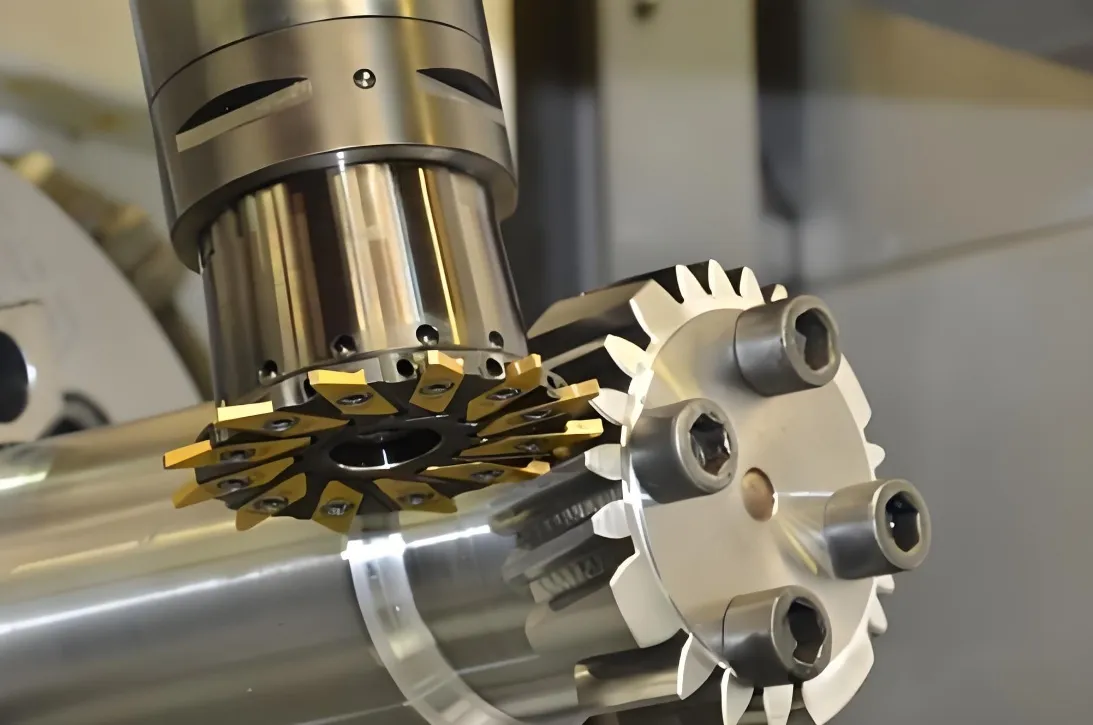
Using a disc-type module milling cutter or a finger-type milling cutter for gear tooth milling is a form-cutting method. The cutter tooth profile (cross-section) corresponds directly to the shape of the tooth space of the gear. This method generally offers lower machining efficiency and lower accuracy, and is therefore mainly suitable for single-piece or small-batch production.

Disc-Type Gear Milling Cutter

Disc-Type Gear Milling Cutter

On a horizontal milling machine, gear tooth indexing is performed using a dividing head. The disc-type gear milling cutter rotates while the worktable feeds, allowing the machining of bevel, spur or helical gears. Both productivity and machining accuracy are relatively low.

Finger-Type Gear Milling Cutter

Finger-Type Gear Milling Cutter

When the gear module is greater than 10 mm, tooth indexing is carried out on a vertical milling machine using a dividing head. The finger-type gear milling cutter rotates while the worktable feeds to perform tooth milling. This method is only suitable for single-piece production and repair/rework applications.

Gear Manufacturing Methods & Accuracy

Gear Manufacturing Methods & Accuracy

Note: Accuracy grades depend on standard (ISO/AGMA/DIN), material state, heat treatment, machine capability, fixturing, and inspection method.

Machining Methods Principle Type Key Features Accuracy Grade Typical Applications
Gear Milling (Form Milling) Forming Method Simple equipment; low efficiency; low accuracy Below Grade 9 Single-piece repair/rework; low-precision gears
Gear Broaching Forming Method Extremely high efficiency; very expensive tools; dedicated tool for dedicated profile Grade 7–8 Large-batch internal ring gears; splines
Gear Planing (for Straight Bevel Gears) Generating Method Dedicated for straight bevel gears; relatively low efficiency Grade 8–9 Straight bevel gears
Gear Hobbing Generating Method Universal & efficient; most common for rough / semi-finish machining Grade 7–8 External-mesh cylindrical gears; worm wheels
Gear Shaping (Slotting) Generating Method Can machine internal gears / compound gears; medium efficiency Grade 7–8 Internal gears; compound gears; racks
Gear Shaving Generating Method High-efficiency finishing, but cannot machine hardened parts Grade 6–7 Finishing of unhardened gears
Gear Honing Generating Method Finishing after hardening; improves surface quality Mainly improves Ra Deburring & polishing of hardened gears
Gear Grinding Generating Method Highest accuracy; highest cost; can machine hardened parts Grade 3–5 Final machining for high-precision (e.g., automotive) hardened gears

Get Started with Your CNC Gear Milling Project Today

Transform your gear design challenges into precision-engineered solutions with a manufacturing partner committed to excellence. Our expert team combines decades of experience with cutting-edge technology to deliver gears that exceed expectations in performance, reliability, and quality.

Whether you’re developing a breakthrough product, improving an existing design, or scaling production, we provide the technical expertise, manufacturing capabilities, and responsive support to make your project successful. From initial consultation through final delivery, we’re dedicated to your success.

Why Partner With Us?

  • Advanced CNC technology with multi-axis machining capabilities
  • Comprehensive material selection from metals to high-performance plastics
  • Tight tolerances to ±0.0004″ ensuring perfect gear meshing
  • Fast turnaround times from 1-3 days for prototypes
  • Scalable production from single units to large manufacturing runs
  • ISO 9001:2015 certified quality management systems
  • Expert engineering consultation and design optimization support

Ready to Begin?

Contact our expert team for a free consultation and instant quote. We’ll review your requirements, recommend optimal solutions, and provide transparent pricing with no hidden fees.

Get a Quote
CNC gear milling cutter

FAQ

Q1. What accuracy can gear milling achieve?

Accuracy depends on gear type, size, fixturing, and the inspection standard on your drawing (e.g., ISO/AGMA). For higher-precision or NVH-sensitive gears, grinding/honing is typically used as a finishing step.

Q2. Milling vs hobbing—how to choose?

Milling is flexible for prototypes, rework, or special geometries; hobbing is usually more efficient for external spur/helical gears in volume. Internal gears are often better suited to shaping/slotting or broaching, depending on access and length.

Q3. What parameters are required for quotation?

Please send drawing/3D (STEP), gear data (module/DP, teeth, PA, helix, face width), material & heat-treat state, quantity, and target inspection standard/acceptance checks.

Q4. Can you mill after heat treatment?

It depends on hardness and required accuracy; many gears are cut soft, then heat-treated (distortion can occur), and finally finished by grinding/honing. We confirm feasibility after reviewing your drawing and hardness spec.

Contact Us