
Blogs, Custom Gear
Gear Heat Treatment Requirements: A Buyer’s Checklist
Jul
Heat treatment can improve a gear’s hardness, wear resistance, and strength. It can also affect the final dimensions, tooth accuracy, and machining process.
However, many gear drawings only state “heat treated,” “carburized,” or a hardness value such as HRC 58–62. These notes may not provide enough information for an accurate quotation or production plan.
At Wenlio, heat treatment is reviewed as part of the complete gear manufacturing route, together with the material, gear type, application, final tolerances, and inspection needs. Buyers do not need to design the full process themselves, but they should provide enough project information for the supplier to recommend a suitable route.
Quick Answer
Clear gear heat treatment requirements should normally include:
- Material grade
- Heat treatment method
- Surface hardness
- Core hardness, when required
- Effective case depth
- Hardness test location
- Final dimensions after heat treatment
- Post-treatment finishing
- Inspection records
The correct process also depends on the gear type, size, material, load, accuracy, and application.
Why Is “Heat Treated” Not Enough?
“Heat treated” does not explain how the gear should be processed or inspected.
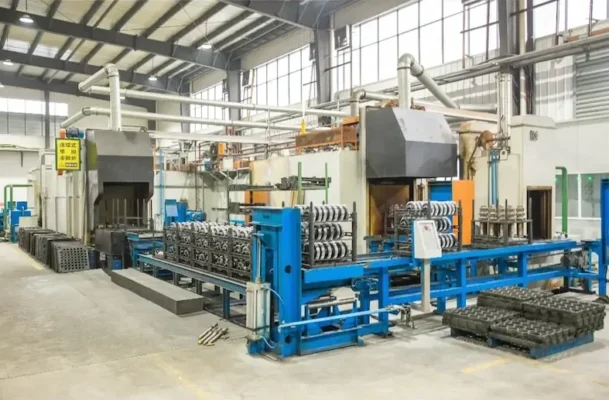
Common gear heat treatment methods include:
- Carburizing and quenching
- Nitriding
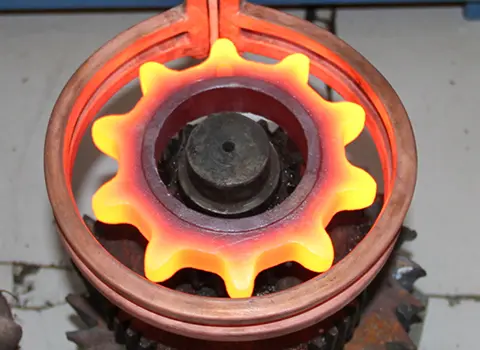
- Induction hardening
- Quenching and tempering
- Through hardening
Each process has different effects on hardness, hardened depth, distortion, cost, and delivery time.
For example, two suppliers may both quote a gear marked “heat treated,” but one may assume carburizing while the other assumes induction hardening. Their prices and production routes may therefore be very different.
A hardness value alone can also create uncertainty. It may not explain:
- Where the hardness should be measured
- How deep the hardened layer should be
- Whether the core hardness matters
- Whether grinding is required afterward
- Which inspection reports must be supplied
Clear requirements help buyers compare quotations on the same technical basis.
What Should Buyers Specify?
| Requirement | What to Confirm |
| Material grade | State the exact material instead of writing only “alloy steel” |
| Heat treatment method | Specify carburizing, nitriding, induction hardening, or another process |
| Surface hardness | Define the hardness range and measurement location |
| Core hardness | Include it when the inner material condition is important |
| Effective case depth | State the required range and test method |
| Distortion control | Identify dimensions and runout that must be controlled |
| Final finishing | Confirm grinding, lapping, hard turning, or bore grinding |
| Inspection records | State which certificates or reports are required |
Not every gear needs all eight items. The final requirements should match the actual application and acceptance standard.
Material Must Be Confirmed First
Heat treatment and material selection are closely connected.
Different steel grades respond differently to heating, cooling, carburizing, and hardening. The same heat treatment process may produce different hardness, case depth, and distortion on different materials.
For more guidance on matching materials with gear requirements, see How to Choose Materials for Bevel Gears.
The RFQ should therefore include:
- Exact material grade
- Applicable material standard
- Whether an alternative material is allowed
- Whether material substitution needs approval
Descriptions such as “alloy steel” or “carbon steel” are too broad for a detailed manufacturing review.
A material change may affect:
- Machining performance
- Heat treatment temperature
- Hardenability
- Distortion
- Final hardness
- Inspection requirements
Any proposed replacement material should be reviewed before production.
Surface Hardness, Core Hardness, and Case Depth
These three requirements describe different parts of the heat-treated gear.
Surface Hardness
Surface hardness refers to the hardness of the tooth surface or another specified area.
It is often related to wear resistance and tooth contact performance. The drawing should state:
- Required hardness range
- Test method
- Test location
Without a clear test location, hardness readings from different areas may not be comparable.
Core Hardness
Core hardness refers to the material below the hardened surface.
For many carburized gears, the aim is to create a hard surface while keeping a tougher core. The surface hardness may meet the drawing, but the core may still need separate confirmation.
Core hardness should be specified when it affects load capacity, impact resistance, or the buyer’s inspection plan.
Effective Case Depth
Effective case depth shows how far the hardened layer extends below the surface according to an agreed hardness limit.
It is not simply the visible depth of a color change in the material.
The buyer should confirm:
- Required depth range
- Test location
- Referenced standard or acceptance method
- Whether a test report is required
This is especially important for carburized or induction-hardened gears.
Why Does Heat Treatment Distortion Matter?
A gear can change shape during heating and cooling.
The amount of distortion depends on several factors, including:
- Material
- Gear size and shape
- Section thickness
- Machining stress
- Furnace loading
- Quenching method
- Heat treatment process
Possible changes include:
- Bore diameter
- Bore roundness
- Face runout
- Radial runout
- Tooth profile
- Tooth lead
- Shaft alignment
- Mating position
Bevel gears may need extra attention because tooth-surface changes can affect how the gear and pinion work together.
Buyers should clearly identify which dimensions must meet final tolerances after heat treatment. This helps the supplier decide whether later processes are needed, such as:
- Gear grinding
- Bore grinding
- Lapping
- Hard turning
- Datum correction
If these requirements are confirmed too late, the gear may not have enough machining allowance for correction.
Related reading: Gear Blank Distortion Control: Start with Forging.
How Gear Heat Treatment Affects the Quotation
Heat treatment affects more than the furnace cost.
Process Selection
Carburizing, nitriding, induction hardening, and quenching and tempering require different equipment, setup, processing time, and control methods.
The selected route affects both price and lead time.
Post-Treatment Machining
Some gears need additional machining after heat treatment.
Examples include:
- Grinding the teeth
- Grinding the bore
- Correcting end faces
- Finishing bearing surfaces
- Restoring important datums
These steps add machining time, inspection, and setup cost.
Inspection Scope
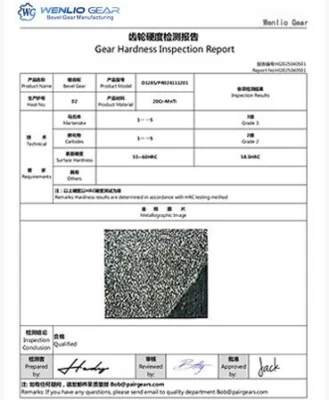
A simple hardness check costs less than a full heat treatment inspection.
A more complete inspection may include:
- Surface hardness
- Core hardness
- Effective case depth
- Hardness gradient
- Metallographic structure
- Decarburization
- Dimensional changes
Some tests require cutting and preparing a sample. These requirements should be agreed upon during quotation.
For help reviewing final inspection data, see How to Read a Gear Inspection Report.
Order Quantity
Prototype, first-article, and batch orders may use different heat treatment and sampling plans.
Buyers should state:
- Prototype quantity
- Initial order quantity
- Estimated annual demand
- Whether future repeat production is expected
This helps the supplier review both the first order and the long-term production route.
Common RFQ Mistakes
Writing Only “Heat Treated”
This does not define the process, hardness, case depth, or inspection standard.
Giving Only One Hardness Value
A value such as HRC 60 does not explain where it should be tested or whether core hardness and case depth also matter.
Using a General Material Name
“Alloy steel” does not provide enough information for heat treatment planning.
Ignoring Final Machining
Heat treatment may not be the last production step. Grinding or finishing may still be required to meet the final drawing.
Requesting Reports After Production
Material certificates, hardness reports, and case-depth records should be requested before production. Some results cannot be recreated later.
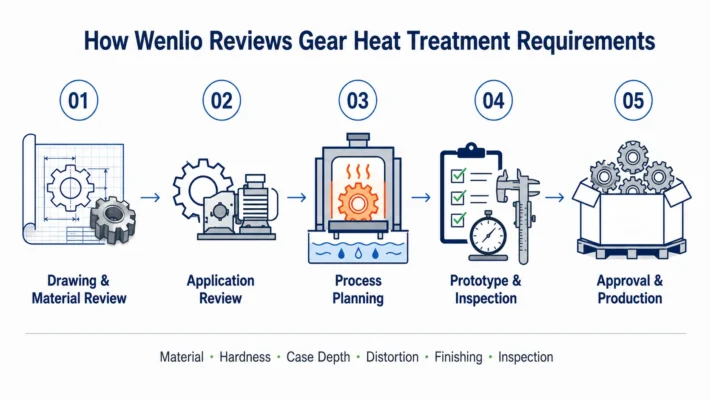
How Wenlio Reviews Gear Heat Treatment Requirements
Wenlio reviews heat treatment as part of the complete custom gear manufacturing route.
1. Drawing and Material Review
The project team checks:
- Material grade
- Gear type
- Tooth parameters
- Critical dimensions
- Final tolerances
- Existing heat treatment notes
Missing or unclear information is identified before production planning.
2. Application Review
Available information about load, speed, lubrication, environment, and intended use is reviewed.
A prototype used only for assembly checking may need a different route from a gear used for load testing or final production.
3. Process Planning
The team reviews:
- Heat treatment method
- Machining allowance
- Distortion risks
- Post-treatment finishing
- Inspection requirements
- Order quantity
The heat treatment step is planned together with machining and inspection, not as a separate operation.
4. Prototype and Inspection
When required, a prototype or first article is produced.
The agreed inspection may cover:
- Hardness
- Case depth
- Critical dimensions
- Runout
- Tooth geometry
- Material documentation
5. Approval and Production
Production begins after the technical requirements, sample, and inspection results have been confirmed.
When information is incomplete, Wenlio first clarifies the missing items instead of applying the same heat treatment route to every gear.
Buyer’s RFQ Checklist
Before requesting a quotation, prepare the following information where available:
- 2D drawing or 3D model
- Exact material grade
- Heat treatment method
- Surface hardness range
- Core hardness requirement
- Effective case depth
- Hardness test location
- Final dimensions after heat treatment
- Required grinding or finishing
- Inspection reports
- Prototype and production quantities
When complete gear heat treatment requirements are unavailable, buyers can provide samples, equipment information, operating conditions, previous inspection reports, and visible wear information for an initial review.
FAQ
Do all gears need heat treatment?
No. The need for heat treatment depends on the material, load, speed, accuracy, expected life, and application.
Is HRC 58–62 suitable for every gear?
No. The correct hardness should be reviewed together with the material, gear type, load, core condition, case depth, and process route.
How do buyers choose between carburizing and nitriding?
The choice depends on the material, required hardened depth, distortion limit, production time, and operating conditions.
Does every heat-treated gear need grinding?
No. Grinding depends on the required accuracy, heat treatment distortion, gear type, noise requirements, and final tolerances.
What heat treatment reports should buyers request?
Depending on the project, buyers may request material certificates, surface hardness records, core hardness results, case-depth reports, or metallographic records.
Conclusion
Clear gear heat treatment requirements include more than a process name and a hardness value. Material, core condition, case depth, distortion, final machining, and inspection records may also need to be confirmed.
Buyers do not need to design the full process before sending an RFQ. Providing a clear drawing, material grade, application information, quantity, and acceptance requirements gives the supplier a better basis for quotation and production.
For a custom gear review, Contact Wenlio and send your drawing, material, application conditions, inspection needs, and estimated quantity. Wenlio can review the heat treatment, finishing, and inspection route for the specific project.

Pingback: Tractor Transmission Gears: Types, Functions, and Selection - wenlio.com
Pingback: Spur Gear vs Helical Gear: Which Fits Your Application? - wenlio.com