
Bevel Gear
How Wenlio Gear Matches Bevel Gear Sets
Dec
1. Introduction
On a drawing, a bevel gear looks like a single part with teeth, tolerances and notes. Inside a real machine, it almost never works alone. In axles, final drives and many right-angle gearboxes, bevel gears run as matched sets—typically a ring and a pinion—sharing torque, contact pattern and noise behaviour over thousands of hours.
Wenlio Gear is a precision gear manufacturer and custom gear supplier dedicated to providing high-quality power transmission solutions for agricultural machinery, heavy-duty trucks, construction equipment, electric vehicles and industrial automation worldwide. Bevel gears are one of our core specialties, so matching is built into the way we design and produce them. The following guide explains how we match, lap and roll-test bevel gear sets, turning two machined parts into a pair that is ready to work together in your drivetrain.
2. What is a matched bevel gear set?
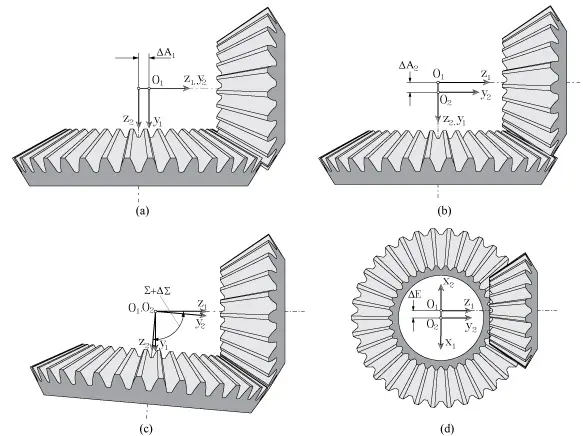
A bevel ring and pinion are not just two random gears. They are designed as a conjugate pair, with tooth forms that depend on each other. Geometry, mounting distance and micro-corrections on one member directly influence how the mate will mesh.
Because of this, a bevel set behaves more like a single functional unit than two independent components. When the pair is treated as separate parts, small differences in geometry or mounting distance can accumulate as noise, poor contact pattern or shortened life in the axle or gearbox.
At Wenlio Gear, this “pair-first” view shapes the whole process: from drawing interpretation and process planning through machining, heat treatment, grinding, lapping, roll testing and final packing.
3. Where bevel gear sets work in five key sectors
Matched bevel gear sets appear across all of Wenlio Gear’s main markets. The applications and priorities differ, but the need for stable contact and predictable backlash is always there.
Wenlio Gear’s five sectors and bevel set priorities
| Sector | Typical bevel set applications | Main priorities |
|---|---|---|
| Agricultural machinery | Tractor / harvester axles, PTO angle drives | Robustness, dirt tolerance, stable contact |
| Heavy-duty truck | Drive axles, differentials, transfer cases | Long life, consistent behaviour, rebuildability |
| Construction equipment | Final drives, swing drives, hub drives | High torque capacity, shock resistance |
| Electric vehicle | E-axles, compact angle gearboxes, auxiliary bevel sets | Compact packaging, low noise at high speed |
| Industrial automation | Right-angle gearboxes, conveyor drives, test stands | Predictable backlash, repeatable motion, uptime |
In every column of this table, the ring and pinion must act as a team. The way we match them in the factory is what allows engineers to hit these different targets in the field.
4. From drawing to process plan: starting with the pair
Matching begins long before chips start to fall. When a new bevel gear project arrives, our engineering team first clarifies the real application, not only the tooth numbers:
-
What type of machine will this set work in—tractor axle, truck differential, construction final drive, EV e-axle or an industrial right-angle gearbox?
-
Which torque, speed and duty cycle will it see during its life?
-
How tight are the backlash and contact pattern requirements?
-
How will the housing control mounting distances and bearing locations?
Answers to these questions drive three key decisions:
-
Shared datums – we define which faces and bores act as primary references for both ring and pinion.
-
Aligned process routes – turning, tooth cutting, heat treatment and finishing are laid out so both members stay linked in terms of datums and tolerances.
-
Pairing rules – we agree whether rings and pinions will be lapped together and always shipped as fixed sets.
By planning from the perspective of the pair, we reduce the risk that each gear looks “OK” alone but proves hard to adjust together in the final housing.
5. Machining with matching in mind
Once the plan is agreed, the work moves onto the shop floor. Ring and pinion blanks start as bars or forgings and go through rough turning, normalising (where needed) and finish turning on CNC lathes. At this stage, the focus is on building a stable base for later tooth work.
Key points during soft machining include:
-
Consistent reference surfaces
Shared faces and bores are machined in a controlled way across an entire batch, so downstream setups stay repeatable. -
Controlled runout and concentricity
Bevel cutting machines need reliable datums to generate accurate tooth geometry. Good turning work makes this possible. -
Balanced machining allowance
Stock is left in a balanced manner, rather than stacked on one side. This helps reduce distortion in heat treatment and finishing.
Tooth cutting then takes place on dedicated bevel gear cutting machines. For matched sets, we use aligned machine families and setup strategies for each production lot. Cutting corrections are applied with expected heat-treat distortion in mind, and process data is recorded so each ring and pinion can be traced later.
By the time the teeth are generated, rings and pinions are already linked to specific lots and histories, which makes later pairing and investigation far easier.

6. Heat treatment for the pair: controlled, not random
Soft machining creates the shape; heat treatment gives the teeth the hardness and toughness they need. Both ring and pinion enter the furnace as a gear family. Recipes differ between agricultural, truck, construction, EV and industrial projects, yet the philosophy is the same.
Our heat treatment approach aims to:
-
harden both members under compatible conditions, including carburising depth and quenching strategy
-
use fixtures and loading patterns that lead to repeatable distortion within the batch
-
confirm hardness, case depth and key dimensions on samples before releasing parts to finishing
Zero distortion is not realistic. Instead, we work toward controlled and repeatable distortion. When deformation follows a predictable pattern, grinding and lapping can correct it efficiently. When distortion is random, every pair demands extra time and cost to rescue.

7. Gear grinding: bringing strength and accuracy together
After heat treatment, tooth surfaces are hard but the geometry reflects whatever distortion occurred in the furnace. Gear grinding is used on critical bevel gear sets—especially those for heavy-duty trucks, construction equipment and EV drives—to bring the ring and pinion from “strong but distorted” to “strong and accurate”.
Grinding operations are planned to:
-
remove only the stock needed to clean up distortion while preserving case depth
-
refine tooth profile and lead so the two members share load correctly across the face width
-
re-check reference surfaces and bores, keeping mounting distances and bearing locations within the agreed window
When this step is finished, each ring and each pinion meets its drawing requirements. Attention still stays on the pair, because numbers only matter if the gears run well together.
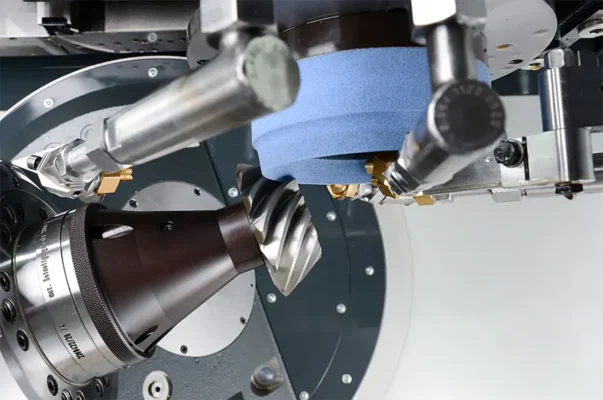
8. Lapping and roll testing: turning two gears into one set
Once grinding is complete on critical sets (or after tooth cutting for some programmes), the focus shifts fully from individual parts to the pair itself. Lapping and roll testing are the stages where the ring and pinion start to behave like one component.
8.1 Lapping the pair
Lapping puts the two gears into controlled contact under light load, often using a special compound or carefully managed oil flow. This step:
-
smooths microscopic high spots on the tooth flanks
-
refines the initial contact pattern across the teeth
-
reduces the risk of early noise and wear during running-in on the vehicle or machine
Because both members are lapped together, their tooth surfaces adapt to each other. The result is a pair that already “knows” how it wants to mesh when it reaches your axle or gearbox.
8.2 Roll testing with marking compound
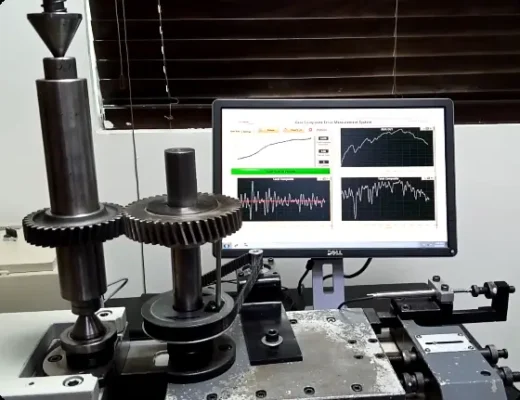
Roll testing then checks how the lapped or ground pair behaves under defined conditions. On the roll tester, the ring and pinion are mounted at specified mounting distances, marking compound is applied, and the set is rotated under controlled torque and speed.
Quality staff observe the contact pattern, measure backlash and listen to the running feel. Small adjustments on the test fixture can be used to confirm the usable range of shims or mounting distances in the customer housing. By the end of this stage, each pair has already demonstrated that it can work as a set before it leaves the factory.
9. Set marking and data traceability
After a ring and pinion pass roll testing, they are formally locked together as a matched set. Identification and data handling then ensure this relationship is never lost.
Both members receive a set number, either engraved or clearly marked. Under this number, key measurements—such as backlash range, recommended mounting distances and contact pattern notes—are stored in the quality system. Tooth-sorting rules separate any sets that require extra internal review or special handling.
On the customer side, a crate can be opened and each ring paired with its pinion at a glance. If a field issue later appears on “Set 057”, Wenlio Gear can retrieve the original process and test data for that specific pair, rather than working from general batch statistics.
10. What matching means in five sectors
The core matching flow is similar across the factory, but each of Wenlio Gear’s five key sectors places its own emphasis on results. The table below summarises the main priorities and how matched bevel gear sets help in each field.
Effect of matching in different applications
| Sector | Main priorities | Role of matched bevel gear sets |
|---|---|---|
| Agricultural machinery | Robustness, dirt tolerance, variable loads | Help maintain stable contact patterns in axles working on uneven ground and in harsh environments. |
| Heavy-duty trucks | Long life, stable behaviour, rebuildability | Make it easier to track performance across fleets and reuse proven settings in service and repairs. |
| Construction equipment | High torque, frequent shocks | Reduce the risk of local overload in final drives and swing drives on demanding job sites. |
| Electric vehicles | Compact packaging, low noise at high speed | Support quiet, efficient running in e-axles and angle drives while meeting strict NVH targets. |
| Industrial automation | Predictable backlash, repeatable motion | Enable consistent performance in conveyors, machine tools and test stands where smooth running matters. |
Across all five industries, the basic principle stays the same: when a customer orders a bevel gear set, they receive more than two gears in a box; they receive a pair whose behaviour has already been rehearsed on Wenlio Gear’s production floor.
11. Conclusion
Ultimately, bevel gears deliver their real performance as matched pairs. When ring and pinion are treated as separate parts, small differences in geometry or mounting distance can add up; as a result, noise, poor contact patterns and shortened service life may appear early in the field.
That is why, at Wenlio Gear, matching is built into the entire production flow. From shared datum planning and consistent machining, through controlled heat treatment and grinding, to lapping, roll testing, set marking and data traceability, each step is designed to keep the pair working as one set in agricultural machinery, heavy-duty trucks, construction equipment, electric vehicles and industrial automation. If you are planning a new bevel gear set, localising an axle or right-angle drive, or trying to solve issues with noise or premature wear, you are welcome to Contact Us with your drawings, samples and operating conditions.
