
Blogs, Gear Shaft
What Is a Spline Shaft? Types, Functions and Applications
Feb
Introduction
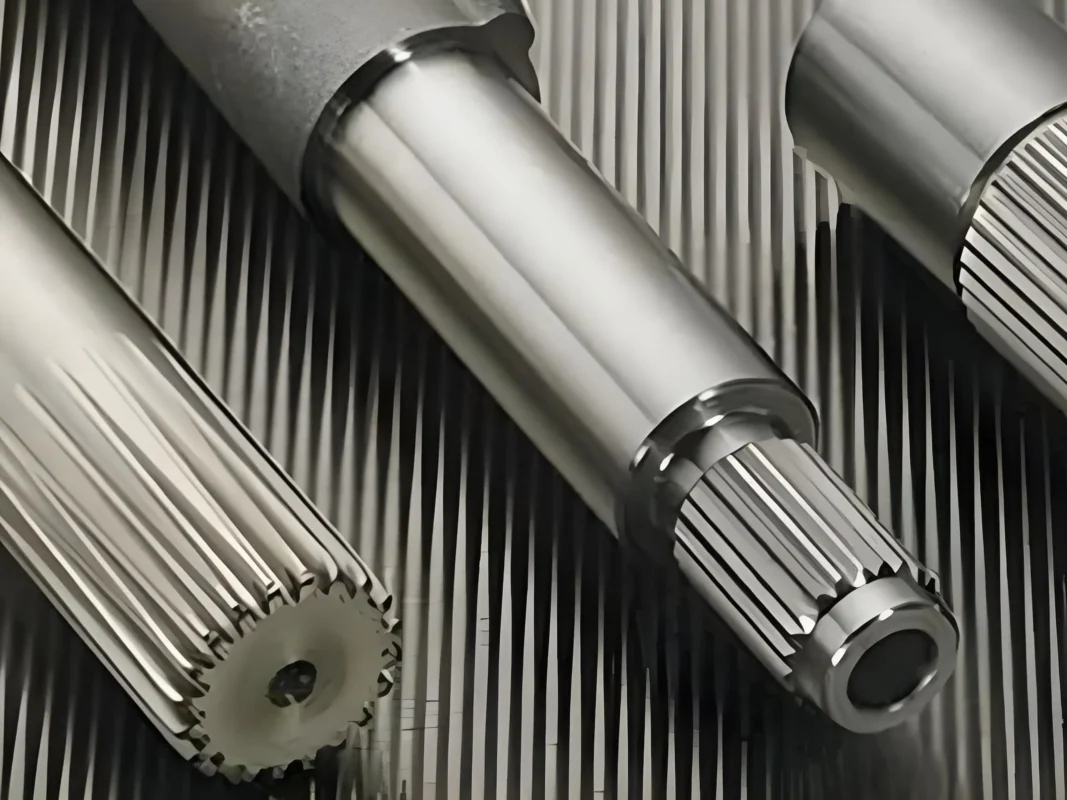
Spline shafts are widely used in mechanical transmission systems that require high torque capacity, accurate alignment, and stable power transfer. Compared with traditional key connections, spline shafts distribute load across multiple teeth, improving durability and positioning accuracy.
At Wenlio Gear, we frequently manufacture spline shafts for demanding transmission assemblies, where geometry accuracy and heat treatment consistency directly influence performance. This article explains spline shafts in a clear, structured way—from definition and importance to types, manufacturing, and applications.
What a Spline Shaft Is
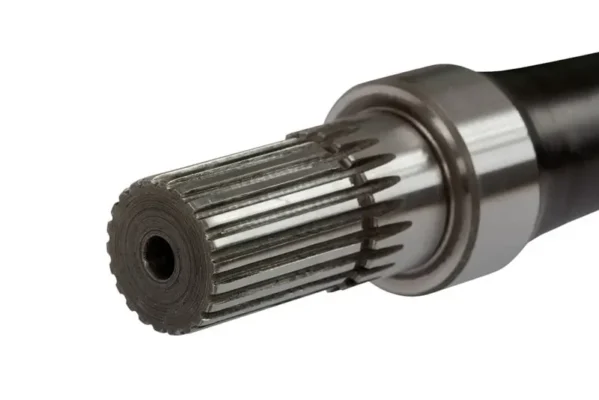
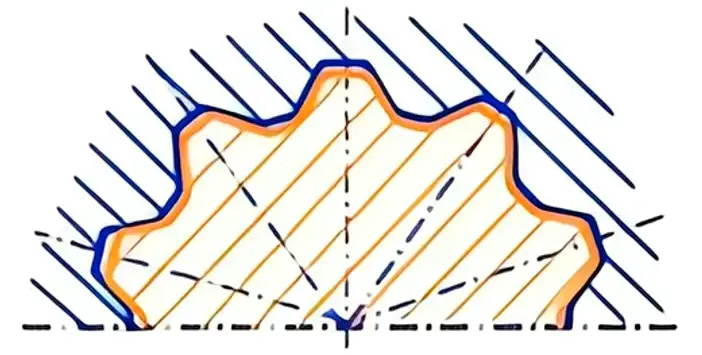
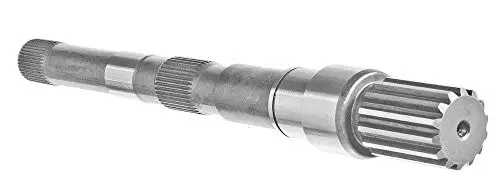
A spline shaft is a torque-transmitting shaft with evenly spaced external teeth that engage matching internal grooves to provide high load capacity and precise alignment.
Why Spline Shafts Matter
When comparing connection methods, spline shafts offer several structural advantages.
More stable torque transmission
Multiple teeth contact simultaneously and distribute torque across the interface. This approach reduces peak stress and supports better fatigue resistance when engineers choose suitable materials and lubrication.
Improved centering accuracy
Spline geometry—especially involute profiles—naturally guides the shaft and hub into alignment. Multi-tooth contact restricts radial movement and helps maintain coaxial stability during rotation.
Adaptability in dynamic systems
Designers can configure spline shafts as fixed or sliding connections. In sliding systems, the shaft moves axially while continuing to transmit torque, which supports gear shifting and telescopic drive assemblies.
For these reasons, engineers frequently rely on spline shafts in systems that demand both power transmission and positional control.
Common Types of Spline Shafts
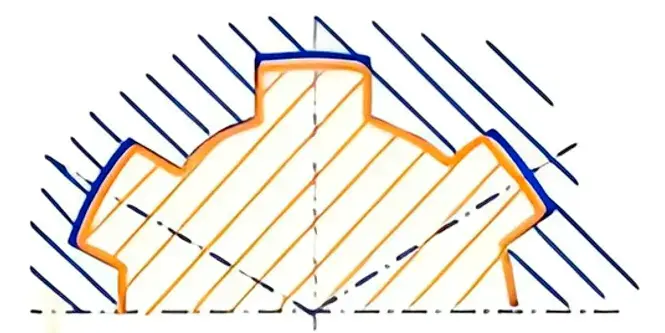
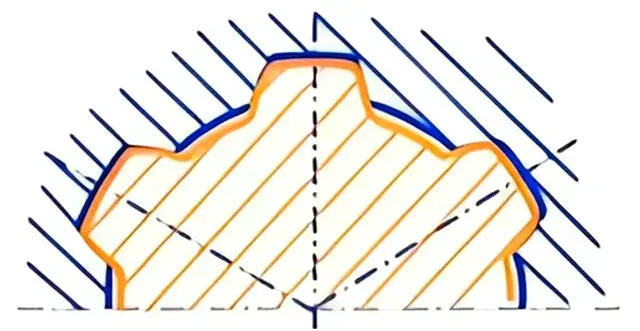
Engineers usually classify spline shafts by tooth profile geometry. The three primary forms include:
| Type | Tooth Profile | Technical Characteristics | Typical Applications |
|---|---|---|---|
| Straight-sided (Parallel) Spline | Rectangular tooth form | Simple geometry, easier machining, moderate load capacity | General industrial machinery |
| Involute Spline | Involute curve profile | Self-centering, improved stress distribution, better fatigue resistance | Automotive transmissions, heavy-duty drives |
| Serration (Triangular) Spline | Small-angle triangular involute | Compact form, suitable for lighter loads and thin hubs | Lightweight couplings |
Among these types, involute splines dominate modern transmission systems because their geometry distributes stress more evenly. Straight-sided splines remain practical in cost-sensitive designs, while serration splines suit compact assemblies with lighter torque requirements.
Where Spline Shafts Are Used
Spline shafts appear in many torque-transfer systems across industries.
Engineers use them in:
-
Automotive transmissions to connect synchronizer hubs and gears
-
Industrial gear reducers to transfer torque between stages
-
Machine tools to connect spindles and tooling
-
Agricultural equipment for power take-off systems
-
Construction machinery for heavy-duty drive assemblies
In these applications, spline shafts transmit torque while maintaining mechanical alignment.
Key Technical Features
Spline performance depends on several structural and manufacturing factors.
| Feature | Why It Matters | Engineering Impact |
|---|---|---|
| Multi-tooth engagement | Shares load across contact surfaces | Increases torque capacity |
| Involute geometry | Controls contact progression | Improves fatigue behavior |
| Axial sliding capability | Allows controlled movement | Supports shifting systems |
| Heat-treated surface | Raises surface hardness | Improves wear resistance |
| Tough core structure | Resists fracture under shock | Enhances durability |
| Controlled backlash | Maintains fit accuracy | Reduces vibration |
Tooth accuracy, surface finish, lubrication, and alignment directly influence contact stress and service life.
Practical Benefits in Mechanical Design
From a design perspective, spline shafts help engineers meet multiple performance goals.
| Design Objective | How Spline Shafts Help |
|---|---|
| Increase torque capacity | Spread torque across multiple teeth |
| Improve alignment precision | Maintain coaxial positioning |
| Reduce stress concentration | Lower peak stress compared to keyways |
| Support compact structures | Eliminate separate key components |
| Enable sliding engagement | Allow axial motion while transmitting torque |
| Improve durability | Balance load distribution under correct conditions |
However, designers must match spline geometry, material, and lubrication to operating conditions to achieve these benefits.
How Spline Shafts Are Manufactured
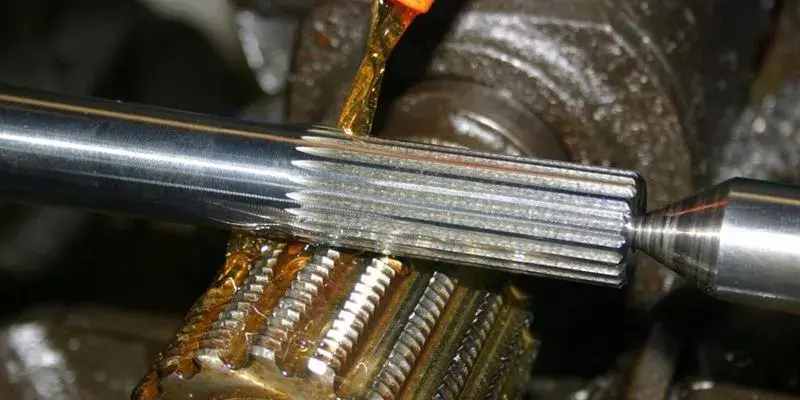
Manufacturers combine machining, heat treatment, and inspection to produce spline shafts.
They begin by selecting alloy steel based on torque and fatigue requirements. Forging improves grain flow and structural strength. CNC turning defines shaft dimensions and prepares the part for spline cutting.
For external splines, manufacturers commonly use hobbing, milling, or rolling. For internal splines, they rely on broaching or shaping, depending on geometry and production volume.
After machining, they apply heat treatment such as quenching and tempering or case hardening. This process increases surface hardness while preserving core toughness.
Finally, inspectors verify tooth profile accuracy, runout, and fit tolerances. Dimensional control at this stage ensures consistent engagement performance.
How to Choose the Right Spline Shaft Supplier
When evaluating a spline supplier, review the following:
-
Can the supplier produce both internal and external splines using appropriate machining methods?
-
Does the supplier control heat treatment parameters according to load requirements?
-
Can the inspection process verify tooth profile, runout, and fit accuracy?
-
Does the engineering team recommend suitable materials based on torque and duty cycle?
-
Can the production system maintain repeatable quality from prototype to batch manufacturing?
Clear technical alignment reduces production risk and improves long-term reliability.
Why Choose Us
Wenlio Gear provides precision spline shafts engineered for stable torque transmission and controlled backlash. We support custom spline geometry, optimized heat treatment strategies, and inspection planning aligned with real operating conditions to ensure repeatable quality from prototype to batch production.
Our manufacturing capabilities include CNC spline machining, internal spline broaching, and precision inspection of tooth profile, runout, and fit tolerance. By combining controlled heat treatment processes with dimensional verification at each stage, we help ensure consistent spline accuracy and reliable engagement performance across different application environments.
FAQ
Q1:Are spline shafts stronger than keyway shafts?
Spline shafts often provide better load distribution because torque is shared across multiple teeth rather than concentrated at a single key interface.
Q2:Which spline type is most widely used?
Involute splines are widely adopted due to their balanced stress distribution and self-centering characteristics.
Q3:Can spline shafts allow axial movement?
Yes. Sliding spline designs are used in shifting mechanisms and telescopic drive systems.
Q4:What factors most influence spline fatigue life?
Material grade, heat treatment quality, tooth geometry accuracy, lubrication, alignment, and operating load all affect fatigue life.
Q5:Are spline shafts standardized?
Many spline geometries follow recognized standards for tooth profile and fit classes, although custom configurations are common in specialized machinery.
Conclusion
Spline shafts provide a reliable and efficient solution for high-torque transmission systems that demand precise alignment and durability. By distributing load across multiple teeth, they improve stability compared to traditional key connections. Selecting the appropriate spline type and maintaining controlled manufacturing processes are essential for consistent long-term performance.
If you are designing a spline shaft or replacing an existing component, you are welcome to Contact Us with your drawing, torque requirements, and operating conditions so we can align on a practical and reliable production solution.
