▷ What is gear planing?
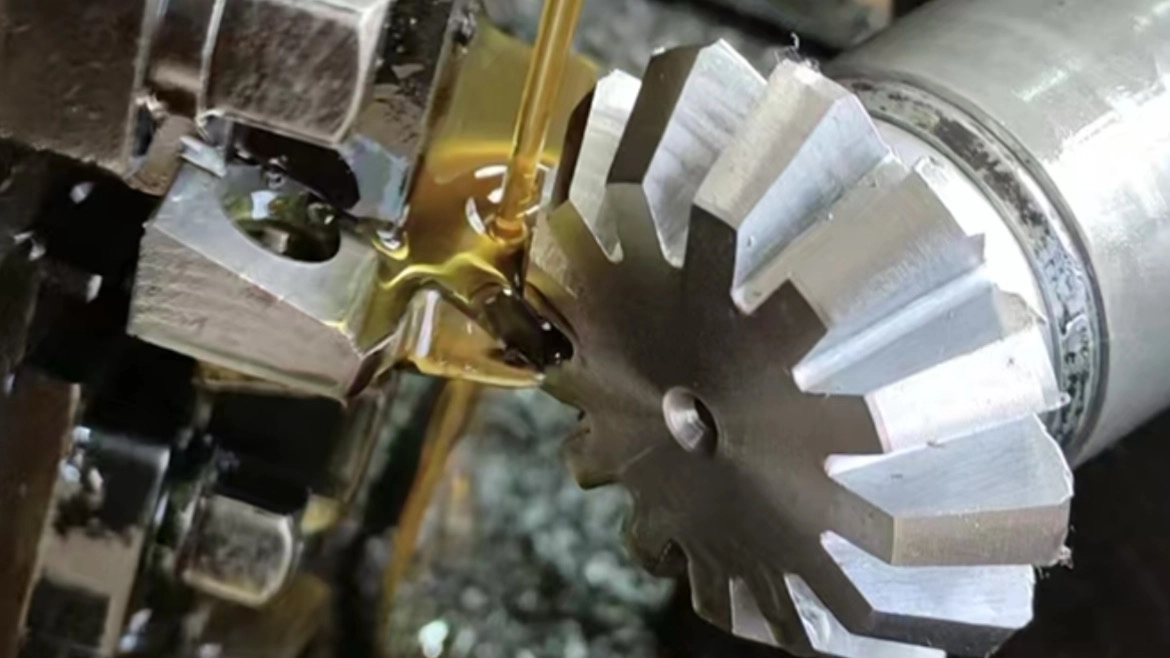
Gear planing is a reciprocating cutting process specifically used to generate the tooth profiles of straight bevel gears. By using synchronized tools that mimic the action of a crown gear, the process ensures stable geometry and dependable meshing for applications where cost-control and mechanical reliability are prioritized.
Understanding the Planing Process
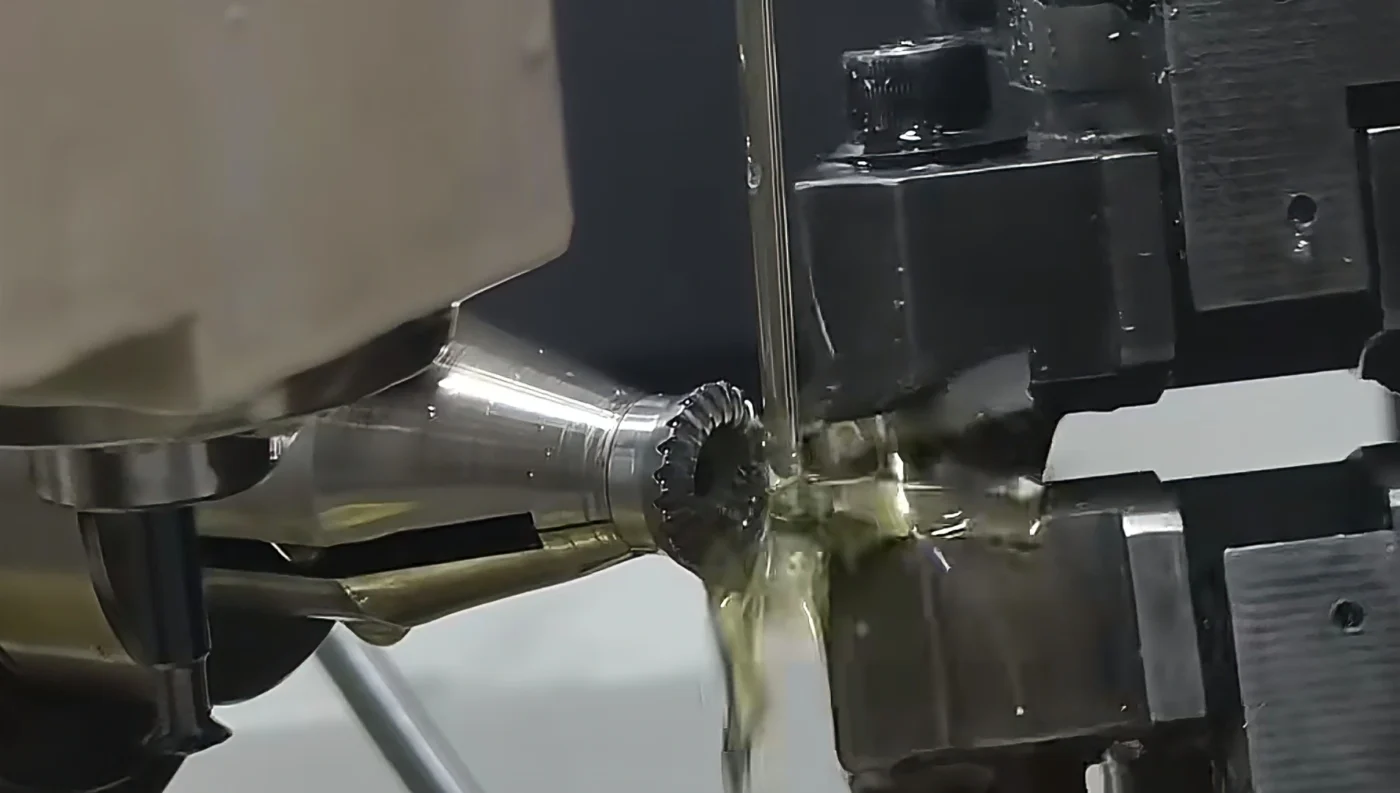
The gear planing process is a fundamental manufacturing method for producing straight bevel gears. Unlike standard milling, planing uses a reciprocating motion where two cutting tools converge toward the gear’s theoretical apex.
This method creates a “generated” tooth form. This means the profile is not just cut but developed through the relative motion of the tool and the workpiece, ensuring consistent contact across the tooth face. It is highly suitable for ISO 7-8 level applications.
When Gear Planing Is a Good Fit
Identifying the right manufacturing route for your project’s performance and budget requirements.
| Project Condition | Why Planing Fits | Production Confirmation |
|---|---|---|
| Straight Bevel Geometry | Designed specifically for converging tooth profiles. | Pressure angle and tooth ratio. |
| Moderate-Speed Transmission | Balanced surface finish for standard gearboxes. | Operating RPM and noise targets. |
| Replacement / Custom MRO | Versatile setup for small batches or one-offs. | Original sample or CAD measurements. |
| Agricultural/Industrial Use | Durable results with controlled manufacturing costs. | Load requirements and duty cycle. |
Data is for typical manufacturing reference only. Specific capabilities depend on design and material.
Manufacturing Roadmap
Analysis
Technical drawing review and material selection (alloy steels/forgings).
Blank Prep
Precise turning and preparation of the bevel gear blank.
Planing
Reciprocating tool generation of the straight bevel profile.
Final QA
Contact pattern check and dimensional audit before packing.
Watch straight bevel gear planing in action. This video shows the tool movement and workpiece positioning used to cut straight bevel gear teeth with stable tooth formation.
Learn More About Gear PlaningQuality Control and Verification
Meshing Check
Verification of tooth contact patterns to ensure uniform load distribution across the gear pair.
Dimensional Audit
Full dimensional check including bore diameter, keyway alignment, and mounting distances.
Surface Integrity
Visual and instrumental inspection of tooth finish and edge treatment (deburring),ensure the integrity of the surface.
Gear Manufacturing Methods & Accuracy
Note: Accuracy grades depend on standard (ISO/AGMA/DIN), material state, heat treatment, machine capability, fixturing, and inspection method.
| Machining Methods | Principle Type | Key Features | Accuracy Grade | Typical Applications |
|---|---|---|---|---|
| Gear Milling (Form Milling) | Forming Method | Simple equipment; low efficiency; low accuracy | Below Grade 9 | Single-piece repair/rework; low-precision gears |
| Gear Broaching | Forming Method | Extremely high efficiency; very expensive tools; dedicated tool for dedicated profile | Grade 7–8 | Large-batch internal ring gears; splines |
| Gear Planing (for Straight Bevel Gears) | Generating Method | Dedicated for straight bevel gears; relatively low efficiency | Grade 8–9 | Straight bevel gears |
| Gear Hobbing | Generating Method | Universal & efficient; most common for rough / semi-finish machining | Grade 7–8 | External-mesh cylindrical gears; worm wheels |
| Gear Shaping (Slotting) | Generating Method | Can machine internal gears / compound gears; medium efficiency | Grade 7–8 | Internal gears; compound gears; racks |
| Gear Shaving | Generating Method | High-efficiency finishing, but cannot machine hardened parts | Grade 6–7 | Finishing of unhardened gears |
| Gear Honing | Generating Method | Finishing after hardening; improves surface quality | Mainly improves Ra | Deburring & polishing of hardened gears |
| Gear Grinding | Generating Method | Highest accuracy; highest cost; can machine hardened parts | Grade 3–5 | Final machining for high-precision (e.g., automotive) hardened gears |
Typical Applications
Agricultural Machinery
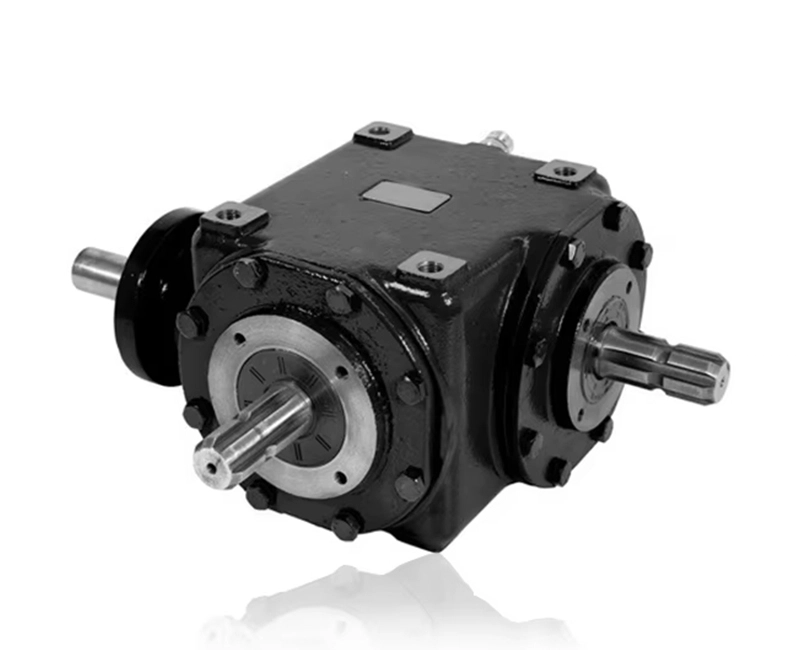
Stable right-angle power transmission for harvesters, seeders, and PTO systems where reliability is paramount.
Industrial Equipment
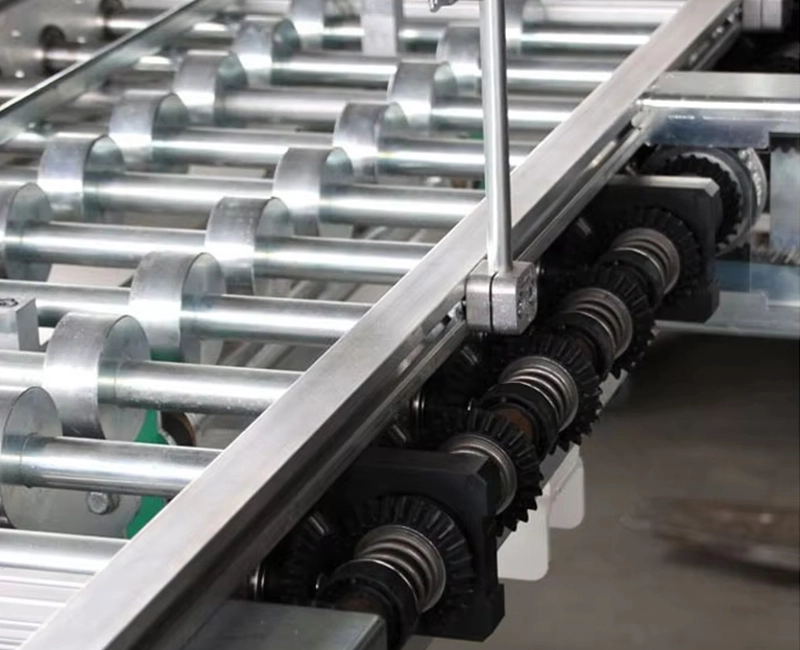
Right-angle drives for conveyors and packaging lines requiring dependable meshing and long service life.
MRO & Custom Parts
Accurate reproduction of legacy straight bevel gears from customer drawings or worn samples.
Frequently Asked Questions
What is gear planing?
It is a reciprocating cutting method used to generate accurate tooth profiles for straight bevel gears through synchronized tool movement.
Is gear planing mainly used for straight bevel gears?
Yes, it is the primary industry standard for generating converging tooth forms on straight bevel gear geometry.
What accuracy level is suitable for gear planing?
It is commonly suitable for ISO 7-8 level requirements, depending on the material, design complexity, and final inspection standards.
When should I choose gear planing instead of grinding?
Choose planing when you need dependable performance and a functional mesh at a controlled cost for moderate-speed industrial applications.
Can Wenlio Gear manufacture from a physical sample?
Yes, we can perform reverse engineering from your sample to create manufacturing drawings and produce matching replacement gears.