|  CNC Gear Grinding Services: Profile Accuracy, Surface Integrity & Noise Control

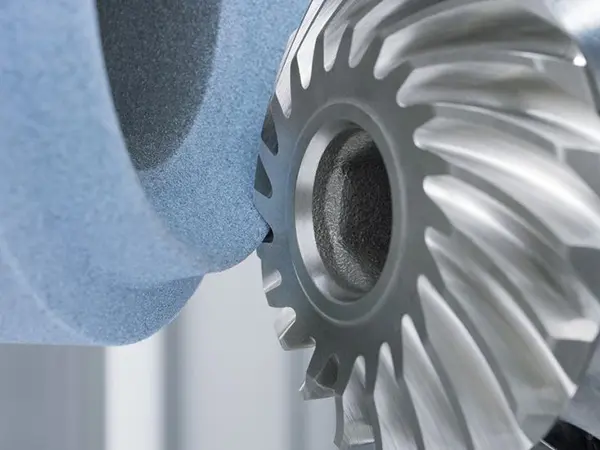
CMM-verified tooth profiles with surface finishes down to Ra 0.4μm. Our focus on surface integrity prevents premature wear and ensures absolute batch consistency for critical OEM components.

Quality Assurance

Our QC process spans from material intake to final CMM verification. Every step involves rigorous testing to ensure superior surface integrity, exceptional performance, and long-term mechanical reliability.

Tolerance Control

Achieving ISO 5 / AGMA 12 accuracy. Our CNC process precisely controls pitch, lead, and involute profiles to optimize contact patterns and eliminate edge loading under high-torque conditions.

|  Beyond Cutting: Why Precision Grinding is Essential

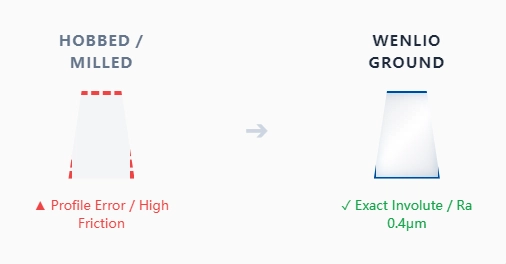
This section illustrates the fundamental difference between standard gear cutting and precision grinding. It explains why heat treatment necessitates a final finishing operation to meet modern transmission tolerances.

While gear cutting (hobbing or milling) defines the initial geometry, gear grinding is the critical final stage. Heat treatment hardens the steel but inevitably causes volumetric changes and microscopic distortions.

At Wenlio Gear, we utilize CNC generating grinding to correct these distortions, achieving the exact involute profiles and lead tolerances required for modern, high-speed power transmission.

       Pre-Heat Treat
       Soft material, rough cut
       geometry.
       Post-Grind
       Hardened steel, precise micro-
       geometry.
Why Precision Grinding is Essential

Improving Transmission Performance through Surface Integrity

Explore the quantifiable benefits of gear grinding. Interact with the tabs below to understand how optimizing micro-geometry impacts noise, load distribution, and overall component longevity.

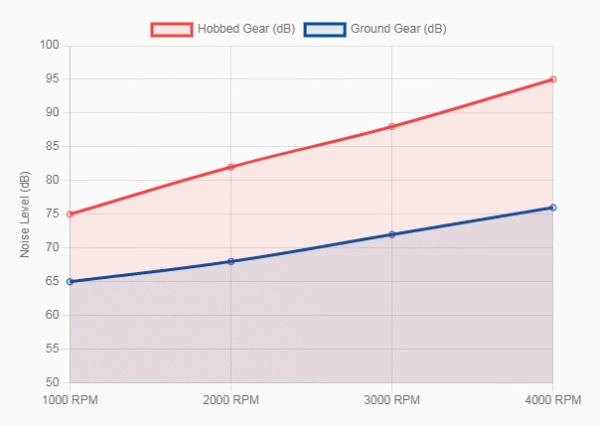
Optimized Micro-Geometry Minimizes Transmission Error

In high-speed applications, minute profile deviations cause transmission error, resulting in gear ‘whine’ and vibration. Our CNC grinding process corrects these deviations, drastically reducing operational decibel levels across the RPM spectrum.

  • Elimination of heat-treat distortion
  • Consistent pitch accuracy
  • Crucial for EV and high-speed drives
Optimized Micro-Geometry Minimizes Transmission Error

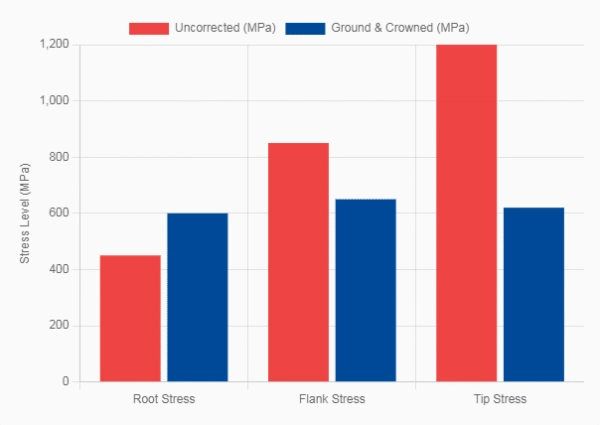
Corrected Tooth Contact Patterns Ensure Even Stress

Uneven load distribution causes premature pitting and failure. By utilizing custom crowning and precise grinding, we ensure the contact pattern is centralized under operational load, distributing stress evenly across the tooth flank.

  • Prevents edge loading and breakage
  • Compensates for housing deflection
  • Increases total torque capacity
Corrected Tooth Contact Patterns Ensure Even Stress

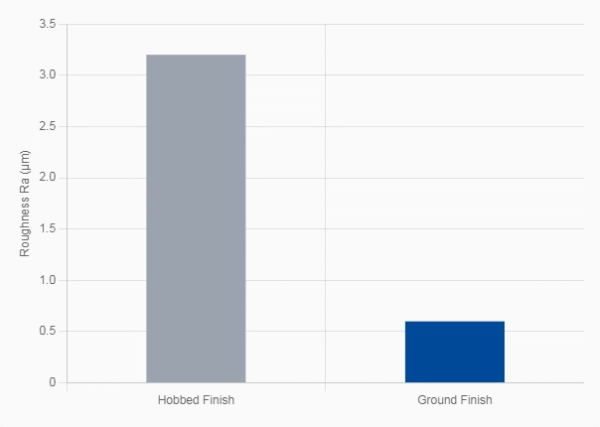
Superior Surface Finish Extends Lifecycle

Friction is the enemy of transmission longevity. Grinding reduces surface roughness (Ra values), which lowers friction, minimizes heat generation, and significantly extends both the lubricant lifecycle and the gear set itself.

  • Ra 0.4 – 0.8 μm achievable
  • Improved oil film retention
  • Reduces operating temperature
Superior Surface Finish Extends Lifecycle

| Specific Capabilities for Complex Geometries

This section details our hard-engineering specifications. We focus heavily on the complexities of grinding spiral bevel gears and precision transmission components for small and medium batches.

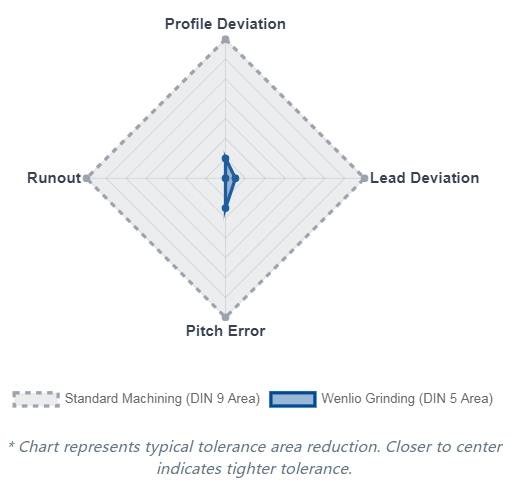
Verification of Tooth Geometry and Contact Patterns

Accuracy is only as good as the measurement. This section demonstrates how we verify our grinding process through rigorous inspection, showing the shift from standard tolerances to precision capability.

Verification of Tooth Geometry and Contact Patterns

Where Precision Grinding is Non-Negotiable

We partner with OEMs across critical industries where transmission failure is not an option.

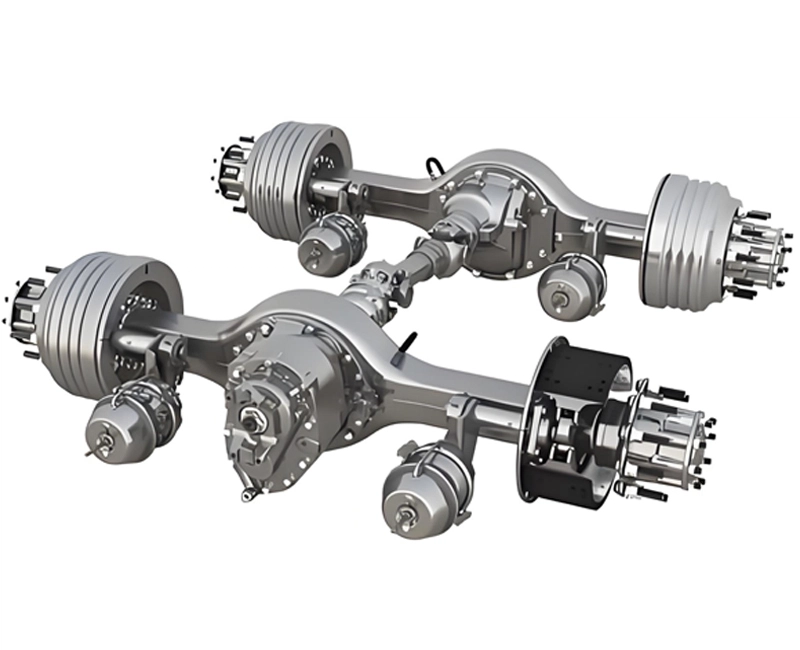
Heavy Duty Axles

Heavy Duty Axles

Ground spiral bevel gears for construction and agricultural machinery, ensuring high torque transfer without premature pitting under heavy loads.

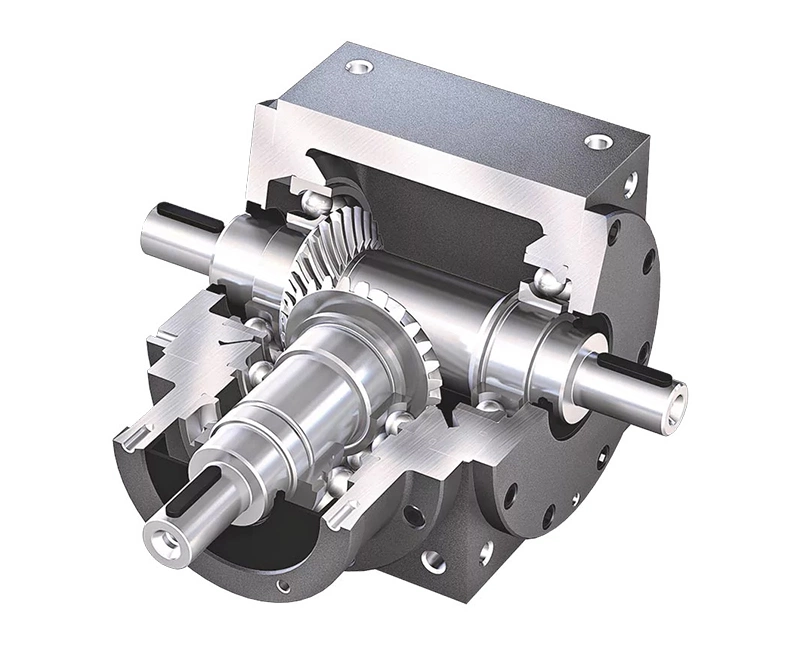
Industrial Gearboxes

Industrial Gearboxes

High-efficiency planetary and worm-gear reducers demanding low heat generation and extended 24/7 lifecycle operation.

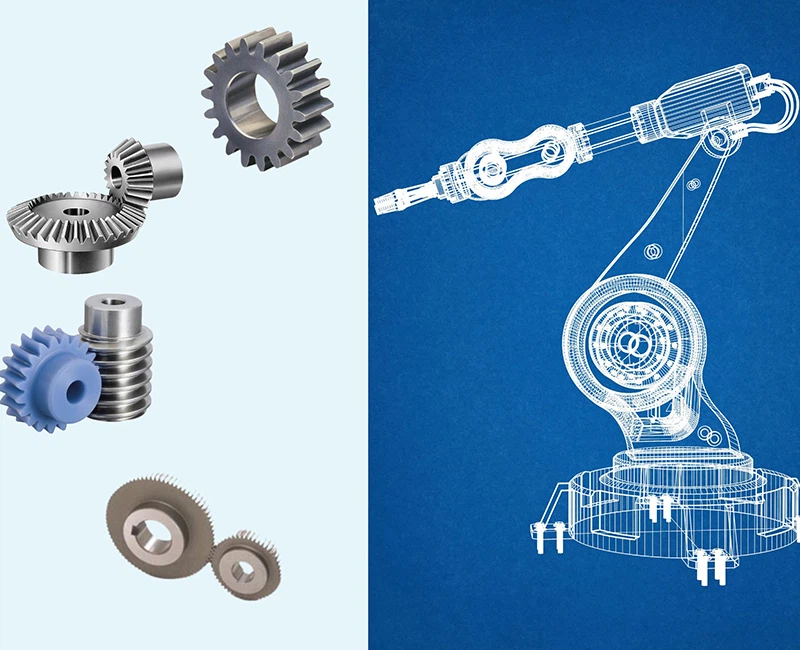
Robotics & Automation

Robotics & Automation

Low-backlash gears requiring extreme pitch accuracy for precise motion control, positioning, and reversing accuracy.

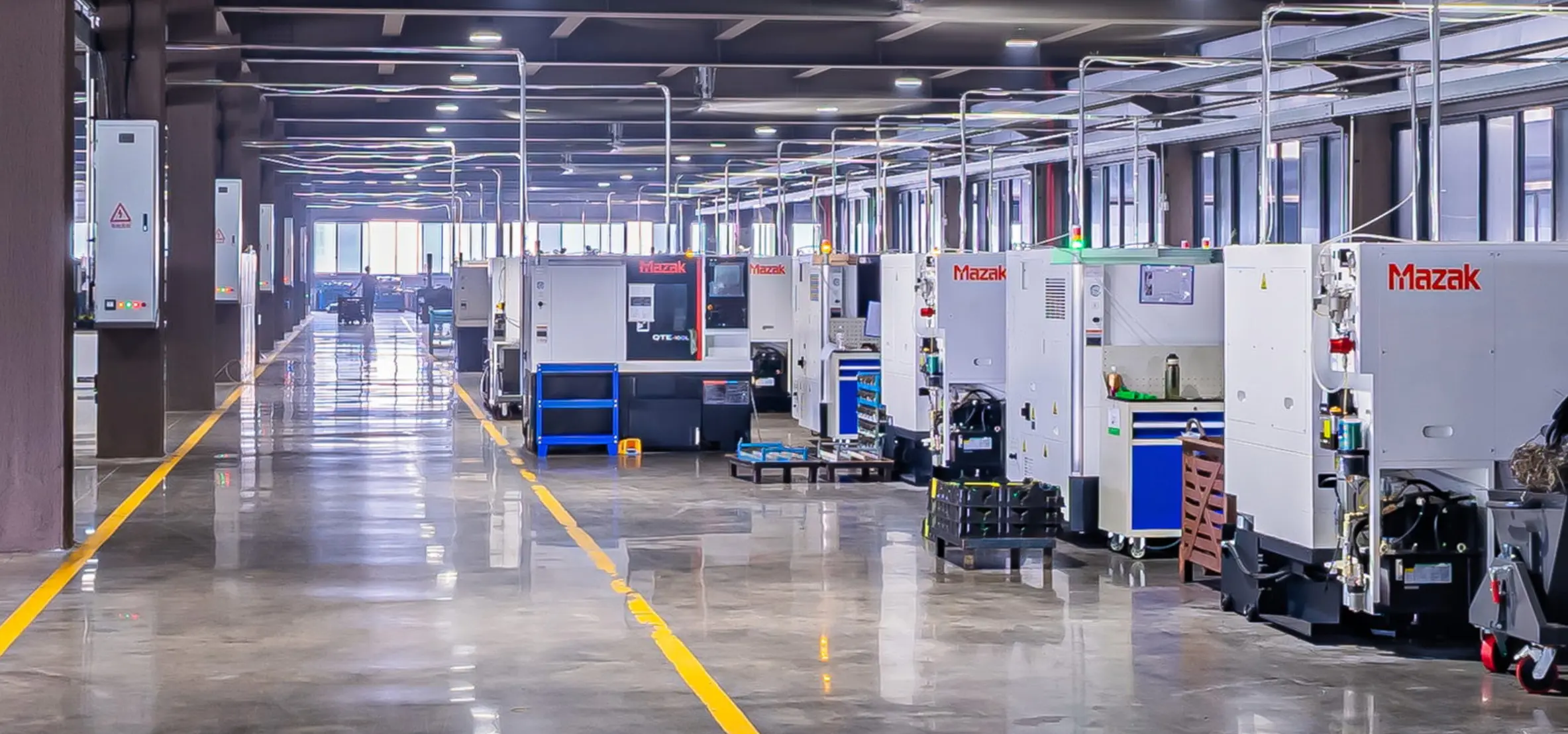
Wenlio CNC Workshop


Your Manufacturing Partner for Critical Components

We don’t just provide “parts.” We provide manufacturing consistency. Buyers choose Wenlio for our focus on batch-to-batch repeatability, our transparent CMM documentation, and our ability to hold tight tolerances on complex bevel sets that other shops shy away from.

100% Inspection Capability for Aerospace & Industrial Standards


Gear Manufacturing Methods & Accuracy

Note: Accuracy grades depend on standard (ISO/AGMA/DIN), material state, heat treatment, machine capability, fixturing, and inspection method.

Machining Methods Principle Type Key Features Accuracy Grade Typical Applications
Gear Milling (Form Milling) Forming Method Simple equipment; low efficiency; low accuracy Below Grade 9 Single-piece repair/rework; low-precision gears
Gear Broaching Forming Method Extremely high efficiency; very expensive tools; dedicated tool for dedicated profile Grade 7–8 Large-batch internal ring gears; splines
Gear Planing (for Straight Bevel Gears) Generating Method Dedicated for straight bevel gears; relatively low efficiency Grade 8–9 Straight bevel gears
Gear Hobbing Generating Method Universal & efficient; most common for rough / semi-finish machining Grade 7–8 External-mesh cylindrical gears; worm wheels
Gear Shaping (Slotting) Generating Method Can machine internal gears / compound gears; medium efficiency Grade 7–8 Internal gears; compound gears; racks
Gear Shaving Generating Method High-efficiency finishing, but cannot machine hardened parts Grade 6–7 Finishing of unhardened gears
Gear Honing Generating Method Finishing after hardening; improves surface quality Mainly improves Ra Deburring & polishing of hardened gears
Gear Grinding Generating Method Highest accuracy; highest cost; can machine hardened parts Grade 3–5 Final machining for high-precision (e.g., automotive) hardened gears
gear Grinding

FAQ About Gear Grinding

Direct answers to common engineering and sourcing questions.

Heat treatment causes volumetric changes and distortion in steel. Grinding removes these inaccuracies, restoring the intended involute profile and pitch consistency required for smooth operation.

We consistently achieve ISO/DIN 5 to 9 (AGMA 12-13) accuracy levels, depending on the specific gear geometry, size, and material.

Yes. We can apply crowning, tip relief, and specific lead modifications to compensate for housing deflection and shaft bending under heavy load.

We typically achieve surface finishes of Ra 0.4 to 0.8 μm, significantly reducing friction, heat generation, and wear compared to hobbed-only gears.

We support everything from prototype development and small batches to medium-scale OEM production runs, maintaining strict repeatability throughout the batch.

Ready to Discuss Your Gear Specifications?

Send us your technical drawings or project requirements. Our engineering team will review your tolerances and provide a manufacturing feasibility assessment and quotation.

✉ support@wenlio.com
+86 18257981010