
Blogs, Bevel Gear
Bevel Gears for Tractors and Agricultural Machinery
Mar
Introduction
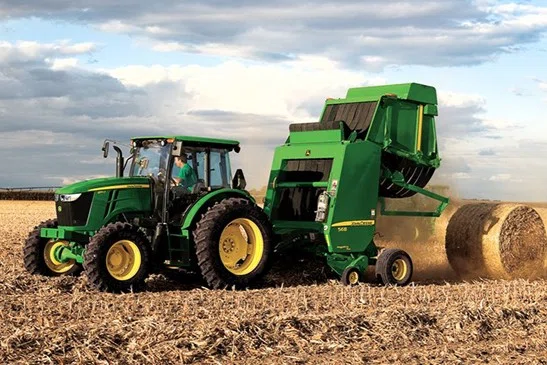
Tractors, harvesters, and tillage machines demand a lot from their drivetrains. Because they run at low speed and high torque, see frequent shock loads, and operate in dust, mud, and moisture, long duty cycles are the norm. As a result, bevel gear sets often sit at key turning points in the power flow—changing direction, splitting torque, or driving implements.
In practice, agricultural gear projects succeed when teams align three inputs early: the real duty cycle (including shock and temperature), the installation constraints (mounting distance, backlash targets, and housing stiffness), and the inspection evidence that proves repeatable contact behavior. So this guide explains where agricultural bevel gears work, how to choose the right bevel type, and what to include in an RFQ to reduce risk from prototype to batch production.
What agricultural bevel gears are
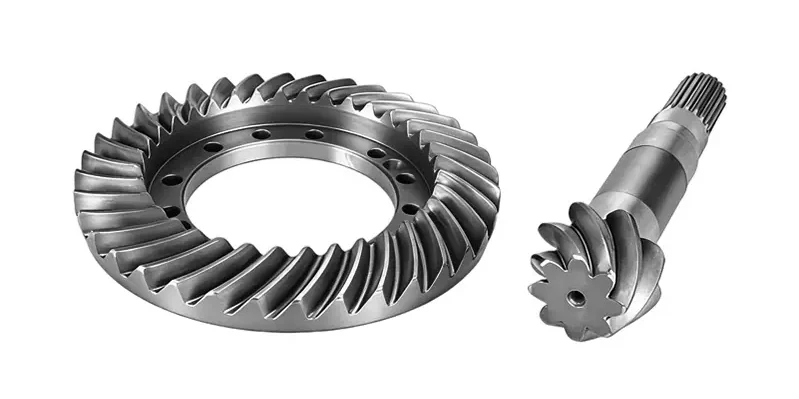
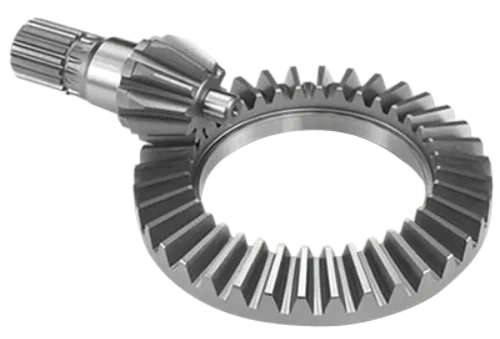
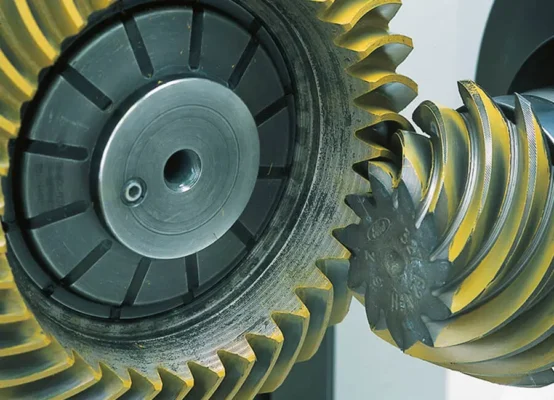
Agricultural bevel gears are cone-shaped gear sets that transfer torque between intersecting shafts—often around 90°—to change direction and deliver power inside tractor and farm machinery drivetrains.
Why bevel gears matter in the field
They carry “dirty torque”
Field work rarely applies smooth loads. Instead, traction changes, implement impacts, and operator maneuvers create torque spikes that stress tooth roots and shift tooth contact. So a bevel set that looks fine at steady load can still fail early if the design ignores shock events and reversal frequency.
They run in harsh lubrication conditions
Meanwhile, dust ingress, water contamination, and temperature swings weaken oil-film stability. Once the film breaks down, surface distress—micropitting, scuffing, and wear—accelerates and heat rises. In practice, lubrication reality often defines service life more than the nominal gear rating.
They influence uptime more than their size suggests
Even though a bevel set may be a small part inside a large machine, a failure can stop the entire tractor or implement during peak season. That’s why many programs treat bevel-gear reliability as a productivity KPI, not just a parts drawing.
The bevel gear options that show up most
| Bevel option | Best when you need… | Watch-outs |
| Straight bevel | Cost-effective direction change at moderate speed and load | More impact/noise at speed; alignment sensitive |
| Spiral bevel | Smoother engagement, better load distribution, quieter running | Tighter process + contact-pattern control needed |
| Hypoid (offset) | Packaging flexibility with offset axes and high contact ratio | More sliding than spiral; lubrication sensitivity increases |
In tractor and agricultural drivetrains, spiral bevel sets are common where smoothness, load distribution, and NVH stability matter. Hypoid sets appear when packaging or axle layout requires axis offset. Straight bevel sets can still fit cost-sensitive, moderate-duty gearboxes if alignment control is strong.
Where you’ll find bevel gears in agricultural machines
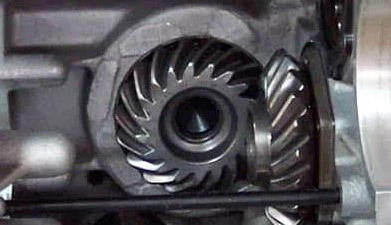
Common agricultural bevel-gear positions include:
-
Tractor differentials and axle transmissions
-
Final drives and reduction stages
-
PTO gearboxes and right-angle PTO drives
-
Steering gearboxes and right-angle gearboxes on implements
-
Combine/harvester drivetrains where direction changes are required
-
Tillage equipment gearboxes (rotary tillers, balers, spreaders)
In practice, these positions combine high torque with load reversals and contamination risk. As a result, they become more sensitive to tooth-root strength, mounting stiffness, bearing support, and oil cleanliness.
What drives durability in agricultural bevel gears
| Focus area | Why it matters in agriculture | What to define / verify |
| Tooth contact pattern | Shock loads can shift contact, so edge contact quickly creates heat and pitting. | Define a target pattern referenced to assembly datums, then check pattern stability under load. |
| Mounting distance & backlash | Small shifts can change the effective pressure angle and move the contact zone, therefore performance can drift. | Set assembly targets plus a tolerance window, and define the backlash measurement method. |
| Material & heat treatment | You need surface durability while keeping a tough core to survive shock. | Specify hardness targets and case depth (if used), and confirm a distortion-control plan. |
| Surface finish & deburr | Poor finish raises sliding distress risk, so scuffing and temperature rise more easily. | Set roughness targets, and control deburr/chamfers at tooth edges. |
| Runout & alignment control | Misalignment concentrates load, which drives noisy mesh and early local damage. | Tie runout/coaxiality to functional datums, and control bearing seats accordingly. |
Practical note: in agriculture, assembly and housing stiffness matter. Even a high-precision gear can develop edge contact if the housing deflects under load or if bearing preload changes with temperature. That is why installation datums and tolerance stack-up belong in the RFQ, not only in the gear drawing.
What a well-chosen bevel set improves
| Program goal | What improves | Why buyers care |
| Higher uptime | Fewer surface distress failures and rework loops | Less harvest-season downtime |
| Lower noise risk | Smoother meshing and more stable contact pattern | Better operator comfort and perceived quality |
| Stable torque transfer | Better load distribution and repeatable backlash | Improved traction and implement performance |
| Predictable service life | Strength + lubrication assumptions match reality | Better maintenance planning and warranty control |
Most agricultural reliability gains come from consistency: consistent contact pattern, consistent hardness, consistent assembly datums, and consistent oil conditions. When these stay stable, the bevel set becomes predictable across seasons and across batches.
Supplier selection tips that prevent headaches
- Share assembly-first inputs: mounting distance, backlash target, housing constraints, bearing layout, and any shim strategy.
- Request contact-pattern targets and acceptance evidence (not only tooth thickness pass/fail).
- Define real duty cycle and lubricant reality: peak torque events, reversals, oil type/viscosity, contamination expectations.
- Confirm heat treatment and distortion control: how geometry stays repeatable after heat treatment and finishing.
- Align inspection scope to function: profile/lead/runout evidence plus an assembly-oriented method to confirm contact and backlash.
Why Choose Us
Wenlio Gear supports agricultural bevel gear projects with a focus on repeatable geometry and inspection evidence that reflects real assembly behavior. In practice, we help teams align design intent with manufacturable routes—especially around contact stability, runout control, and the installation parameters that decide performance (mounting distance, backlash, and bearing support).
To keep validation meaningful, we also clarify duty-cycle assumptions early—shock loading, temperature-rise limits, and lubrication realities—so prototype results and batch production stay comparable and decisions remain evidence-based.
FAQ
Q1: Why do many agricultural applications prefer spiral bevel over straight bevel?
A: In practice, spiral bevel gears engage more gradually, so they run smoother and distribute load better under variable field loads. By contrast, straight bevels tend to excite more impact at speed, which can make them less forgiving in harsh duty.
Q2: Do hypoid gears always last longer than spiral bevel gears?
A: Not automatically. Hypoids can improve packaging and contact ratio, but they also introduce more sliding and therefore demand stricter lubrication control. So life still depends on the full system—load, oil, alignment, and surface durability.
Q3: What usually causes early pitting or scuffing in agricultural bevel sets?
A: Most often, the root causes are an unstable contact pattern (edge contact) and/or a weak lubrication film (wrong viscosity or contamination). In addition, overheating and misalignment/runout issues can accelerate damage.
Q4: What inspection evidence should I request for an agricultural bevel gear RFQ?
A: At minimum, request profile/lead and runout evidence (as applicable). Then, add an assembly-oriented check—such as contact-pattern verification and backlash confirmation—so the data reflects real functional behavior.
Q5: What information speeds up a correct quotation?
A: To quote accurately and fast, share drawings (gear + assembly), target ratio, mounting distance and backlash targets, duty cycle (speed/torque), lubricant spec/method, and any noise or temperature constraints.
Conclusion
Agricultural bevel gears operate under shock loads, contamination risk, and long duty cycles. So choosing the bevel type is only the first step. In practice, stable performance depends on contact control, mounting distance and backlash targets, heat-treatment discipline, and inspection evidence that reflects real assembly conditions.
If you’re developing a tractor or agricultural gearbox, localizing an existing bevel set, or troubleshooting field issues such as noise, pitting, or wear, then Contact us with your drawings and operating conditions. From there, we can align on a practical manufacturing route and a verification plan.
