
Blogs, Bevel Gear
Bevel Gear Manufacturing from Samples: Buyer Checklist
Jun
At Wenlio Gear, many bevel gear projects do not begin with a complete drawing. They begin with a worn sample, a damaged mating part, or a replacement job where the original source is no longer available. This is common in agricultural machinery, heavy truck, construction equipment, electric vehicles, and industrial automation projects.
Because Wenlio focuses on bevel gear projects, sample-based review is a practical part of our engineering workflow. A bevel gear made from a sample is never just a copied shape. We still need to identify the gear type, understand how it works with its mating component, review the likely material and heat-treatment route, and decide which dimensions control fit and running behavior.
Quick Answer: What Does Bevel Gear Manufacturing from Samples Mean?
Bevel gear manufacturing from samples means using a physical part, together with measurement and engineering review, to rebuild a manufacturable gear definition when a complete drawing is missing or incomplete. The sample helps start the review, but the mating part, application details, material route, heat treatment, and inspection requirements still need to be confirmed.
Why Sample-Based Bevel Gear Projects Need More Preparation
Because a sample is not the same as a drawing.
A sample shows the part as it exists today, not always the part as it was originally intended. The sample may already be worn, repaired, distorted, or running against a damaged mating gear. If we only copy the visible form without checking the application context, the new part may repeat the same failure mode.
Because bevel gears work as meshing parts, not isolated components.
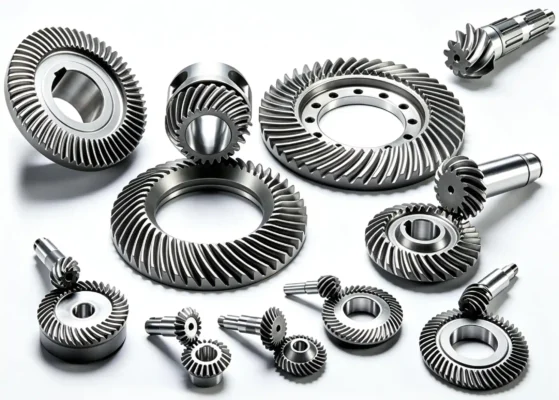
For bevel gears, the real issue is rarely one outside diameter or one tooth thickness. The real issue is whether the new part will match the mating gear, hold the intended backlash, and produce a stable contact pattern after assembly. This is especially important in spiral bevel and hypoid projects, where matched-pair behavior matters directly in service.
Because quotation depends on what can and cannot be confirmed.
A supplier can quote sample-based work more accurately when the buyer makes clear which data is known, which items are estimated, and which details must be measured or reverse reviewed. For RFQ review, Wenlio may check gear type, mating condition, material route, heat treatment, profile, lead, pitch, runout, hardness, and other inspection points depending on the project risk.
Common Sample Situations Buyers Usually Face
| Project situation | What the buyer usually has | What still needs to be confirmed |
| Worn replacement bevel gear | One damaged gear | Wear allowance, mating condition, critical dimensions |
| Sample plus mating gear | Both meshing parts | Ratio, backlash target, contact logic, pair condition |
| Sample plus old housing | Gear and installation context | Mounting dimensions, center distance, fit references |
| Sample with OEM reference | Part plus partial traceability | Whether the old reference still matches current use |
| Prototype from field failure | Broken or noisy gear from service | Failure cause, material route, heat treatment, redesign need |
| No drawing, no mating gear | Only one used sample | Reverse-engineering scope and project risk level |
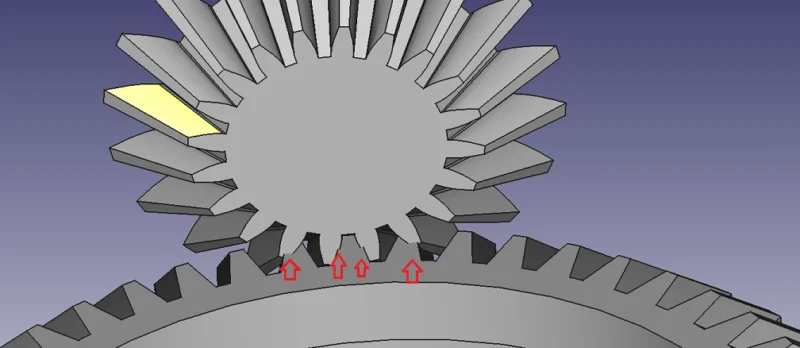
This is why we start by classifying the sample condition before talking about production. A clean sample with its mating gear is a very different project from one worn part taken out of a failed assembly.
Who Should Be Involved Before Sending the Sample?
- Buyers or sourcing teams preparing the RFQ
- Design engineers if the gear must match a defined performance target
- Service or maintenance teams that removed the part from the machine
- Quality engineers reviewing what must be measured and reported
- Assembly engineers who understand fit, backlash, and housing references
- Project managers coordinating prototype approval and production timing
A sample-based job moves faster when these people share information early instead of sending only the part and expecting the supplier to infer the rest.
What Buyers Should Send with a Bevel Gear Sample
| Item | What to send | Why it matters |
| Physical sample | The cleanest available part | Gives the supplier the best starting point for measurement |
| Mating part if possible | Pinion, gear, or full pair | Helps verify ratio, contact relationship, and matching logic |
| Application details | Industry, machine type, load, speed, environment | Helps define the real performance target |
| Known dimensions | Bore, spline, mounting face, shaft angle, OD if available | Reduces reverse-engineering uncertainty |
| Photos before disassembly | Installed position, wear pattern, assembly side | Helps keep orientation and usage context clear |
| Failure description | Noise, pitting, breakage, wear, overheating, misfit | Helps distinguish copying from correcting |
| Quantity plan | Prototype quantity and expected batch demand | Affects tooling, process route, and lead time |
| Material or hardness info | Any known grade, case depth, or test result | Helps estimate the right manufacturing route |
| Inspection request | What must be checked before approval | Aligns the report with the real project risk |
At Wenlio Gear, we normally ask for this kind of supporting information. A sample alone is helpful, but a sample plus mating data, application details, and inspection expectations is much more valuable because it lets us review manufacturability and approval risk in one workflow.
For sample-based work, buyers should make sure the sample is legally available for manufacturing review and does not violate any existing IP, confidentiality, or supply agreement restrictions.
How a Better Sample-Based Workflow Reduces Risk
| Project result | What improves | Why it helps |
| Better quote accuracy | Fewer hidden assumptions | Reduces later revisions |
| Better manufacturability review | Earlier confirmation of gear type and process route | Avoids costly misinterpretation |
| Better prototype approval | Reports match the real risk points | Speeds up validation |
| Better matching confidence | More focus on pair logic and contact behavior | Reduces field complaints |
| Better batch consistency | The approved sample becomes a clearer production reference | Lowers variation after release |
When sample-based work is handled well, the project becomes less about copying a part and more about rebuilding a working gear solution. Wenlio supports prototype runs, flexible lot production, calibrated inspection, and report-based approval when required, so the approved sample and related data can become a clearer reference for repeat production.
What Buyers Should Confirm Before Production Starts
Whether the sample truly reflects the target geometry
First, check whether the sample represents the intended final gear geometry. A worn part is not always the right reference. The buyer should clearly state whether the goal is to copy the original nominal form or to correct a problem found in service.
Whether the gear runs alone or as a matched pair
Next, confirm whether the gear works by itself or as part of a matched pair. This is especially important for bevel gears. In many cases, one sample is not enough because the running behavior also depends on the mating part.
Which material and heat treatment should be used
Then, define the material and heat-treatment route. Wenlio supports different options, including carburizing, nitriding, and induction hardening. The project should make clear whether the original route must be followed or whether Wenlio can recommend a reviewed alternative.
What inspection data will approve the part
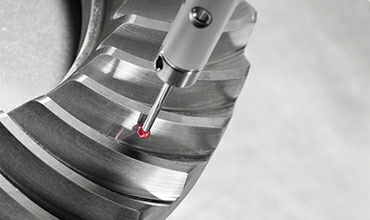
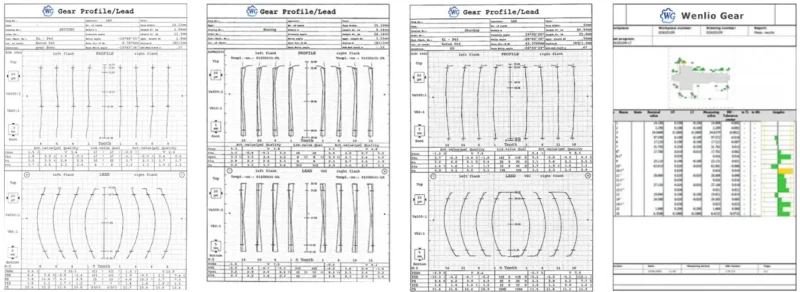
After that, decide what inspection data will be used for approval. In real gear projects, profile, lead, pitch, runout, hardness, dimensional results, and contact-related checks often matter more than a simple pass/fail result. The exact priority depends on the project.
What the real timeline looks like
Finally, confirm the actual project timing. Prototype and production do not always follow the same schedule. Lead time depends on sample condition, gear complexity, and the amount of reverse review required.
Why Choose Wenlio for Sample-Based Bevel Gear Projects
At Wenlio Gear, we handle bevel gear projects as engineering work, not simple part copying. We support customers from early review through prototype inspection and batch delivery, with attention to gear type, material route, heat treatment, matching logic, and the inspection evidence needed before shipment.
This matters most in sample-based work. A used part can only show part of the story. The better approach is to combine measurement with application review, process planning, and report-based validation. That helps reduce the gap between a copied sample and a replacement bevel gear that actually fits, matches, and performs in service.
FAQ
Q1: Can a bevel gear be manufactured from a sample without a drawing?
Yes, in many cases. But the supplier still needs enough information to confirm gear type, mating logic, material route, and approval criteria.
Q2: Is one sample always enough?
Not always. For bevel gears, the mating part, housing relationship, or running condition may also be needed to reduce matching risk.
Q3: What is the biggest risk in sample-based bevel gear work?
Treating a worn or failed part as the exact design target without reviewing why it failed in service.
Q4: What should buyers ask for before approving the prototype?
At minimum, dimensional results, gear inspection data, hardness or case-depth evidence where required, and any matching checks that matter for the application.
Q5: Can prototype and small-batch orders be accepted?
Yes. Wenlio supports prototype runs, flexible lot production, and stable batch manufacturing under the same broader workflow.
Conclusion
Bevel gear manufacturing from samples works best when the buyer treats the sample as a starting point, not as the whole answer. The more clearly the project defines the gear type, mating condition, material route, heat treatment, application load, and inspection target, the more reliable the quotation, prototype, and production result will be.
For sample-based bevel gear projects, the real goal is not only to copy a part. It is to rebuild a gear that can fit, match, and run correctly in service. If you are preparing a worn sample, a failed bevel gear, or a reverse-engineering RFQ, Contact Us with your sample photos, application details, and any known drawing or OEM reference so the review can start from the information that matters most.
