
Blogs, Bevel Gear
Crown Bevel Gear Applications: Where Buyers Use Them
Jun
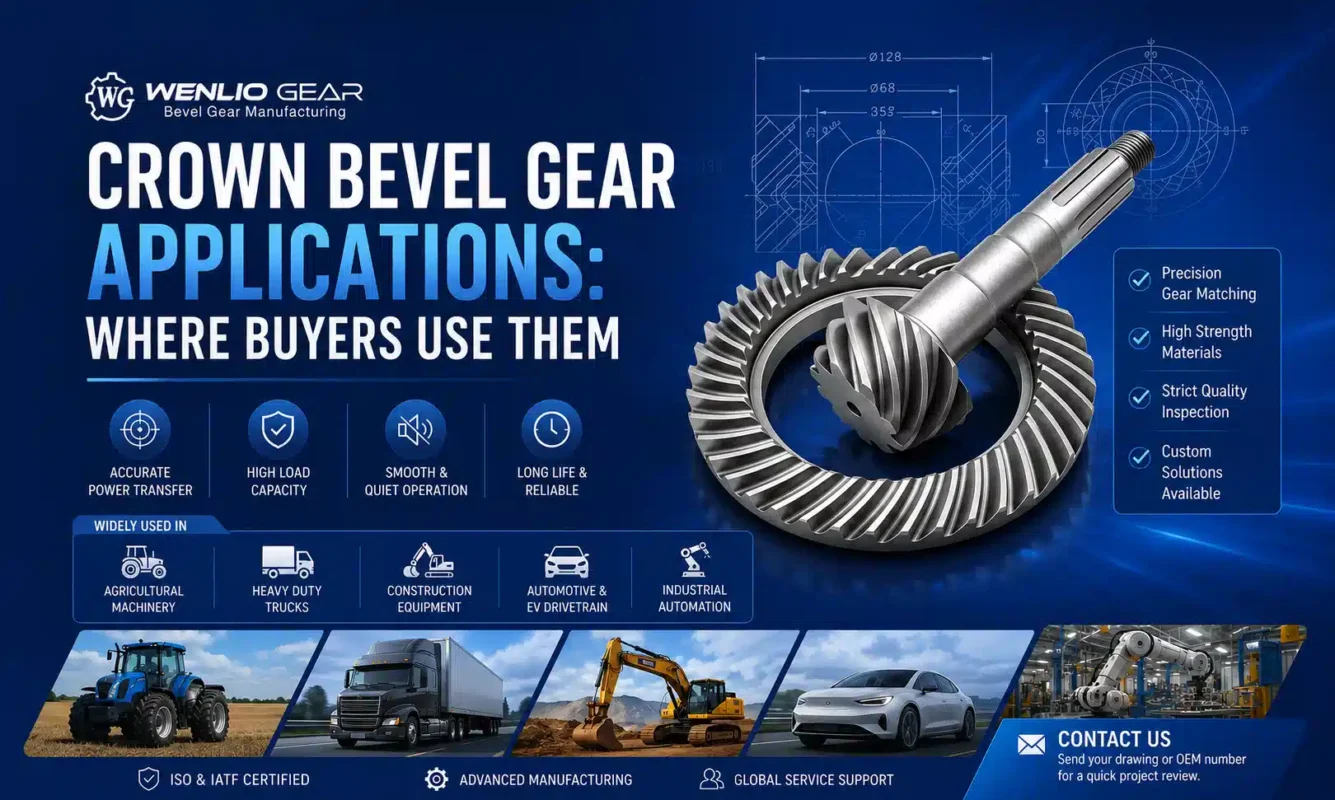
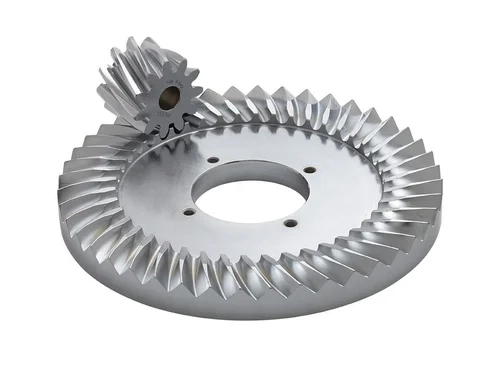
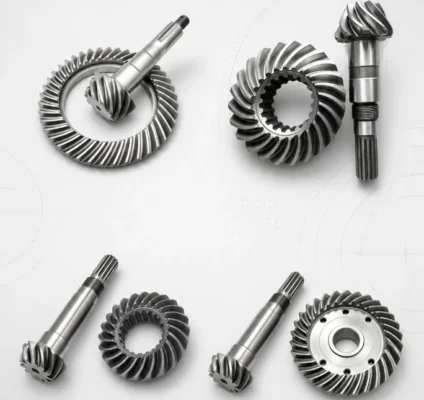
At Wenlio Gear, crown bevel gear questions usually start from application layout, not from theory. A buyer may need to move power through 90 degrees inside a tight space, fit a face-style bevel gear into an existing assembly, or replace a worn part where the original data is incomplete. Application context matters because a crown bevel gear is selected to solve a compact right-angle gear layout, not simply to use an unusual tooth form. Wenlio crown bevel gears are part of the main bevel gear family and support several compact drive applications.
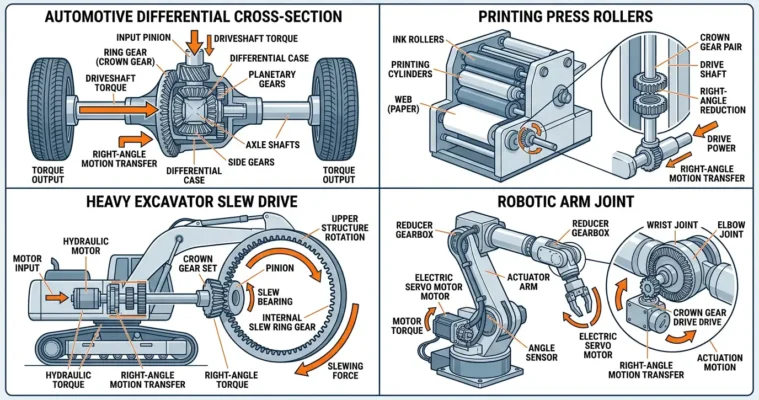
The useful question is not only “What is a crown bevel gear?” A better buyer question is where this gear form fits, which mating conditions matter, and what should be confirmed before quotation or manufacturing. In Wenlio projects, crown bevel gear applications are often discussed around motorcycles, agricultural tractors, industrial robots, and selected heavy-duty drive layouts. These examples help buyers connect the gear form with real sourcing needs instead of treating it as an abstract geometry topic.
Quick Answer: Where Are Crown Bevel Gears Used?
Crown bevel gear applications usually involve compact right-angle drive layouts where a face-style bevel gear form helps transfer motion or torque under specific space, mating, and installation constraints.
Why Buyers Choose Crown Bevel Gears
Space and shaft direction often drive the decision.
Many buyers do not begin with a gear-family preference. They begin with a packaging problem. The machine needs a right-angle motion path, the installation envelope is limited, and the mating gear form must be reviewed together with nearby parts. Crown bevel gears are often considered in this compact layout.
One gear cannot be judged alone.
A crown bevel gear project is not only about one gear blank or one outside diameter. The important review covers the relationship between the face-style member and its mating gear, the available mounting space, and the working condition. Treating the part as a simple catalog item can create avoidable quoting or matching problems later.
Application conditions guide the manufacturing route.
Once a crown bevel gear appears in a project, the review usually expands to load, speed, lubrication, mating geometry, material, heat treatment, and inspection. Wenlio reviews these items together so the gear can be planned as part of a working drive layout, not as a stand-alone shape.
Common Crown Bevel Gear Applications
| Application Area | Why Buyers Consider Crown Bevel Gears | What Usually Matters Most |
| Motorcycles | Compact right-angle drive layout | Space, mating condition, speed, lubrication |
| Agricultural tractors | Angle drive under load and field conditions | Durability, mounting, heat treatment, inspection |
| Industrial robots | Compact right-angle motion transfer | Accuracy, consistency, installation space |
| Heavy-duty vehicle drive layouts | Right-angle power transfer in demanding assemblies | Load, dimensional fit, material route, repeatability |
Wenlio groups crown bevel gear applications around these real use cases because buyers usually select this gear family for layout and matching reasons. The application should stay at the center of the discussion before quotation, sample review, or production planning begins.
Who Should Review the Crown Bevel Gear Application?
- Sourcing teams
collect drawings, samples, quantity plans, and quotation requirements. - Design engineers
review the right-angle layout, mating gear, and performance target. - Assembly engineers
confirm installation space, mounting references, and fit. - Quality engineers
define inspection items before approval. - Maintenance teams
explain wear condition when the project starts from a used sample. - Project managers
balance prototype timing, approval steps, and repeat production.
A crown bevel gear project moves more smoothly when these roles understand why the application uses this gear form instead of treating it as just another bevel gear.
Crown Bevel Gear Applications by Industry
How Application Fit Improves the Project
| Project Result | What Improves | Why It Helps |
| Better gear selection | The gear form matches the real layout | Reduces redesign risk |
| Better quote accuracy | The supplier understands the working condition | Fewer hidden assumptions |
| Better manufacturability review | Mating, space, and process route are checked together | Fewer production surprises |
| Better inspection planning | Tests match the application risk | Easier approval before shipment |
| Better service reliability | Material, heat treatment, and geometry fit the use case | Lower wear and fitting risk |
This is why crown bevel gear sourcing should start from the machine layout, not from the part number alone. Once the application is clear, the quotation, process route, and inspection plan become much more meaningful.
What Buyers Should Confirm Before a Crown Bevel Gear Quote
Mating gear and motion path
First, look at the mating gear and the overall motion path. You cannot properly review a face-style gear unless you understand how it meshes and how motion moves through the system.
Project input type
Next, confirm what project data is available. Drawings, samples, or both can all support the review, but each option brings a different level of risk and leaves a different number of unknowns.
Service conditions
Then, define the real service conditions. Speed, torque, lubrication, installation space, and duty cycle all shape the manufacturing route and inspection focus.
Material and heat treatment
After that, choose the right material and heat-treatment route. Common options include steels such as 16MnCr5, 20CrMnTi, or SAE 8620, together with carburizing, quenching and tempering, or nitriding, depending on project needs.
Approval reports
Finally, make the approval requirements clear. Buyers should state in advance whether they need dimensional reports, material certificates, heat-treatment test results, accuracy measurements, or other inspection records before shipment.
Why Choose Wenlio for Crown Bevel Gear Projects
At Wenlio Gear, crown bevel gear work is reviewed through a broader bevel gear workflow. Our team does not stop at “can this tooth form be machined.” We review the application, mating condition, process route, heat-treatment plan, and inspection evidence needed to make the project repeatable.
Buyers can start with the project inputs they usually have in real sourcing work: drawings, samples, speed and load notes, lubrication requirements, and quantity plans. This matters because crown bevel gear applications are often sensitive to layout and matching, so a useful supplier should connect application review with manufacturing and inspection from the start.
FAQ
Q1: Where are crown bevel gears most commonly used?
Buyers often use crown bevel gears in compact right-angle drive layouts, including motorcycles, agricultural tractors, industrial robots, and selected heavy-duty vehicle drive projects.
Q2: Are crown bevel gears only for light-duty applications?
No. Application suitability depends on layout, load, material route, heat treatment, and inspection requirements. The same gear family can serve different duty levels when the project is reviewed correctly.
Q3: Can a crown bevel gear be quoted from a sample?
Yes. A quotation can often start from a drawing or sample, but mating information, application details, and inspection expectations improve quote accuracy.
Q4: Which information should buyers send first?
The most useful starting package is the drawing or sample, mating-part information, speed and load data, lubrication notes, quantity, and inspection expectations.
Q5: Which reports should buyers ask for before shipment?
Buyers should confirm dimensional, material, heat-treatment, and accuracy-related reports, plus any additional checks required for the application.
Conclusion
Crown bevel gear applications make the most sense when buyers start from the drive layout they are trying to solve. In compact right-angle applications, the question is rarely just whether a crown bevel gear can be made. The more important question is whether the gear form, mating condition, material route, and inspection plan all fit the machine it will run in.
If you are reviewing a motorcycle, tractor, industrial robot, or heavy-duty drive project and want to know whether a crown bevel gear is the right direction, Contact Us with your drawing, sample, or application details so Wenlio can review the layout and manufacturing path from the start.
