
Blogs, Bevel Gear
What to Confirm Before Ordering Straight Bevel Gears
Jun
Introduction
At Wenlio Gear, straight bevel gear projects often look simple at first. The teeth are straight, the layout is usually a right-angle drive, and the buyer may already know the target ratio or basic dimensions. But in real ordering work, the mistakes usually do not come from the obvious points. They come from missing data before quotation, unclear shaft angle, incomplete drawing details, or assumptions about backlash, heat treatment, and inspection that were never aligned before production.
That is why ordering straight bevel gears should start with confirmation, not only with price comparison. In many projects, a buyer already knows the application is an intersecting-shaft layout, often 90 degrees, and expects the gear to be easier than a spiral bevel set. Sometimes that is true. Even so, the gear still has to match the mounting condition, material route, and quality target of the real machine. When those inputs are clear, the quote is more reliable, prototype approval moves faster, and production risk drops.
What to confirm before ordering straight bevel gears
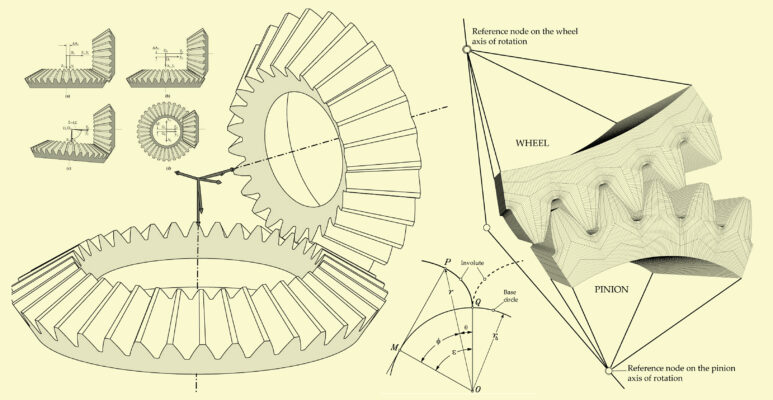
Before ordering straight bevel gears, buyers should confirm the gear geometry, shaft angle, mating relationship, material, heat treatment, backlash, runout, and inspection requirements needed for the real application.
Why these checks matter before you place the order
Because a straight bevel gear is still a working transmission part, not just a machined component.
Even when the tooth form is simpler than a spiral bevel gear, the part still has to mesh correctly, fit the housing, and carry the expected load without excessive noise or wear.
Because missing information creates hidden assumptions in the quote.
If the drawing is incomplete or the supplier has to guess the module, pressure angle, shaft angle, or heat-treatment route, the first quotation may look fast but may not be stable enough for approval.
Because ordering errors are usually harder to fix after cutting and heat treatment.
A wrong shaft angle, an unclear datum, or an unfinished inspection requirement can affect contact, backlash, fit, and rework cost long after the RFQ stage is over.
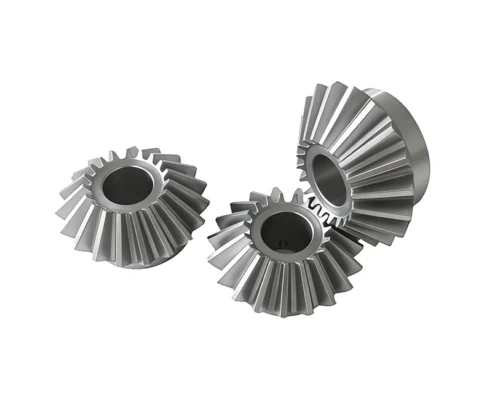
The key items buyers should confirm before ordering
| Item | What to confirm | Why it matters |
| Gear type | Straight bevel gear, not spiral, hypoid, or zerol | Prevents the wrong process route from the start |
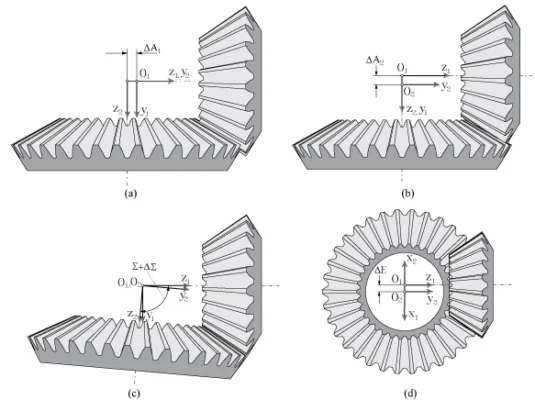
| Shaft angle | Usually 90°, or the exact required angle | Defines layout and mating geometry |
| Tooth count and ratio | Pinion and gear tooth numbers | Confirms transmission function |
| Module or DP | Metric module or diametral pitch | Directly affects tooth size and compatibility |
| Pressure angle | Standard or customer-specific value | Influences meshing and tooling |
| Bore and mounting features | Bore, keyway, spline, hub, flange, datum | Affects assembly and positioning |
| Material | Required steel grade or approved alternative | Controls strength, wear behavior, and cost |
| Heat treatment | Carburizing, induction hardening, nitriding, or none | Affects durability, hardness, and distortion |
| Backlash target | Standard range or project-specific requirement | Affects running smoothness and fit |
| Runout limit | Radial runout or datum-related requirement | Affects vibration, noise, and rotational stability |
| Inspection scope | Dimensional, hardness, tooth geometry, material cert | Defines what approval actually means |
| Quantity plan | Prototype quantity and expected batch demand | Helps choose tooling, process, and lead time |
Who should review the order package
- Buyers preparing the RFQ and comparing quotations
- Design engineers checking shaft angle, ratio, and fit logic
- Quality engineers defining inspection and acceptance format
- Assembly engineers reviewing mounting references and backlash expectations
- Service or maintenance teams if the order is for replacement parts
- Project managers coordinating prototype timing and production release
A straight bevel gear order becomes easier when these people are aligned before the supplier starts manufacturing review.
What the drawing and gear data should include
A straight bevel gear drawing does not need to be overcomplicated, but it does need to be complete enough for manufacturing and inspection. The goal is to define not only the part shape, but also the functional relationship between the mating gears.
| Drawing or data item | What should be included | Why buyers should care |
| Basic gear data | Tooth count, module/DP, pressure angle, face width | Defines the gear itself |
| Pair logic | Mating part reference or pair information | Reduces mismatch risk |
| Angle information | Shaft angle and cone-related reference where needed | Keeps the layout correct |
| Mounting dimensions | Bore, keyway, spline, hub, shoulder, flange | Prevents fit problems |
| Material callout | Steel grade or approved equivalent | Avoids later substitution disputes |
| Heat-treatment note | Hardness target, case-depth expectation, or route | Aligns durability with the application |
| Tolerance notes | Runout, fit, concentricity, perpendicularity if needed | Helps assembly and rotation quality |
| Inspection request | What reports are required before shipment | Makes approval faster and clearer |
If a full drawing is not available, the order package should still include whatever the buyer can provide: sample photos, key dimensions, OEM reference, mating-part data, and a short note on how the gear is used in service. That often makes the difference between a rough quote and a usable one.
What good pre-order confirmation improves
| Project result | What improves | Why it helps |
| Better quote accuracy | Less guesswork in process and material | Reduces price revision risk |
| Faster engineering review | Clearer data from the beginning | Shortens RFQ turnaround |
| Better assembly outcome | More consistent fit and backlash control | Lowers rework at installation |
| Better running behavior | Better control of tooth geometry and runout | Helps reduce noise and uneven wear |
| Better prototype approval | Reports match the real project target | Makes validation easier |
| Better batch consistency | Same assumptions from sample to production | Lowers variation between lots |
Good preparation does not only help the supplier. It helps the buyer avoid the most common ordering problem: receiving a part that looks correct but does not behave correctly in the machine.
Supplier selection tips before order release
Choose a supplier that reviews the application, not only the drawing.
A good straight bevel gear supplier should ask about shaft angle, mating condition, load, speed, and inspection expectations.
Confirm whether the supplier supports both prototype and repeat production.
The first approved gear should become the basis for stable later batches, not a one-time success.
Ask what inspection data will be provided before shipment.
For many straight bevel gear projects, dimensional checks, hardness data, and runout-related results are at least as important as the general appearance of the part.
Make sure material and heat treatment are discussed together.
Material choice alone does not define performance. The final result depends on how the steel and heat-treatment route work together.
Do not approve the order based on geometry alone.
Straight bevel gears are easier to describe than some other bevel forms, but the order should still be judged by fit, process route, and approval evidence.
Why Choose Us
At Wenlio Gear, we handle straight bevel gear projects with the same practical mindset we apply across our broader bevel gear work. That means we review the drawing or sample together with the application, the shaft layout, the material route, and the inspection needs before moving into production.
We also understand that buyers do not only need gears that can be cut to size. They need gears that can be quoted clearly, approved with confidence, and produced consistently. That is why our workflow connects early technical review, material and heat-treatment planning, dimensional and gear inspection, prototype support, and repeat manufacturing into one process.
FAQ
Q1: What is the first thing to confirm before ordering straight bevel gears?
The first thing is whether the project is really a straight bevel gear application, followed by the shaft angle and the mating relationship.
Q2: Do straight bevel gears always use a 90-degree shaft angle?
Often yes, but not always. Buyers should confirm the actual shaft angle on the drawing or in the RFQ instead of assuming.
Q3: Is module more important than material in the quote stage?
Both matter. Module defines the tooth size and compatibility, while material affects strength, hardenability, and cost.
Q4: Should buyers define backlash before ordering?
Yes, when the application is sensitive to fit, noise, or assembly behavior. A standard range may be enough in some projects, but it should still be discussed early.
Q5: What reports should buyers ask for before shipment?
That depends on the project, but common requests include dimensional reports, hardness data, material certification, and any required runout or gear-related inspection results.
Conclusion
Ordering straight bevel gears becomes much safer when the buyer confirms the functional inputs before asking the supplier to cut metal. The drawing, shaft angle, tooth count, module or DP, material, heat treatment, backlash, runout, and inspection plan all shape the final result. When those points are clear, the quote becomes more reliable and the production path becomes easier to control.
If you are preparing a straight bevel gear RFQ, replacing an existing pair, or trying to improve the quality of your quotation package, Contact Us with your drawing, sample, or application details so the technical review can start from the information that matters most.
