
Blogs, Bevel Gear
Hypoid Gear vs Bevel Gear : How to Choose
Jan
Introduction
When buyers search “hypoid gear vs bevel gear,” they are usually not looking for theory. They want to know which gear set will run cooler, last longer, carry more load, or fit a tight layout.From a supplier’s viewpoint, bevel and hypoid gear sets belong to the same family, but they behave differently because their shaft layouts are different. In production and inspection, we see the same pattern: most field issues come back to sliding losses, lubrication film strength, and contact pattern stability—not just tooth size.
Wenlio Gear provides custom bevel gear services for matched bevel and hypoid gear sets used in axles, differentials, final drives, compact right-angle stages, and other non-parallel shaft applications. This product guide explains what we supply, how to choose the right geometry, what trade-offs to expect, and what information we need to quote and keep quality repeatable from prototype to batch production.
Hypoid and Bevel Gears in Plain Terms
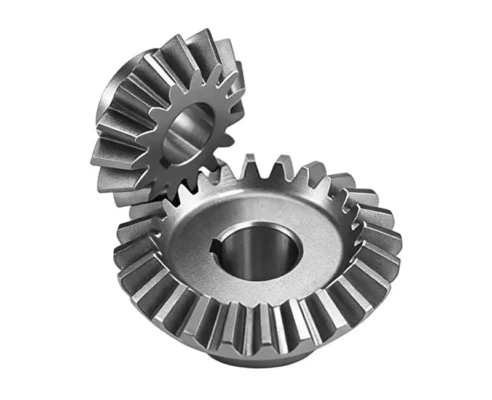
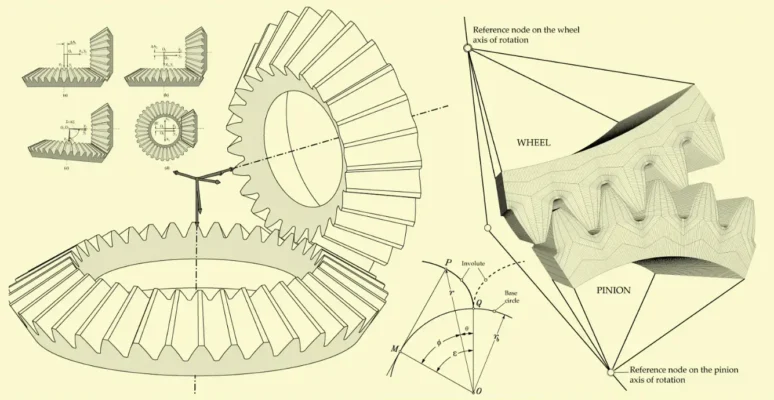
Bevel gears transmit power between intersecting shafts (commonly 90°, but other angles are possible).
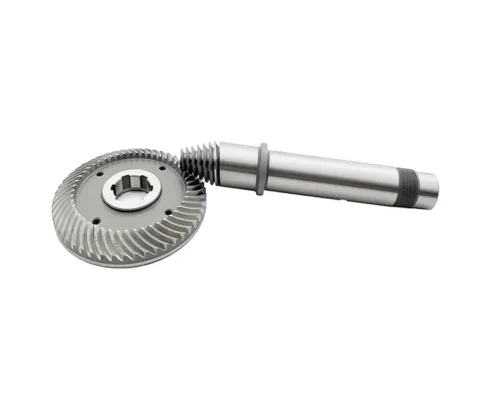
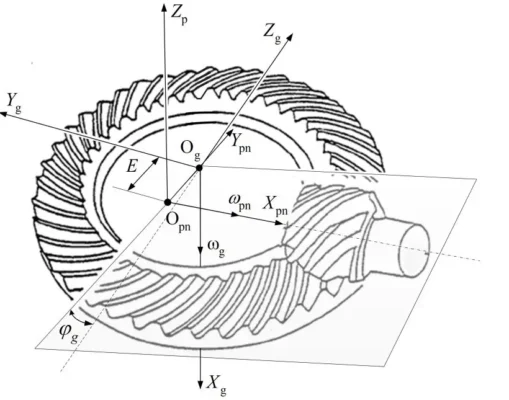
Hypoid gears belong to the bevel gear family, but their shafts do not intersect. Instead, they use an offset—the shortest distance between the pinion axis and the gear axis.
That one change (intersecting vs offset) is why hypoid sets typically see more sliding, stronger lubrication demands, and different efficiency behavior—even when they look similar to spiral bevel gears.
For purchasing and quoting, the fastest way to avoid a wrong selection is to confirm the shaft layout early: shaft angle for bevel sets, or offset value for hypoid sets. If the layout is fixed, the gear type is already 80% decided.
Why Customers Compare These Two Products
In real projects, the “right” choice is usually driven by a few practical constraints:
- Packaging and shaft layout: Do the shafts need to intersect, or is an offset layout required?
- Load and durability: Do you need higher torque capacity and smoother load distribution?
- Efficiency and heat: Is temperature rise a major risk in the application?
- Noise and smoothness: Is quiet running a hard target?
- Manufacturing cost and lead time: How complex can the cutting/finishing/inspection route be?
A bevel gear set can be the most economical and efficient answer. A hypoid set can be the better answer when packaging and load distribution matter more—if lubrication and setup can be controlled.
Product Range We Supply
Below is the common product mix customers request. We can supply single gears or matched sets, and we can align the cutting, heat treatment, and finishing route to your performance and budget target.

| Product Type | Shaft Layout | Typical Value | Typical Trade-Off |
| Straight Bevel Gear Set | Intersecting | Cost-effective, simple geometry | More sensitive to noise at higher speed |
| Zerol Bevel Gear Set | Intersecting | Between straight and spiral feel | Still needs good contact setup |
| Spiral Bevel Gear Set | Intersecting | Smoother contact, better running feel | Process control and pairing matter more |
| Hypoid Gear Set (Offset) | Offset (non-intersecting) | Strong load distribution potential, compact layout options | More sliding → higher lube sensitivity and heat risk |
| Matched Ring & Pinion Sets | Intersecting or offset | Stable backlash/contact in assembly | Requires stricter pairing/marking discipline |
Common Customization Options
To match your assembly and performance target, customers commonly customize:
- Gear ratio and tooth count (pinion/gear pairing)
- Shaft angle (bevel) or offset value (hypoid)
- Face width and load capacity target
- Bore, spline, keyway, and mounting datums
- Spiral hand and matched-set marking requirements
Where These Gear Sets Are Used Most
- Agricultural machinery: axle stages, right-angle power transfer stages, long duty cycles
- Heavy-duty trucks: axle/differential ring and pinion, high torque density, long life targets
- Construction equipment: travel and final drive stages, shock loads, harsh environments
- EV drivetrains: compact drive units where efficiency and noise both matter
- Industrial automation: right-angle stages where repeatability and smooth motion are required
The Product Differences That Matter in Performance
This section helps procurement and engineering teams align quickly. If you tell us what you care about most (heat, life, noise, packaging, cost), we can recommend the best route.
| Topic | Bevel Gear Set (Intersecting) | Hypoid Gear Set (Offset) | What This Means for Your Order |
| Shaft relationship | Shafts meet at one point | Shafts do not meet; there is offset | Layout constraints decide geometry first |
| Sliding vs rolling | Typically more rolling proportion | Typically more sliding due to offset | Hypoid needs stronger lubrication planning |
| Contact behavior | Contact area can be smaller | Contact ratio can be higher | Hypoid can share load well if setup is right |
| Heat tendency | Often easier to keep cool | More heat risk if oil film is weak | Oil viscosity and surface finish become more critical |
| Efficiency | Often higher (less sliding loss) | Often slightly lower (more sliding loss) | Important for energy-sensitive systems |
| Noise / smooth running | Spiral bevel runs smoother than straight | Can run very smooth when tuned well | Finishing route + contact pattern are key |
| Process complexity | Generally simpler cutting/finishing control | More complex geometry and control | Impacts lead time and cost |
| Inspection focus | Size + runout + contact evidence as needed | Same, but contact stability is more sensitive | Matched set discipline matters |
Factory-view note: the biggest practical win is not one magic parameter. It is stable contact behavior (pattern position and edge-load control), surface condition, and lubrication fit for your speed/load/temperature.
Lubrication and Surface Finish Notes
Most hypoid-vs-bevel debates end up at the same place: sliding and oil film. Offset geometry usually increases sliding, so the oil has to do more work. If the oil film is weak or contaminated, you will see heat rise first, then surface distress and faster wear.
From a product selection viewpoint, you do not need to specify an exact oil brand. What helps most is to define the operating window and constraints early:
- Operating temperature range (normal and peak)
- Viscosity range you plan to use (or what your system can support)
- Oil delivery method (splash, pump, or limited lubrication)
- Any contamination risk (dust, water, metal particles) and your filtration level
What You Gain When the Right Set Is Chosen
| Target Outcome | Bevel Set Tends to Be Strong When… | Hypoid Set Tends to Be Strong When… |
| Higher efficiency | Sliding loss must be low | You accept some sliding loss for layout/load benefits |
| Lower running temperature | Lubrication is moderate and speed is controlled | Oil film is strong and setup is stable under load |
| Higher load capacity in compact space | Load is moderate and layout allows intersecting shafts | Compact packaging + higher tooth sharing is needed |
| Longer service life | Oil and alignment are stable | Oil management and contact tuning are well controlled |
| Cost and lead time control | Simpler route is preferred | Budget allows tighter process/inspection control |
How to Specify and Buy
If you want a quote that is fast and accurate—and a production route that is repeatable—use this checklist.
1.Fast RFQ Inputs
- Drawing or sample (sanitized drawing is OK)
- Ratio / tooth count, rotation direction
- Shaft angle (for bevel) or offset value (for hypoid)
- Load and speed range (min/nom/max if possible)
- Duty cycle (steady load or shock load, start/stop frequency)
- Mounting constraints: key datums, runout limits, space envelope
- Target: noise expectation, life expectation, or key failure you want to avoid
- Lubrication assumptions: oil type/viscosity range, operating temperature window (if known)
2.Questions to Ask a Supplier
- Do you supply matched sets, and how do you mark/pair them?
- How do you verify contact pattern (and under what condition)?
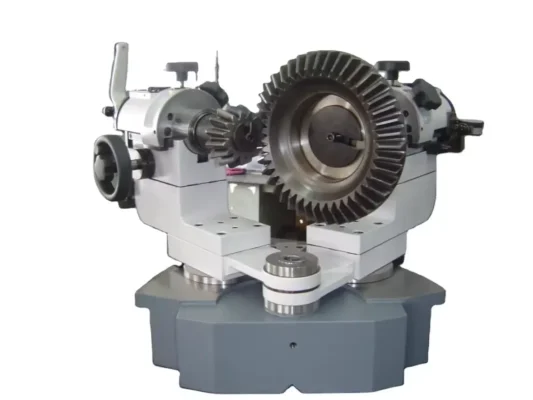
- What finishing route do you propose (lapping / grinding), and why?
- What inspection evidence will be included (runout to datums, key checks, contact evidence when required)?
These questions reduce trial-and-error cycles and improve unit-to-unit consistency, especially for matched ring-and-pinion programs.
If your assembly is sensitive, also ask how the supplier controls: (1) runout to mounting datums, (2) marking and pairing discipline, and (3) any agreed contact evidence. These are often the differences between a smooth build and repeated adjustments.
Common Selection Mistakes (and How to Avoid Them)
- Choosing hypoid for “more strength” without an oil plan: more sliding needs stronger film control and cleanliness.
- Quoting without real load/speed ranges: the finishing route and lubrication assumptions can change.
- Not defining mounting datums and runout limits: contact pattern can shift even when tooth size is correct.
- Treating matched sets as interchangeable: ring-and-pinion pairing and marking discipline matter in assembly.
What You Receive for a Matched Gear Set Order
For most programs, the goal is not only to ship gears, but to ship a gear set that can be assembled correctly and run consistently. Typical deliverables include:
- Marking and pairing instructions for matched sets (when required)
- Key inspection results tied to your datums (dimensions and runout as specified)
- Material and heat-treatment confirmation per your requirement (when specified)
- Optional contact pattern evidence for critical programs (by agreement)
- Packing method suitable for long-distance shipping (anti-rust protection + separation to avoid mix-ups)
Why Choose Wenlio Gear
- Product coverage: bevel and hypoid gear sets with a focus on precision and repeatability for non-parallel shaft drives.
- Factory process thinking: we align geometry, heat treatment and finishing so contact behavior stays stable from prototype to batch.
- Inspection that matches assembly reality: we prioritize datums/runout control and contact behavior—not only basic dimensions.
- Clear project communication: you send drawings/samples and operating conditions, and we respond with a manufacturable recommendation and quote route.
Further Reading
- ISO 23509- Bevel and hypoid gear geometry (definitions and terms).
- ISO 17485- ISO system of accuracy for bevel and hypoid gears.
- ISO 10300- Load capacity calculation methods for bevel gears (series).
- ISO 12925-1- Specifications for lubricants for enclosed gear systems.
- NASA spiral bevel TCA report- Tooth contact analysis concepts for spiral bevel gear meshing.
- SKF oil selection guide- Oil viscosity selection parameters and practical guidance.
FAQ
Q1: Is a hypoid gear a type of bevel gear?
Yes. Hypoid gears belong to the bevel gear family, but they use an offset shaft layout instead of intersecting shafts.
Q2: Can hypoid gears carry more load than bevel gears?
Often they can, because contact behavior can allow more teeth sharing the load. The final result depends on design, finishing, lubrication, and setup stability.
Q3: Why do hypoid gear sets run hotter in some applications?
Offset geometry typically increases sliding friction. If oil film strength is not enough, heat rises and wear can accelerate.
Q4: Which is better for efficiency—hypoid or bevel?
Bevel sets are often more efficient because they typically have less sliding loss. Hypoid can still be very efficient, but it is usually more sensitive to lubrication and temperature.
Q5: What is the fastest way to avoid a wrong selection?
Confirm the shaft layout first (angle vs offset), then share load/speed, mounting constraints, and lubrication assumptions. That is enough for a supplier to recommend the right route.
Conclusion
Hypoid and bevel gear sets solve different problems. Bevel sets usually offer higher efficiency and easier manufacturing control when shafts intersect. Hypoid sets support offset layouts and can provide strong load distribution, but they typically demand more attention to sliding, lubrication, and contact stability.
If you are planning a new bevel or hypoid gear project, localizing an existing design, or selecting a matched gear set for a demanding application, you are welcome to Contact Us to share your drawings, samples, and operating conditions with our engineering team.
