
Blogs, Bevel Gear
Bevel Gear Surface Roughness and Why It Matters
Mar
Introduction
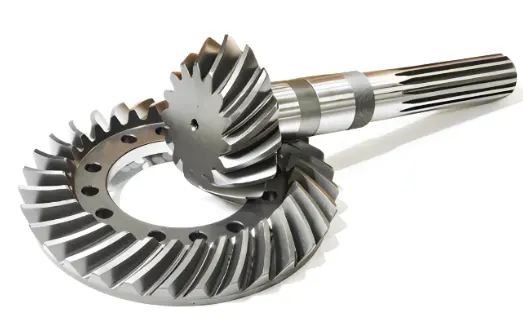
Surface roughness sounds like a small detail, but on bevel gears it often becomes a real performance issue. A bevel gear may meet drawing dimensions, pass basic tooth geometry checks, and still run noisy, hot, or show early wear if the tooth surface condition does not match the application. That is especially true in right-angle drives, differentials, final drives, and other systems where contact pattern stability matters.
At Wenlio Gear, we see surface roughness come up not only in finishing discussions, but also in failure analysis. Customers may describe the problem as noise, pitting, scuffing, or unstable contact, yet the root cause often includes how roughness interacts with lubrication, heat, and load distribution. This guide explains bevel gear surface roughness from a practical engineering view—what it is, why it matters, where it shows up in real service, and what to include in an RFQ if you want stable results.
What bevel gear surface roughness is
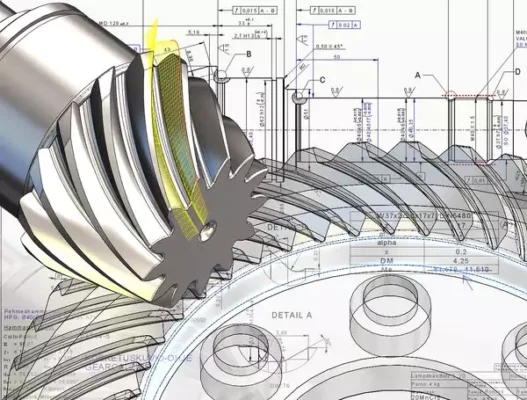
Bevel gear surface roughness is the microscopic peak-and-valley texture left on the tooth surface after manufacturing, and it directly affects contact, lubrication, noise, and wear behavior in mesh.
Why surface roughness matters on bevel gears
It changes how the tooth surfaces actually touch
On paper, a bevel gear tooth profile may look correct. In operation, however, real contact happens between two finished surfaces, not between two perfect geometric models. If the surface is too rough, the first contact occurs on local peaks, which raises local pressure and increases the chance of early wear or heat buildup.
It affects lubrication more than many people expect
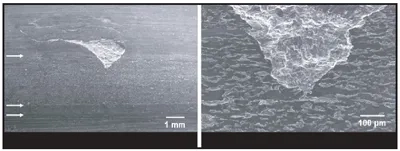
Bevel gears do not run on geometry alone. They run on a thin lubricant film that has to survive load, speed, temperature, and contamination. When the surface is too rough for the oil film thickness available in service, metal-to-metal interaction increases. That can accelerate micropitting, scuffing, or polishing wear.
It can change NVH and service life even when the drawing looks fine
A rough surface may increase frictional noise, disturb smooth rolling-sliding balance, and make the contact patch behave less consistently. In practice, this means surface roughness is not only a finishing parameter. It is part of the durability and noise strategy.
The surface conditions engineers usually compare
| Surface condition | Typical source | What it usually means in service | Main risk |
| Rough machined tooth surface | After coarse cutting or before final finishing | Higher friction and stronger peak contact | Noise, rapid initial wear |
| Fine finished tooth surface | After controlled grinding, lapping, or fine finishing | More stable contact and smoother running | Cost/process sensitivity |
| Over-polished surface | Very low roughness without matching lube strategy | Can reduce oil retention in some cases | Lubrication behavior may change |
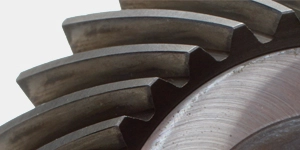
| Damaged service surface | Wear, scuffing, contamination, or poor lubrication | Surface no longer reflects original process | Heat, vibration, distress progression |
A practical point: lower roughness is not always “better” by itself. The correct target depends on load, lubricant, contact pattern, and the finishing route used for the gear pair.
Where bevel gear roughness matters most
- Differential and final drive bevel gear sets
- Tractor and agricultural right-angle gearboxes
- Construction equipment drivetrains
- Industrial right-angle reducers
- High-speed bevel gearboxes with NVH sensitivity
- Rebuild programs where mating parts and lubrication history vary
In these applications, roughness interacts with more than just the gear tooth. It also interacts with assembly accuracy, housing stiffness, lubricant cleanliness, and temperature rise over duty cycle.
What surface roughness changes in real operation
| Performance area | Why roughness matters | What you should watch |
| Contact pattern stability | Peaks change how the load first enters the mesh | Uneven marking, edge contact sensitivity |
| Wear resistance | Rough peaks break down faster under load | Rapid running-in, polishing, scoring |
| Noise and vibration | Surface friction and unstable micro-contact raise NVH | Whine, rough-running feel, temperature-linked noise |
| Lubrication behavior | Roughness affects oil film formation and retention | Micropitting, scuffing, local overheating |
| Fatigue life | Rough valleys can act as stress concentration sites | Surface distress and reduced durability |
| Inspection consistency | Roughness changes measured and perceived quality | Harder correlation between bench check and field behavior |
This is why roughness should not be treated as an isolated number. On bevel gears, it belongs in the larger discussion of tooth geometry, heat treatment, pattern control, and assembly condition.
What a well-controlled roughness target improves
| Goal | What improves | Why it helps |
| Smoother running | More stable contact and lower friction spikes | Better NVH and operator feel |
| Longer surface life | Lower peak stress on microscopic asperities | Slower wear and less early distress |
| Better lubrication performance | Surface finish better matches oil film conditions | Lower scuffing and micropitting risk |
| More repeatable validation | Bench results correlate better with field performance | Less guesswork in prototype approval |
| Stronger batch consistency | Finishing quality becomes measurable and controlled | Fewer complaints across production lots |
A useful rule is this: if your bevel gear program is sensitive to noise, heat, or early wear, surface roughness deserves the same attention as tooth profile and backlash.
Supplier selection tips for roughness-related RFQs
- Ask for the roughness target together with the process route. A number alone is not enough; grinding, lapping, and other finishing methods create different textures even at similar Ra values.
- Define where the requirement applies. Clarify whether the target applies to the full tooth flank, the active contact zone, or a specific inspection location.
- Connect roughness to duty cycle and lubrication. Share speed, torque, oil type, contamination risk, and temperature range so the target matches real service.
- Align roughness with contact-pattern and geometry checks. Roughness should sit beside profile, lead, runout, and contact evidence—not replace them.
- Ask how the supplier verifies consistency across batches. The real question is not whether one part can hit a number once, but whether the process can keep that result stable.
Why Choose Us
Wenlio Gear supports precision bevel gear projects with an emphasis on geometry control, surface condition consistency, and inspection evidence that reflects real operating behavior.
For bevel gear programs, we help customers connect tooth geometry with practical finishing and verification requirements. That includes aligning surface condition expectations with duty cycle, lubrication method, contact-pattern stability, and inspection planning, so the gearset is evaluated as a working transmission component rather than as an isolated dimension.
We also focus on repeatability. That means not only defining the target, but making sure the chosen process route and inspection method can support comparable results from prototype validation to batch production.
FAQ
Q1: Is lower roughness always better for bevel gears?
A: Not automatically. Lower roughness often helps smoothness and wear resistance, but the correct target still depends on lubricant, speed, load, and the finishing route.
Q2: Which roughness parameter matters most, Ra or Rz?
A: Ra is widely used, but it should not be the only reference. Rz and the actual surface texture can matter because bevel gear contact responds to peak and valley behavior, not only to an average value.
Q3: Why can a bevel gear be noisy even if the geometry is correct?
A: Because geometry is only part of the picture. Surface roughness, lubrication, mounting distance, backlash, and contact pattern can all change how the mesh behaves in operation.
Q4: Does roughness affect contact pattern checks?
A: Yes. A rougher tooth surface can influence the initial marking and load distribution behavior, especially during early running-in or under light-check conditions.
Q5: What should I include in an RFQ if roughness matters?
A: Include the target roughness, finishing route if known, duty cycle, lubrication method, application environment, and the geometry or inspection evidence you want alongside roughness.
Conclusion
Bevel gear surface roughness is not just a surface-quality number for a report. It influences how the tooth pair carries load, how the lubricant film survives, how much noise the gearbox generates, and how quickly wear or pitting may start. In other words, roughness belongs in the same engineering conversation as tooth profile, backlash, contact pattern, and heat treatment.
If you are developing a bevel gearset, troubleshooting gear noise or surface distress, or preparing an RFQ that needs more than a generic finish callout, you are welcome to Contact Us with your drawings and operating conditions so we can help align surface finish targets with a practical manufacturing and inspection plan.
