
Blogs, Bevel Gear
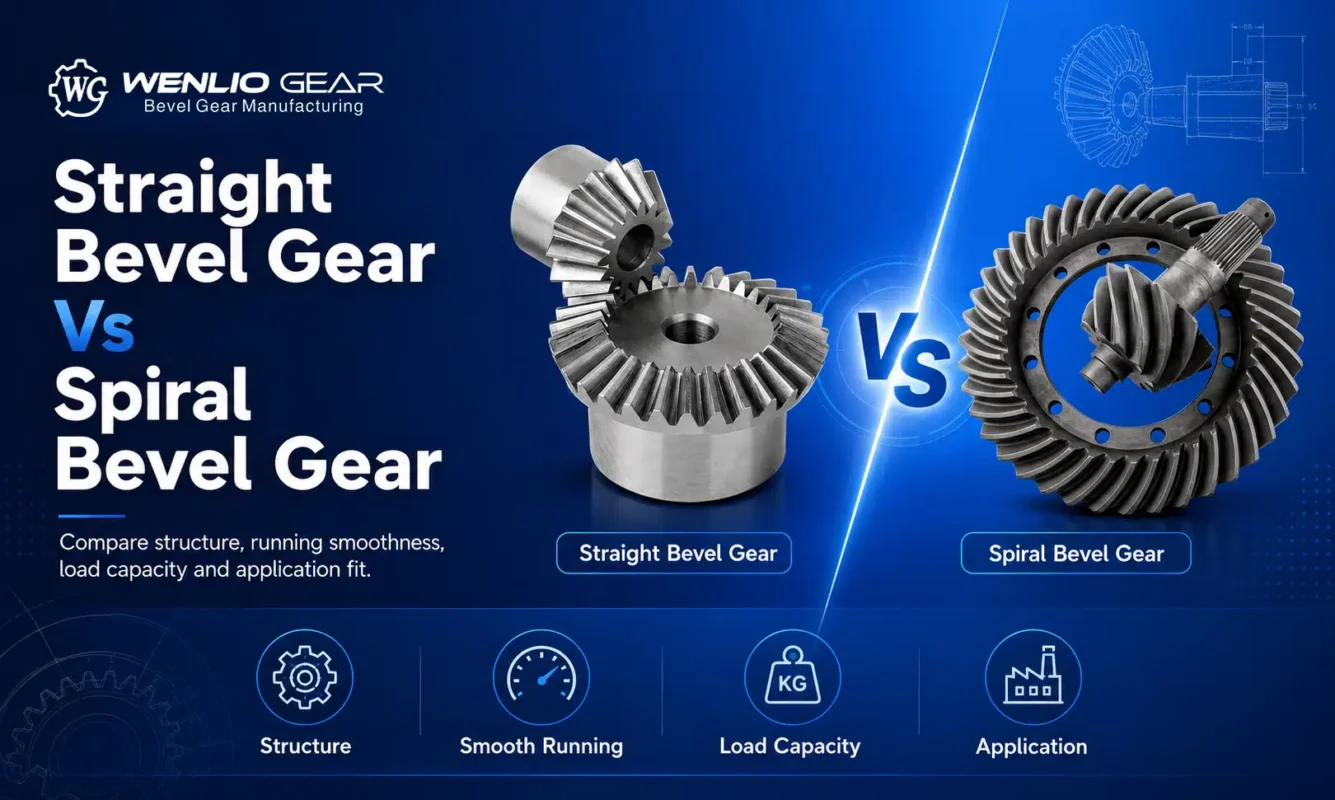
Straight Bevel Gear vs Spiral Bevel Gear
May
Introduction
Straight bevel gears and spiral bevel gears both transfer power between shafts that meet at an angle, often 90 degrees. The main difference is easy to see: straight bevel gears have straight teeth, while spiral bevel gears have curved teeth. But in real use, this small difference changes a lot. It affects how the gears mesh, how much noise they make, how they carry load, and how strict the manufacturing process needs to be.
For buyers, this is not just a drawing detail. The wrong gear type can lead to poor contact, early wear, extra noise, or unnecessary cost. Wenlio Gear works on custom bevel gear projects based on drawings, samples, OEM numbers, photos, dimensions, and application data. This article explains the difference between straight bevel gears and spiral bevel gears in a simple, practical way, so engineers, sourcing teams, and maintenance buyers can make a better decision before production starts.
What Is the Difference Between Straight Bevel Gear and Spiral Bevel Gear?
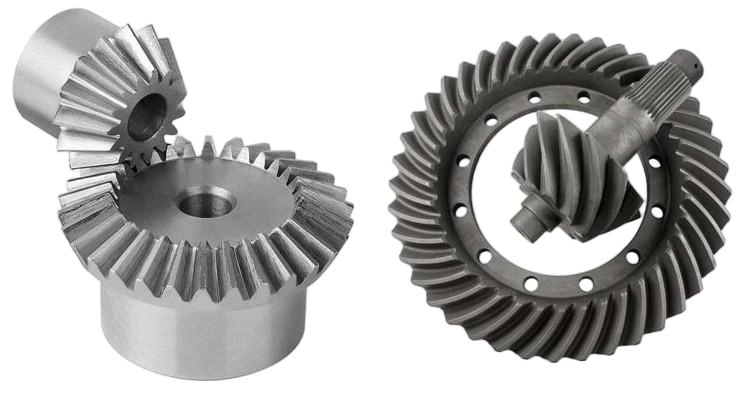
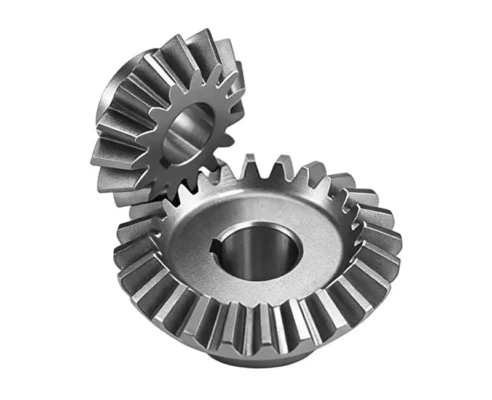
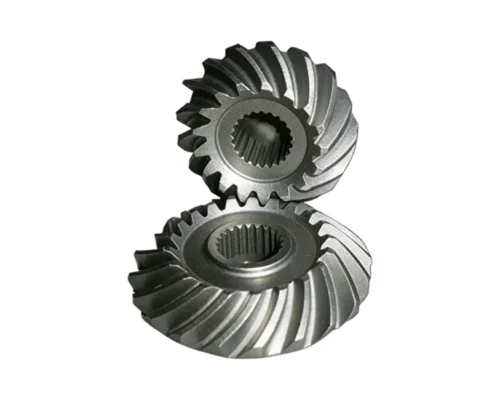
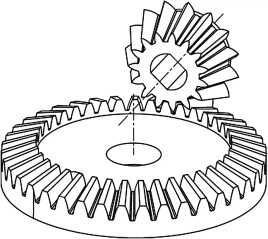
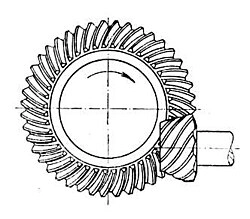
A straight bevel gear has straight teeth cut along the cone surface, while a spiral bevel gear has curved teeth that enter mesh more gradually.
This is the main difference. A straight bevel gear has a simpler tooth shape and is usually easier to manufacture. A spiral bevel gear has a more complex tooth form, but the curved tooth line allows smoother contact and better load sharing when the gear pair is designed and made correctly.
In simple terms, straight bevel gears are often chosen for simpler, lower-speed, cost-sensitive applications. Spiral bevel gears are often chosen when the application needs smoother running, lower noise, higher load capacity, or better performance at speed.
Why Does the Difference Matter?
The difference matters because bevel gears do not work alone on a drawing. They work inside a real machine, with shafts, bearings, housing stiffness, lubrication, heat treatment, and assembly conditions. A small change in tooth form can change the whole behavior of the transmission.
Straight bevel gears engage more directly. This can be acceptable in many low- to medium-speed applications, especially when the load is not too severe and noise is not the main concern. The benefit is that the gear is simpler, easier to understand, and usually more economical to produce.
Spiral bevel gears engage more gradually. More than one part of the tooth surface may share the load during operation, which helps the gear run more smoothly. This is why spiral bevel gears are widely used in applications where noise, vibration, load stability, and service life matter more than the lowest initial cost.
Types of Bevel Gears Compared
| Gear Type | Tooth Form | Main Advantage | Common Limitation |
| Straight Bevel Gear | Straight teeth on a conical surface | Simple structure and lower manufacturing cost | More direct engagement, usually noisier at speed |
| Spiral Bevel Gear | Curved teeth on a conical surface | Smoother meshing, better load sharing, lower noise | More complex manufacturing and inspection |
| Zerol Bevel Gear | Curved teeth with zero spiral angle | Smoother than straight bevel in some cases, with lower axial thrust than spiral bevel | More specialized design and production |
| Hypoid Gear | Curved teeth with offset shaft axes | Compact layout and strong torque capacity | More sliding action and stricter lubrication needs |
For most projects, the real comparison is between straight bevel and spiral bevel. The right choice depends on load, speed, noise target, cost, available space, lubrication, and whether the gear needs to match an existing mating part.
Who Uses Straight and Spiral Bevel Gears?
Both straight bevel gears and spiral bevel gears are used in mechanical transmission systems, but they are chosen for different working conditions. Straight bevel gears are often used in simpler, moderate-speed applications, while spiral bevel gears are preferred where smoother meshing, lower noise, better load handling, and higher running stability are required. This difference is especially important in agricultural machinery, construction equipment, heavy-duty vehicles, industrial automation, EVs.
For replacement projects, the original tooth form must be confirmed before ordering, especially when only a sample or limited dimensions are available. A straight bevel gear and a spiral bevel gear are usually not direct substitutes, because the mating gear, mounting distance, tooth direction, contact pattern, and housing design all need to match.
Key Features of Straight Bevel Gear vs Spiral Bevel Gear
| Item | Straight Bevel Gear | Spiral Bevel Gear |
| Tooth Shape | Straight tooth line | Curved tooth line |
| Meshing Style | More direct tooth contact | More gradual tooth contact |
| Running Noise | Usually higher at medium or high speed | Usually lower when correctly made and assembled |
| Load Sharing | More limited contact continuity | Better load sharing across the tooth surface |
| Manufacturing Difficulty | Simpler | More complex |
| Cost Level | Usually lower | Usually higher |
| Inspection Focus | Dimensions, runout, backlash, contact pattern | Contact pattern, backlash, mounting distance, handedness, surface quality |
| Speed Suitability | Low to medium speed | Medium to high speed |
| Typical Fit | Simple right-angle drives, moderate load, cost-sensitive projects | Higher load, smoother operation, lower noise, stricter applications |
This does not mean spiral bevel gears always give the better result. They solve a different problem. If the working condition does not require a spiral tooth form, a well-made straight bevel gear may be the more practical choice.
Benefits of Choosing the Right Gear Type
| Benefit | Why It Matters |
| Better Matching | The correct tooth form helps the gear pair mesh properly under real operating conditions |
| Lower Noise Risk | Spiral bevel gears can reduce harsh engagement when smooth running is required |
| Better Cost Control | Straight bevel gears can avoid unnecessary cost when the application is not demanding |
| Longer Service Life | Proper selection helps reduce poor contact, overheating, abnormal wear, and tooth damage |
| Easier Process Planning | Gear type affects cutting method, heat treatment control, finishing, and inspection |
| Safer Replacement | Correct identification prevents mismatch when producing from old samples |
| More Reliable Application Fit | The gear type can be matched to torque, speed, space, lubrication, and duty cycle |
In many projects, the mistake is not choosing a “bad” gear type. The mistake is choosing a gear type without checking the real working condition. A low-speed agricultural drive, a compact automation unit, and a vehicle-related transmission part do not need the same design logic.
How to Choose Between Straight Bevel Gear and Spiral Bevel Gear
Choose a straight bevel gear when the setup is simple, speed is low to medium, load is moderate, and cost matters. It is usually the better fit when space is available and noise control is not a major concern.
Choose a spiral bevel gear when you need smoother meshing, lower noise, higher load capacity, and better stability at speed. It performs better, but it also needs tighter control in cutting, heat treatment, finishing, and inspection.
Before choosing, check the shaft angle, ratio, module or DP, material, heat treatment, accuracy, lubrication, and whether it must match an existing mating gear. For replacement parts, the safest approach is to provide the old gear, mating gear, photos, key dimensions, and application details so the supplier can confirm the tooth form before quoting.
How to Choose a Supplier for Bevel Gear Projects
A bevel gear supplier should not simply ask, “Do you want straight or spiral?” A better supplier starts with a different question: “What does the application need?”
When comparing suppliers, check whether they can read the gear geometry, identify the tooth form, and understand how the gear will run in service. This matters even more when the buyer has no full drawing and only provides a sample, OEM number, or photos.
For straight bevel gears, the supplier should control datum, bore, runout, tooth cutting, backlash, and basic contact pattern. For spiral bevel gears, the supplier also needs to control contact pattern, mounting distance, tooth direction, heat treatment distortion, and pair matching more tightly.
Price matters, but it should not decide the project by itself. A cheaper bevel gear can become expensive if it creates noise, poor contact, repeated assembly problems, or early failure. In custom bevel gear projects, strong engineering communication and reliable inspection support matter just as much as machining capability.
Why Choose Us
Wenlio Gear works on custom bevel gear projects based on drawings, samples, OEM numbers, photos, dimensions, and application data. For straight bevel gears, spiral bevel gears, hypoid gears, zerol bevel gears, and custom gear pairs, we help buyers review the gear type together with the real working condition.
Our process covers geometry review, material selection, blank preparation, machining, heat treatment, finishing, and inspection. In bevel gear projects, we pay close attention to tooth contact, backlash, runout, hardness, surface quality, and mating behavior. These details often decide whether the gear runs smoothly, stays quiet, and lasts in service.
Wenlio Gear is suitable for buyers who need custom development, replacement gear production, small-to-medium batch manufacturing, and technical communication before production. If the original data is incomplete, we can review available samples, photos, dimensions, and application information before confirming the process route.
FAQ
Q1: Which is better, straight bevel gear or spiral bevel gear?
Neither is always better. A straight bevel gear is usually better for simpler, lower-speed, cost-sensitive applications. A spiral bevel gear is usually better when the project needs smoother running, lower noise, higher load capacity, or better performance at speed.
Q2: Are spiral bevel gears quieter than straight bevel gears?
In many cases, yes. Spiral bevel gears have curved teeth that enter mesh more gradually. This helps reduce harsh tooth impact, vibration, and noise when the gear pair is properly manufactured and assembled.
Q3: Are straight bevel gears cheaper to manufacture?
Usually yes. Straight bevel gears have a simpler tooth form and often need a simpler production route. The final cost still depends on size, material, heat treatment, accuracy, quantity, and inspection requirements.
Q4: Can a straight bevel gear replace a spiral bevel gear?
Usually not directly. The mating gear, mounting distance, tooth direction, contact pattern, and housing design must be checked. In many cases, the complete matched gear pair needs to be reviewed or redesigned.
Q5: What information is needed for a custom bevel gear project?
A drawing is best. If no drawing is available, provide samples, photos, tooth count, outside diameter, bore size, face width, module or pitch if known, mating gear details, material requirement, and working conditions.
Conclusion
Straight bevel gears and spiral bevel gears both transfer power through angled shafts, but they do not behave the same in service. A straight bevel gear is often a practical choice when the structure is simple, the speed is moderate, and cost control matters. A spiral bevel gear is usually a better fit when the project needs smoother engagement, stronger load sharing, lower noise, and more stable running.
The right choice should start from the actual duty cycle, not only the drawing shape or unit price. If you are developing a new bevel gear, replacing an existing gear, or comparing straight and spiral bevel options, you are welcome to Contact Us with your drawings, photos, dimensions, and operating conditions so the discussion can begin from the real application.
