
Blogs, Bevel Gear
What Is a Hypoid Gear and Where Is It Used
Apr
Introduction
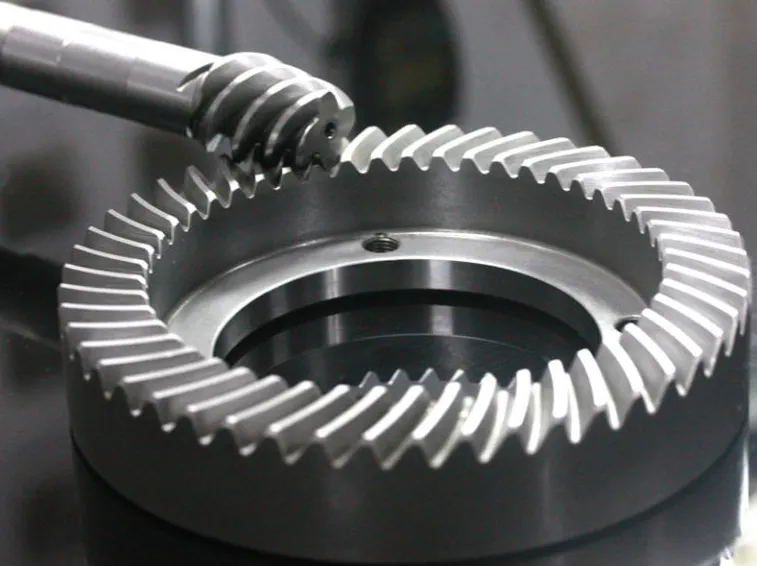
Hypoid gears often come up in the same discussions as bevel gears, especially in automotive, off-highway, and compact right-angle transmission systems. At first glance, they look close enough to spiral bevel gears that many buyers and even some non-specialist engineers group them together. In practice, though, once shaft offset enters the design, the gearset begins to behave differently in contact, packaging, lubrication, and installation.
At Wenlio Gear, we usually see hypoid projects start with an application need rather than a geometry discussion. A customer may know they need a compact right-angle drive, lower driveline height, or smoother torque transfer under load, but they may not yet be sure whether a hypoid set is truly the right answer or just the most familiar term. This article explains hypoid gears from a practical engineering point of view: what they are, why they are different, where they fit best, and what should be clarified before a project moves into production.
What a hypoid gear is
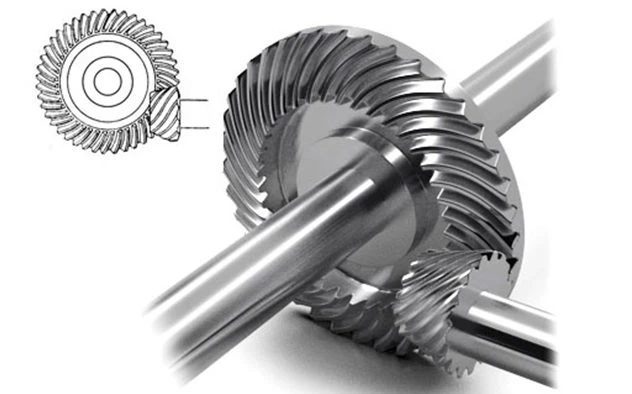
A hypoid gear is an offset-axis bevel-type gearset in which the two shafts do not intersect, allowing smooth right-angle torque transfer through a combination of rolling and sliding contact.
Why hypoid gears matter
They solve layout challenges more easily than standard bevel gears.
A typical bevel gear pair works with intersecting shafts. A hypoid gear pair introduces shaft offset, which gives designers more freedom to position the input and output axes inside a tight housing. In practical systems, that can help lower a driveline, improve space use, or simplify surrounding structure.
They change the meshing behavior in a useful way.
Because a hypoid set combines rolling with controlled sliding, it can achieve smooth transmission, a relatively high contact ratio, and strong load-sharing across the tooth surfaces. That makes it attractive in applications where compactness and torque capacity matter at the same time.
They also demand more from the rest of the system.
The same sliding component that improves layout freedom and smoothness also increases frictional heat and lubrication sensitivity. So hypoid gears are rarely just a drop-in upgrade. They need the right flank condition, the right oil, and the right installation accuracy to perform well over time.
The gear types buyers usually compare with hypoid gears
| Gear type | Shaft relationship | Best fit | Main trade-off |
| Straight bevel gear | Intersecting shafts | Simple right-angle drives | More abrupt engagement and more noise at speed |
| Spiral bevel gear | Intersecting shafts | Smooth right-angle transmission | Less packaging freedom than hypoid |
| Hypoid gear | Offset, non-intersecting shafts | Compact layouts with smooth torque transfer | Higher lubrication and setup demands |
| Worm gear set | Crossed / non-parallel shafts | Large reduction ratio in compact drives | Lower efficiency and higher sliding loss |
This comparison matters because many buyers first see hypoid gears as a variation of spiral bevel gears. That is partly true in appearance, but not enough for engineering decisions. The real question is not which one looks similar, but whether the application genuinely needs shaft offset, and whether the system can support the lubrication and setup control that come with it.

Where hypoid gears are commonly used
- Automotive rear axle final drives
- Heavy-duty equipment reduction drives
- Construction machinery transmission stages
- Compact marine drive systems
- Specialty right-angle reducers where offset layout matters
These applications are different in speed, torque, and duty cycle, but they share one common need: power has to turn through an angle without consuming too much space. In many cases, engineers choose hypoid gears because they want both a compact housing and stable torque transfer, not because they are simply chasing a specific gear name.
What makes a hypoid gear different in practice
| Design point | What it means in a hypoid gear | Why it matters |
| Axis offset | The pinion axis does not intersect the gear axis | Creates layout flexibility and distinguishes hypoid from ordinary bevel gears |
| Combined rolling and sliding | Mesh includes both rolling contact and tooth-direction sliding | Improves smoothness but raises lubrication demands |
| Larger effective contact area | Multiple teeth can share load over a broader contact zone | Helps load capacity and transmission smoothness |
| Pinion geometry freedom | Pinion size is less restricted by intersecting-axis geometry | Can improve pinion strength in compact systems |
| Higher setup sensitivity | Offset, backlash, and contact position must be controlled carefully | Affects noise, wear, and long-term durability |
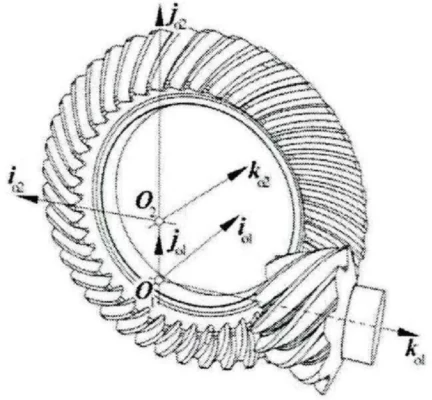
The easiest way to understand hypoid gears is to compare them with standard bevel gears. Ordinary bevel gears use intersecting shafts, while hypoid gears use offset shafts. That offset creates more sliding in the mesh, which affects flank temperature, lubrication, axial load, and sensitivity to installation error.
The offset layout also gives the pinion more design freedom, so it can often be larger and stronger than a spiral bevel pinion in a similarly compact system. That helps explain why hypoid gears are widely used in final-drive applications.
Under load, hypoid gears can transmit high torque smoothly because load is shared through a longer, more progressive contact path. But this also means they are more sensitive to mounting, backlash, and lubrication. If system control is poor, noise, heat, and uneven wear can rise quickly.
What good hypoid gear design improves
| Design goal | What improves | Why it helps |
| Smoother torque transfer | Better progressive contact | Lower noise and more stable running |
| Higher compactness | More flexible shaft positioning | Easier packaging inside tight housings |
| Better load capacity | Larger effective contact and stronger pinion design | More stable transmission under load |
| Longer service life | Better contact control and lubrication matching | Lower risk of scuffing and uneven wear |
| More practical layout freedom | Offset structure supports system packaging | Useful in drivetrains, axles, and compact reducers |
Hypoid gears are attractive not because of one feature, but because several advantages work together. They help solve packaging limits, support smooth torque transfer, and allow stronger pinion geometry in compact space. That is why they are widely used in rear axles, compact reducers, and heavy-duty right-angle transmissions.
But these benefits only appear when the design is handled as a full system. Offset distance, contact pattern, lubrication, flank finish, and bearing support all matter, and hypoid gears are not very forgiving when one of them is off.
Supplier selection tips
- Confirm whether you truly need shaft offset. If the application does not benefit from offset layout, a spiral bevel set may be easier to manufacture, easier to install, and easier to support in service.
- Ask how the supplier handles lubrication assumptions. Hypoid gears are more sensitive to sliding friction than standard bevel gears. Oil type, viscosity, temperature range, and flank condition should be discussed early, not treated as afterthoughts.
- Review contact-pattern and installation logic before production. Offset distance, backlash, and mounting condition strongly affect running noise and wear. These points should be agreed before batch production, not after field complaints appear.
- Check how pinion strength and surface finish are controlled. Hypoid performance depends on more than nominal geometry. Tooth surface quality, heat treatment consistency, and finishing route all affect how the gearset performs in real service.
- Treat the gearset as a matched pair. A hypoid project should never be reviewed one member at a time. The real behavior only shows up when the pair is considered as a working transmission set.
Why Choose Us
Wenlio Gear supports precision right-angle transmission projects with a focus on geometry clarity, real contact behavior, and application-driven manufacturing control.
For hypoid gear applications, we help customers connect shaft layout, load target, lubrication conditions, and assembly requirements into one practical plan. That includes looking at offset-related packaging needs, meshing behavior, and the inspection points that matter most once the gearset moves from drawing to production.
We also pay close attention to repeatability. In practice, that helps reduce the gap between a theoretically correct hypoid design and a gearset that actually performs well in service.
FAQ
Q1: Is a hypoid gear the same as a hypoid bevel gear?
A: Yes. Hypoid gear is the common short form, while hypoid bevel gear is the more complete term.
Q2: What is the main difference between hypoid gears and ordinary bevel gears?
A: The main difference is the shaft relationship. Ordinary bevel gears usually work with intersecting shafts, while hypoid gears use offset, non-intersecting shafts.
Q3: Why do hypoid gears need better lubrication?
A: Because their tooth contact includes more sliding. That raises frictional heat and makes the tooth surfaces more sensitive to wear and scuffing.
Q4: Are hypoid gears good for high-speed applications?
A: They can run at speed, but they are usually better suited to medium-speed, high-torque applications where smooth transmission and packaging advantages matter more.
Q5: What should I include in an RFQ for a hypoid gear project?
A: Include ratio, shaft layout, offset requirement, duty cycle, lubrication conditions, noise expectations, and any assembly targets such as backlash or mounting condition.
Conclusion
Hypoid gears are best understood as offset-axis bevel-type gearsets designed for compact, smooth, and high-load right-angle transmission. Their biggest value comes from combining layout flexibility with stable torque transfer. At the same time, their sliding contact makes them more sensitive to lubrication, installation accuracy, and flank condition than many ordinary bevel gear systems.
If you are evaluating a hypoid gear project, comparing it with a spiral bevel option, or trying to improve an existing offset-axis transmission, you are welcome to Contact Us with your drawings and operating conditions so we can help align the geometry, manufacturing route, and inspection plan with your application.
