
Blogs
What Is a Gear Tooth?
Dec
1. Introduction
In agricultural, heavy truck, construction equipment, electric vehicle and industrial automation, gears must work for many hours under heavy load. Behind every reliable gearbox or axle, one small feature does the real work: the gear tooth.
For Wenlio Gear, a precision gear manufacturer and custom gear supplier, good transmission always starts from the tooth. If each tooth has the right shape, hardness and accuracy, the whole gear set has a solid foundation. This article explains in simple language what a gear tooth is, which basic dimensions matter, what common tooth types exist, and how Wenlio Gear designs teeth for our five main sectors.
2. What is a gear tooth?
A gear tooth is one of the “little bumps” that repeat around the outside (or inside) of a gear. When two gears mesh, the teeth push on each other and pass rotation and torque from one shaft to the other. Without teeth, a gear is only a smooth wheel and cannot transmit power.
Most modern precision gears use an involute tooth profile. This special curve is widely used because it:
-keeps the speed ratio almost constant, even if the centre distance changes a little
-allows smooth rolling contact and reduces shock and noise
-follows clear international standards, which makes design, cutting and inspection easier
Whether the gear is a spur gear in a tractor, a helical gear in a truck transmission, a spiral bevel gear in an axle or a worm wheel in a lift, Wenlio Gear always asks the same question: is every tooth strong, accurate and stable enough for the real working conditions?
3. Basic gear tooth geometry
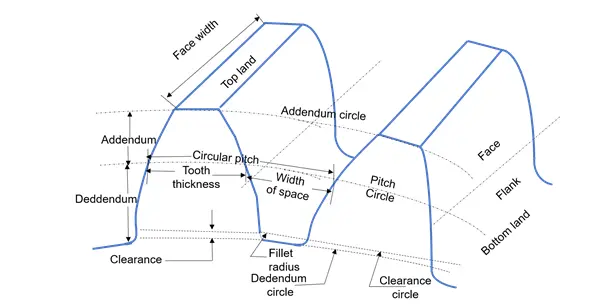
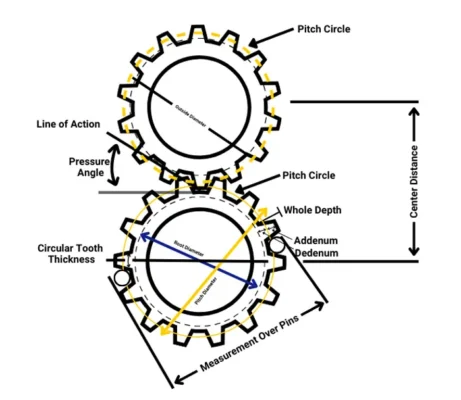
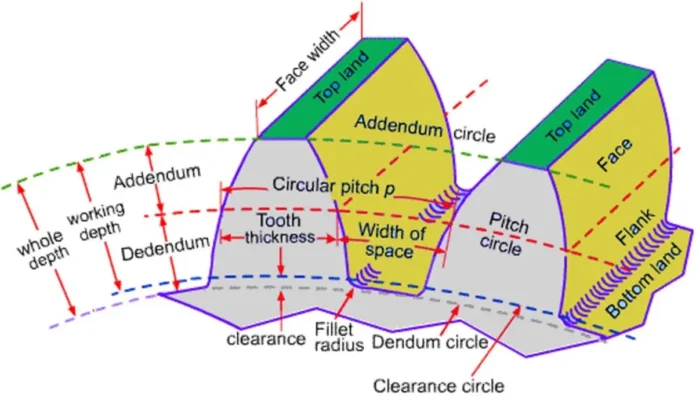
Engineers do not draw gear teeth by eye. The tooth shape follows several linked parameters. Together they decide whether two gears can mesh correctly, how much load they can carry and how much space they need.
Key parameters (simple view)
| Parameter | Plain meaning | Main effect |
| Pitch circle diameter | “Working” diameter where gears touch | Gear ratio, centre distance, size |
| Module / DP | Tooth size index (metric / inch) | Tooth strength, tool choice |
| Number of teeth | How many teeth around the pitch circle | Ratio, risk of undercut, smooth running |
| Addendum / dedendum | Tooth height above / below pitch circle | Contact area, root strength, clearance |
| Pressure angle | Direction of force along the tooth | Stiffness, load capacity, sensitivity |
| Tooth thickness / pitch | Tooth width and spacing around the circle | Backlash, fit and accuracy |
In Wenlio projects we never look at these numbers alone. We always connect tooth geometry with torque, speed, duty cycle, lubrication, material, heat treatment and the planned machining route (hobbing, skiving, shaping, grinding and so on).
4. Main gear tooth types used by Wenlio Gear
Different gear types use different tooth directions and surfaces. Below are the tooth types Wenlio Gear most often designs and manufactures.
4.1 Spur gear teeth
Spur gear teeth run straight and parallel to the shaft.
Main points:
-simplest tooth form
-easy to cut and inspect
-suitable for low to medium speeds
We use spur gear teeth in lower-speed stages of agricultural gearboxes, some auxiliary drives in trucks and construction equipment, and in automation devices where noise is not the main concern.
4.2 Helical gear teeth
Helical gear teeth are cut at a helix angle to the shaft. The tooth enters mesh gradually, starting from one side and spreading across the face.
Benefits:
-smoother and quieter running than spur gears
-more teeth in contact at the same time, so higher load capacity
-better suited to higher speeds
Wenlio Gear uses helical gear teeth in heavy truck transmissions, construction machinery reducers, EV reduction stages and industrial automation gearboxes. For demanding projects, we add profile and lead corrections and finish by grinding to balance strength, efficiency and noise.

4.3 Bevel and hypoid gear teeth
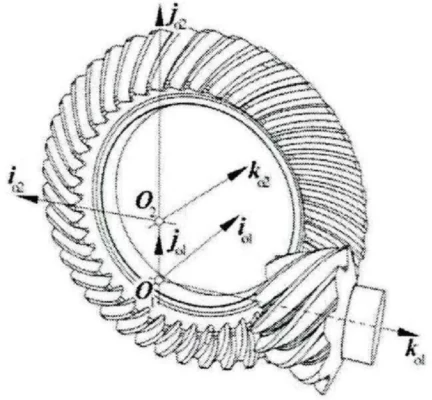
Bevel gear teeth sit on a cone and transfer power between shafts that cross, often at 90°.
Straight bevel teeth – straight lines on a cone, for medium speed and simpler duty
Spiral bevel teeth – curved lines on a cone, for smoother and stronger right-angle drives
Hypoid teeth – like spiral bevel, but with shaft offset; common in axles
These tooth forms are key in agricultural axles, truck and bus axles, final drives for construction machines and some automation gearboxes. Wenlio Gear pays special attention to tooth contact patterns, matching of ring and pinion and heat treatment so that these teeth survive high torque and shock loads.
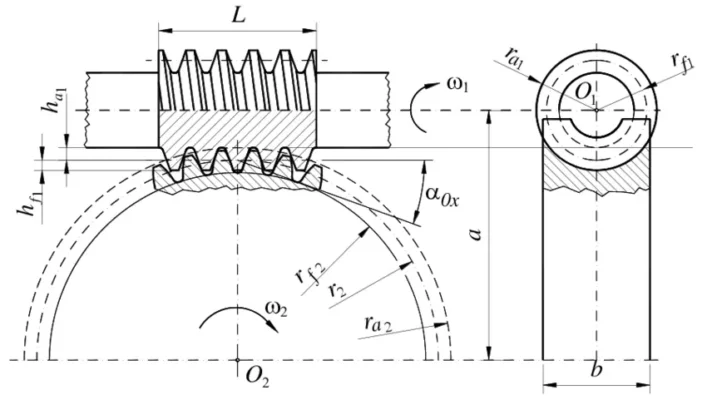
4.4 Worm gear teeth
In a worm set, the worm tooth looks like a screw thread, and the worm wheel teeth wrap around it.
Typical uses:
-very high reduction ratio in one stage
-right-angle layouts with little space
-cases where some self-locking is helpful
For selected agricultural tools, lifting devices and adjustment drives, Wenlio Gear designs worm gears with proper materials and lubrication advice, so that the teeth can handle sliding contact and wear in a controlled way.
4.5 Internal gear and rack teeth
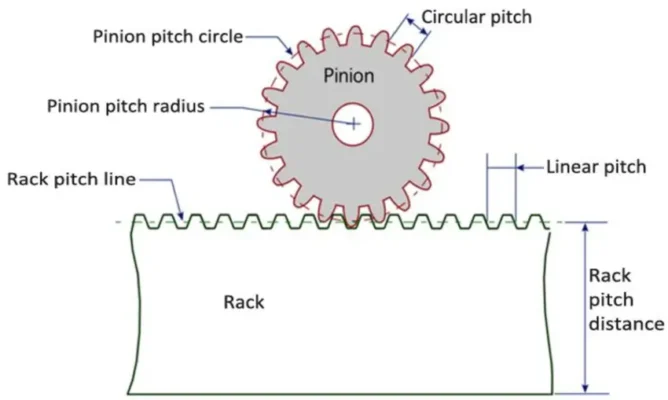
Internal gears have teeth on the inside of a ring. They help make compact multi-stage reducers.
Racks are straight bars with teeth. They mesh with a pinion to turn rotation into linear motion.
When customers need gears together with cylinders, actuators or linear stages, Wenlio Gear can include internal gears or racks in the layout so that tooth strength and backlash still meet the overall system needs.
5. Gear teeth in Wenlio Gear’s five focus sectors
Gear tooth design also depends on where the gear will work. Below is how we look at teeth in our five main sectors.
5.1 Agricultural machinery
Positions: tractor and harvester gearboxes, PTO gears, bevel gears in axles
Environment: dust, mud, changing loads, long working days
Tooth focus:
-good wear and pitting resistance in dirty oil
-ability to handle overload and field shocks
-tooth corrections that avoid edge contact
5.2 Heavy-duty truck
Positions: gearbox gears, synchronizer gear teeth, axle ring and pinion, differential gears
Environment: high mileage, long periods at high load, wide oil temperature range
Tooth focus:
-strong tooth root and surface for long life
-stable noise over many kilometres
-consistent quality from batch to batch
5.3 Construction equipment
Positions: wheel hub drives, swing and travel reducers, slew drives
Environment: low speed, very high torque, frequent shocks, dirty sites
Tooth focus:
-high safety margin for overload
-deep and stable case hardening
-even load across the tooth face to avoid chipping
5.4 Electric vehicle (EV)
Positions: e-drive reduction gears, differential gears, auxiliary transmission gears
Environment: high speed, compact housings, high efficiency demand, strict noise limits
Tooth focus:
-high accuracy and often ground teeth
-low loss and controlled noise with optimised micro-geometry
-good lubrication and cooling in tight spaces
5.5 Industrial automation and robotics
Positions: servo gearboxes, robot joints, AGV/AMR drives, conveyor gear units
Environment: frequent start–stop, accurate positioning, long running hours
Tooth focus:
-controlled backlash for accurate positioning
-smooth torque at low and medium speed
-stable noise level over time
6. How Wenlio Gear keeps teeth reliable
To make sure each tooth works as planned in real machines, Wenlio Gear mainly focuses on three areas.
6.1 Smart design and calculation
-follow ISO, DIN or AGMA standards when required
-choose module, tooth number, pressure angle and face width based on real load and life targets
-use profile and lead corrections when necessary
-run contact checks and strength calculations for key gear sets
6.2 Right materials and heat treatment
-select suitable alloy and case-hardening steels for each sector
-define carburizing, quenching, tempering, nitriding or induction hardening as needed
-check case depth and hardness profile on important gears and shafts
6.3 Precise machining and inspection
-combine hobbing, shaping, skiving, shaving and grinding to reach the required accuracy
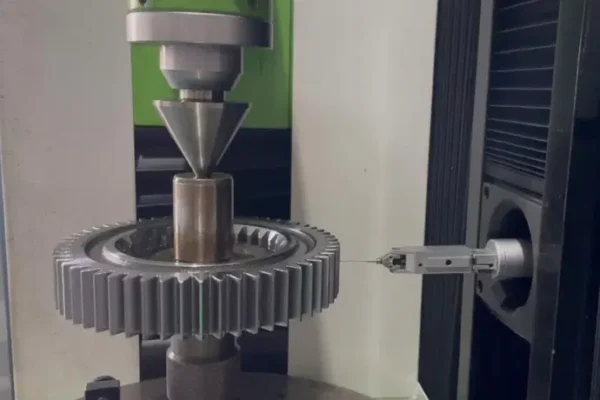
-measure tooth profile, lead and run-out on gear measuring centres
-keep process capability under control so each batch behaves like the last one
By watching these three areas, Wenlio Gear treats every tooth as part of a real driveline, not just a CAD model.
8. Conclusion
A gear tooth is small, but it controls how the whole gear behaves. Good tooth design and good production lead to smooth contact, stable noise and long life in real machines.
As a precision gear manufacturer and custom gear supplier, Wenlio Gear focuses on tooth-level quality for agricultural machinery, heavy truck, construction equipment, EV and industrial automation.
If you plan to improve or redesign a gear set, you can send your drawings, samples and basic working conditions to Wenlio Gear. Our team will help you work from the tooth shape outward to build a stronger and more efficient gear solution. You can reach us any time via the Contact Us.
