
Blogs
ISO Standards for Gear Manufacturing Explained

Dec
1. Introduction: Why ISO standards matter
Gears do far more than simply rotate. They have to fit into a housing, run with other components, carry torque and speed, and keep doing it for years without surprise failures. Because of this, gear design and production cannot rely only on “experience” or intuition. They also need clear, common rules.
This is where ISO standards come in. As a precision gear manufacturer and custom gear supplier, Wenlio Gear uses ISO-based methods to design, produce and inspect gears for five key sectors: agricultural machinery, heavy-duty trucks, construction equipment, electric vehicles and industrial automation & robotics. By working to shared standards, we can speak the same technical language as our customers and design partners worldwide.
2. What are ISO standards?
The International Organization for Standardization (ISO) publishes technical documents that define agreed ways of working. In other words, ISO standards turn best practice into consistent rules that companies around the world can follow.
For gear manufacturing, several of these standards are especially important. Taken together, they help answer three basic questions:
-
How should we manage quality in the factory?
-
How strong does the gear tooth have to be?
-
How accurate does the gear geometry need to be?
When designers and manufacturers in different countries follow the same ISO rules, a gear produced in one region can, in principle, run correctly in a gearbox or axle designed in another. This shared framework reduces guesswork and makes global cooperation much easier.
3. Three key ISO standards for gears
Although there are many ISO documents, three of them show up most often in everyday gear work at Wenlio Gear: ISO 9001, ISO 6336 and ISO 1328.
3.1 ISO 9001 – Quality management system
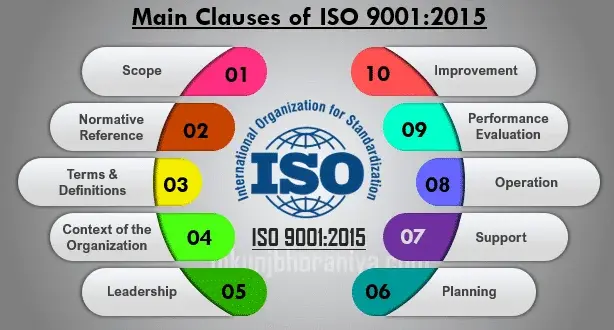
To begin with, ISO 9001 is not a “gear drawing” standard. Instead, it describes how a company should build and maintain a quality management system. It covers topics such as:
-
defining processes and responsibilities
-
documenting procedures and records
-
analysing risks and handling non-conformities
-
driving continual improvement
At Wenlio Gear, this means we do not depend only on individual skills. Instead, we set up controlled processes from enquiry and quotation through production, inspection and shipment. As a result, we aim for stable quality from batch to batch, rather than one-off “good runs” that are hard to repeat.
3.2 ISO 6336 – Gear strength calculation
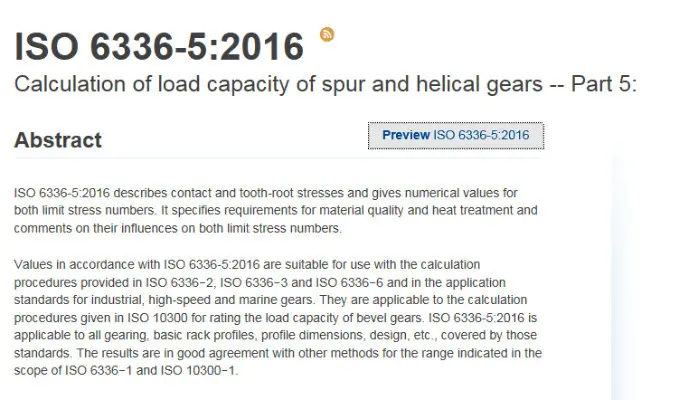
Next, ISO 6336 focuses on gear tooth strength and surface durability. It provides calculation methods and factors that help engineers predict:
-
bending strength at the tooth root
-
surface durability against pitting and scuffing
-
safety factors under specific torque, speed and duty cycles
For Wenlio Gear, ISO 6336 is a practical tool. For example, we use it to check whether:
-
a tractor axle gear will survive heavy field loads
-
a truck gearbox gear can reach its target mileage
-
a compact EV gear set can handle high speed without premature pitting
By using this standard, we can compare different materials, heat treatments and geometries on a fair basis, rather than relying on rough estimates.
3.3 ISO 1328 – Gear accuracy grades
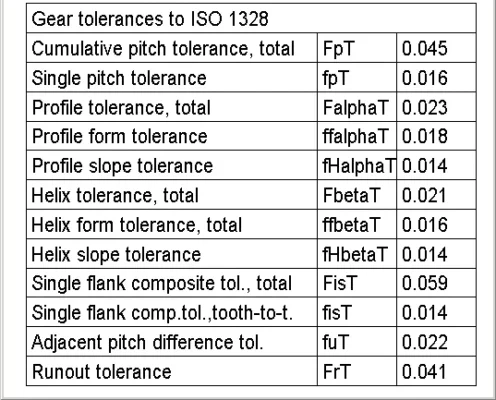
Finally, ISO 1328 defines accuracy grades for cylindrical gears (spur and helical). It sets tolerance limits for errors such as:
-
profile deviations (tooth shape)
-
lead deviations (tooth line across the face)
-
pitch errors and runout
Higher accuracy grades mean tighter limits, smoother tooth contact and more predictable noise behaviour. However, they also require more precise machining and inspection.
At Wenlio Gear, ISO 1328 helps us and our customers agree what “gear quality” really means. Instead of saying “high precision”, we can say, for instance, “gear quality grade X according to ISO 1328”, and then inspect the teeth accordingly on dedicated gear measuring equipment.
4. How these standards work together
On their own, each ISO standard covers one aspect of gear manufacturing. When we combine them, they create a complete framework from drawing to shipment.
| Standard | Focus area | Role in projects at Wenlio Gear |
|---|---|---|
| ISO 9001 | Quality management system | Controls processes, documents and continual improvement |
| ISO 6336 | Gear tooth strength calculation | Ensures gears are sized for real load and life targets |
| ISO 1328 | Gear accuracy grades and tolerances | Defines measurable tooth quality for inspection |
In practice, a typical project uses the standards like this:
-
First, we use ISO 6336 to size gears for torque, speed and duty cycle.
-
Then, we select appropriate ISO 1328 accuracy grades based on noise, efficiency and cost requirements.
-
Finally, we run the whole process under an ISO 9001-style quality system to keep things controlled and traceable.
Because of this combination, both Wenlio Gear and our customers have a clear view of what is being designed, manufactured and delivered.
5. What ISO means in Wenlio Gear’s five focus sectors
The same ISO standard can look different in real life, depending on where the gears are used. Below is how ISO-based methods show up in each of Wenlio Gear’s five key sectors.
5.1 Agricultural machinery
Agricultural gears work in fields, not in clean labs. Tractors, harvesters and implements face dust, mud, moisture and changing loads.
-
Through ISO 6336, we check that tooth strength and surface durability are suitable for long working days and seasonal peaks.
-
Using ISO 1328, we choose accuracy grades that balance smooth running with robustness and cost.
-
With ISO 9001-based systems, we keep replacement gears consistent across seasons and orders.
5.2 Heavy-duty trucks
Heavy truck gearboxes, axles and PTO drives must carry high torque and run high mileage on the road.
-
ISO 6336 helps us design gears that meet bending and surface fatigue targets over hundreds of thousands of kilometres.
-
ISO 1328 guides the accuracy of gears where noise, efficiency and durability all matter.
-
ISO 9001 principles support traceability and stable quality, which is crucial for safety and warranty.
5.3 Construction equipment
Construction equipment such as excavators, loaders and cranes often works at low speed but very high torque, with frequent shocks and difficult environments.
-
Here, ISO 6336 is used to check that gears in swing drives, final drives and slew drives can cope with heavy loads and impact.
-
ISO 1328 accuracy grades are chosen to maintain reliable tooth contact even when shafts deflect under load.
-
Meanwhile, ISO 9001-style process control helps keep quality consistent across different machine models and batches.
5.4 Electric vehicles (EV)
EV gears are usually high speed and located close to passengers, so efficiency and noise become critical.
-
ISO 6336 helps us design compact gears that still meet life targets under demanding torque and speed conditions.
-
Higher ISO 1328 grades, together with grinding and fine finishing, support lower noise and smoother meshing.
-
Under ISO 9001 principles, process stability and inspection data become important inputs for high-volume EV programs.
5.5 Industrial automation & robotics
In industrial automation and robotics, gears often run many hours per day while supporting precise positioning and repeatability.
-
ISO 1328 accuracy grades help us control backlash and positioning accuracy in servo gearboxes and robot joints.
-
ISO 6336 calculations support long-life designs in conveyors, AGVs and AMRs.
-
ISO 9001-style systems keep multiple production batches aligned with the original validated design.
6. How Wenlio Gear applies ISO in daily work
Because ISO standards form a common framework, Wenlio Gear uses them at several stages of the project.
6.1 During engineering and design
To start with, we use ISO 6336 to size gear teeth for torque and life. At the same time, we choose initial ISO 1328 accuracy grades based on the required noise level, speed and cost. Whenever customers bring their own company standards built on ISO, we align our calculations and tolerances accordingly.
This approach means that, even in early concept phases, the design already has a realistic foundation instead of being purely theoretical.
6.2 During production and inspection
Once the design is agreed, ISO principles carry over into production:
-
Gear cutting, heat treatment and grinding are set up so they can reach the chosen ISO 1328 grades.
-
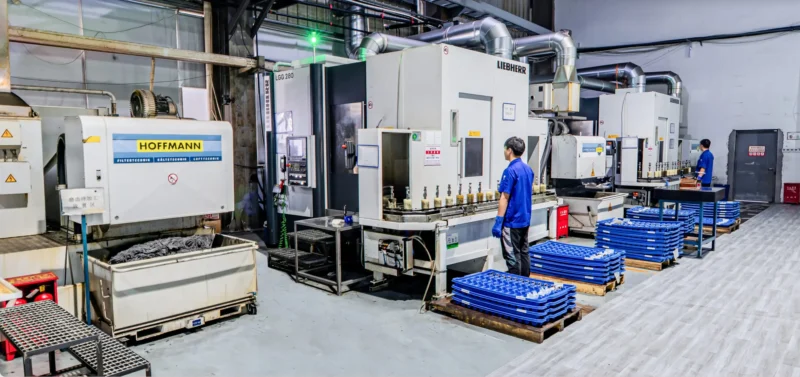
Inspection routines on gear measuring machines are defined in line with ISO parameters.
-
Process controls and records follow ISO 9001-style methods.
As a result, the factory is not only capable of making one good prototype, but also of repeating that quality in regular production.
6.3 During documentation and support
Finally, ISO-based work shows up in documentation and customer support:
-
Inspection reports reference ISO 1328 parameters, so customers know exactly what is measured.
-
On request, we can share ISO 6336-based strength calculations or summaries.
-
Process data and quality records support traceability, audits and long-term technical discussions.
Because everything is anchored in shared standards, communication stays clear even when projects become complex.
7. Conclusion
ISO standards may look abstract at first, but they have a direct impact on how gears behave in real machines. ISO 9001 helps build a stable quality management system, ISO 6336 guides strength and life calculations, and ISO 1328 defines measurable gear accuracy grades. Taken together, they support reliable, efficient and long-life gears in demanding applications.
As a precision gear manufacturer and custom gear supplier, Wenlio Gear combines these ISO-based methods with practical experience in agricultural machinery, heavy trucks, construction equipment, electric vehicles and industrial automation & robotics. If you are planning a new gear project or reviewing an existing design, you are welcome to share your drawings, samples and operating conditions with us via the Contact Us page so we can explore the best ISO-based solution for your application.
FAQ – ISO standards and Wenlio Gear
Q1. Do I need to understand ISO 6336 and ISO 1328 in detail before working with Wenlio Gear?
Not necessarily. If you provide torque, speed, duty cycle and basic layout, Wenlio Gear can apply ISO 6336 and ISO 1328 on the engineering side and then explain the results in practical terms.
Q2. Can Wenlio Gear work with our in-house standards that are based on ISO?
Yes. Many OEMs use internal standards that build on ISO documents. As long as you share them clearly, we can work to those requirements.
Q3. Are all Wenlio Gear products designed and inspected using ISO-based methods?
Yes. Our gear design, manufacturing and inspection practices follow ISO-based approaches, combined with our own know-how from projects in the five sectors we serve.
Q4. Can you provide documents to support audits and technical approvals?
Yes. We can provide relevant inspection reports, basic calculation summaries and selected process information to support your internal audits, PPAP-style reviews or supplier evaluations.

Pingback: Custom Gears vs. Standard Gears: Which Should You Choose - wenlio.com