
Blogs, Bevel Gear
What Is a Gear Ratio? Factory Guide from Wenlio Gear
Jan
1. Introduction
On a whiteboard, a gear ratio is just a number like 3.5:1 or 6:1. On our shop floor at Wenlio Gear, that same number decides whether a tractor climbs a slope smoothly, whether a truck axle runs too hot, and whether an EV angle drive stays quiet at high speed.
Wenlio Gear is a precision gear manufacturer and custom gear supplier focusing on bevel gears and related components. Every day we work on power transmission solutions for agricultural machinery, heavy-duty truck, construction equipment, electric vehicle and industrial automation. This article explains gear ratios from a factory reality point of view: what they mean, how we see different types in real orders, and what customers should think about when choosing ratios and suppliers.
2. What Is a Gear Ratio in a Bevel Gear Drive?
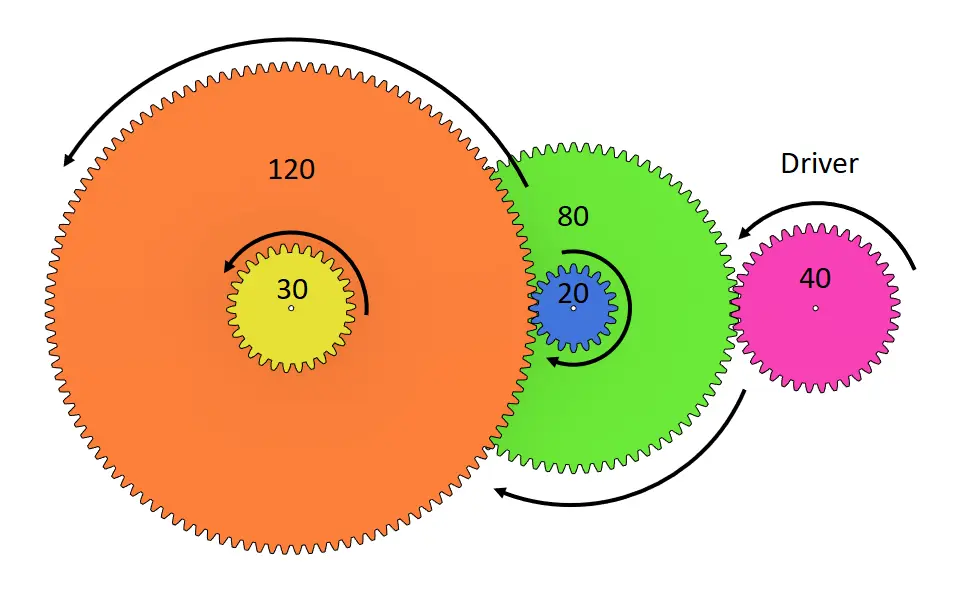
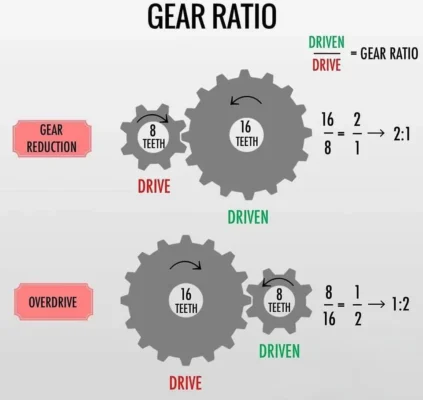
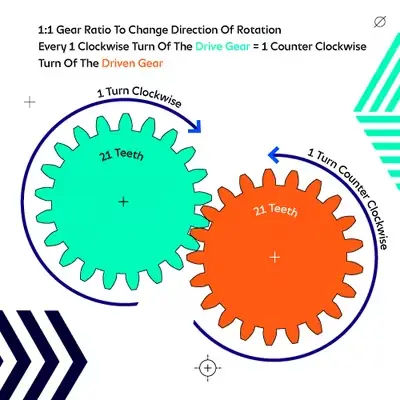
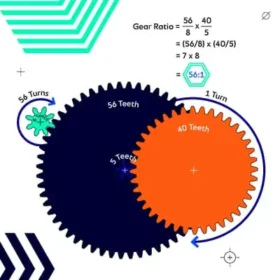
A gear ratio is the relationship between input speed and output speed in a gear set, usually defined by the tooth counts of the gears.
(For example, if a 10-tooth pinion drives a 20-tooth gear, the output turns at half the speed of the input and delivers roughly twice the torque.)
3. Why Gear Ratio Matters on the Shop Floor
In our factory, gear ratio is not just something written on the drawing. It shows up in three very practical ways.
First, it controls how the machine feels in real work.
When a customer sends us a bevel gear axle for agricultural machinery, we quickly see if the ratio is “too tall” or “too short” from test bench data and operator comments. Too tall, and the tractor may struggle in low gear. Too short, and it may never reach the speed they expected.
Second, it affects the whole bevel gear design and process.
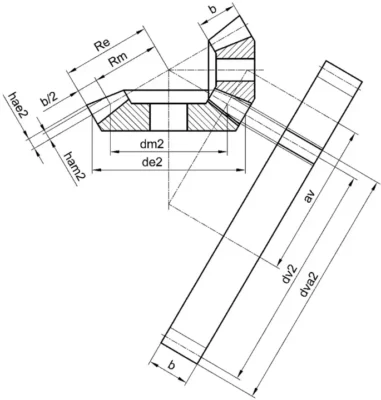
Once the ratio is fixed, our engineers must choose tooth counts, modules, shaft angles, heat treatment and grinding stock. A medium truck ratio and a slow, high-torque construction ratio use very different bevel gear geometries, even if the housing size looks similar.
Third, it links design engineers and production teams.
A number like 5.29:1 in a truck axle is a shared target. Design engineers, process engineers, machine operators and test technicians all work around it. If the ratio definition is unclear (input/output or output/input), confusion spreads through the whole chain. That is why we always confirm ratio definitions before starting a Wenlio Gear project.
4. Gear Ratio Types We See in Wenlio Bevel Gear Projects
On real orders, we see a few recurring gear ratio “types”. The table below is based on actual patterns in our bevel gear and gear shaft projects.
Common gear ratio types in Wenlio Gear’s daily work
| Gear ratio type | Typical range | How it behaves in the drivetrain | Where we often see it at Wenlio Gear |
|---|---|---|---|
| Low reduction | 1.2 : 1 – 3 : 1 | Small speed drop, light torque gain | EV angle drives, light industrial gearboxes, test rigs |
| Medium reduction | 3 : 1 – 6 : 1 | Clear speed reduction, strong torque increase | Tractor axles, truck differentials, swing drives |
| High reduction | 6 : 1 – 20 : 1 | Large speed reduction, very high torque at the output | Construction final drives, hub drives, heavy hoists |
| Overdrive (speed-up) | < 1 : 1 | Output faster than input, torque reduced | Special test equipment, some industrial machines |
| Single-stage bevel gear set | One bevel pair | Simple layout, compact housing, limited ratio window | PTO bevel boxes, basic right-angle drives |
| Multi-stage gearbox | Two or more stages | Very flexible ratios but more parts and more complexity | Combined bevel + spur/helical gearboxes for EVs and automation |
When a new drawing arrives, our engineers can almost guess the application family just by looking at the gear ratio and bevel layout.
5. Who Uses Gear Ratio Data in a Project?
Inside Wenlio Gear and on the customer side, different people use gear ratio information for different reasons:
-
Design engineers – turn required speed and torque into actual ratios, then into bevel gear tooth counts and layouts.
-
Application and sales engineers – collect duty cycle information from end users and suggest practical ratios and options.
-
Process and production engineers – choose machines, tools, heat treatment routes and inspection plans to keep real ratios consistent.
-
Test and quality engineers – measure input/output speed and torque on the test bench to see if the gearbox behaves as planned.
-
Service and fleet teams – give feedback such as “plenty of power but too slow” or “fast on road but weak on slopes”, which tells us if the ratio is really right.
A good gear ratio is one that these people all agree “feels correct” in the real machine.
6. Key Gear Ratio Features We Check in Production
In real bevel gear manufacturing, we do not only look at the numeric ratio. We also check several related features.
Gear ratio features Wenlio Gear pays attention to
| Feature | What it means on the shop floor | Why it matters for bevel gears |
|---|---|---|
| Ratio definition | Whether the drawing uses input/output or output/input | Avoids mistakes in design, machining and testing |
| Nominal ratio value | Target speed change between shafts | Drives tooth counts and bevel gear geometry |
| Mounting distances | Real distances between gear centres and bearing positions | Controls actual contact pattern and backlash |
| Stage split | How total ratio is shared between bevel and any spur/helical stages | Affects size, noise, efficiency and cost |
| Duty cycle & overloads | How often the machine runs at light, medium or heavy load | Influences safety factor and material choice |
| Environment & lubrication | Mud, dust, temperature, oil flow and cleanliness | Decides heat treatment, surface finish, sealing |
These points show up in our internal process sheets and inspection reports, not only in marketing materials.

7. What a Good Gear Ratio Delivers for Your Machine
From the factory side, we see clear patterns when a ratio is well chosen versus when it is not.
Benefits of a well-designed gear ratio in bevel gear drives
| Benefit area | What we see on the test bench and in the field | What you get as an OEM or operator |
|---|---|---|
| Performance | Machine reaches target speed and has enough pulling power | Easier selling point, better operator feedback |
| Efficiency | Current and temperature stay within planned levels | Lower fuel or energy cost per hour |
| Reliability | Gear teeth and shafts work inside safe stress ranges | Longer life, fewer breakdowns and warranty cases |
| Noise & comfort | Noise at typical working speed is easier to control | Quieter cabs, more comfortable operation |
| Flexibility | Small ratio changes cover different terrains or markets | One basic design, multiple variants for different regions |
We often see this when customers adjust ratios between hilly and flat markets: the same bevel gear family can be tuned to “pull harder” or “run faster” with small changes, if the original design left enough room.
8. How to Choose a Gear Supplier for Ratio-Critical Bevel Gears
When gear ratio is important to your project, choosing the right supplier can save a lot of trial and error. From our experience, you can look at a few simple points:
-
Can they talk about real duty cycles, not only modules?
Good suppliers ask about load, speed, daily hours and terrain, not just “send us the drawing”. -
Do they have experience in similar machines?
A supplier used to agricultural axles and truck differentials will handle those ratios better than someone who only knows small gearmotors. -
Is the whole process under control?
Ratio is not only cut on one machine. Turning, bevel cutting, heat treatment, grinding and inspection all influence how the set behaves. -
Can they test gearboxes or gear sets under load?
A basic no-load spin test is not enough. Test stands with torque, speed and temperature monitoring show the real picture. -
Do they keep traceable records?
When something goes wrong in the field, test reports and heat treatment logs often give the clues, not memory.
9. Why Choose Wenlio Gear for Gear Ratio Projects
(1) Real bevel gear factory, not just a trader
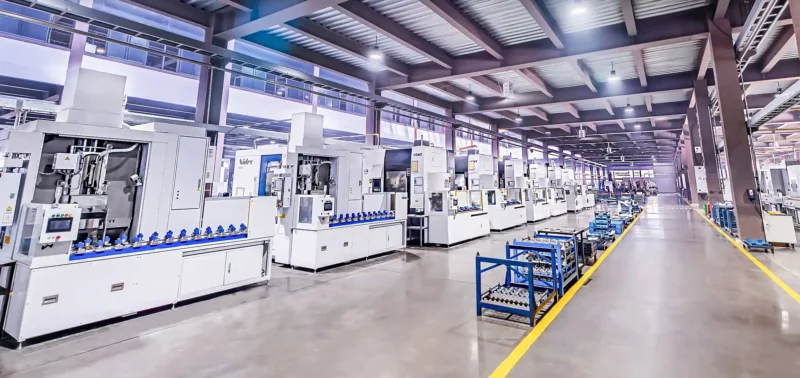
At Wenlio Gear, you can walk from rough turning to bevel gear cutting, heat treatment, grinding and inspection in one line. Each step is designed to keep the real gear ratio and tooth contact close to the design target.
(2) Focused on five key application sectors
Our main work is in agricultural machinery, heavy-duty trucks, construction equipment, electric vehicles and industrial automation. Many projects involve bevel gear sets and shafts where the ratio is central to machine behaviour. This gives our team a good feel for what typically works in each sector.
(3) Precision gear manufacturer & custom gear supplier
Some customers send a complete drawing; others bring a worn sample and basic performance needs. In both cases, our engineers can help translate those needs into a realistic ratio, bevel geometry and process plan.
(4) From first ratio idea to field feedback
We support early ratio discussions, produce sample sets, fine-tune processes during pilot runs and stay involved when your machines start working in the field. That closed loop makes later improvements easier.
10. Gear Ratio FAQ from Real Wenlio Gear Projects
Q1. Why does my machine feel weak even though the engine looks big enough?
We often find that the total gear ratio is too “tall”. The engine has power on paper, but too much of it is spent on speed instead of torque at the wheels or working shaft. A review of the bevel gear ratio and any other stages usually points to a better combination.
Q2. Can a small change in gear ratio really reduce axle noise?
Sometimes yes. If a truck or EV drive runs most of the time at an uncomfortable speed point, a small ratio change can move the main working RPM into a quieter band. Of course, tooth quality and contact pattern also matter, so Wenlio Gear looks at all three together.
Q3. We already have a housing. Can you adjust ratios without changing the casting?
In many cases we can. By changing bevel tooth counts and possibly adding or adjusting a second stage, we can get new ratios inside the same basic envelope. However, we will always check strength, bearing loads and lubrication before giving a firm answer.
Q4. What minimum information do you need to help with a gear ratio proposal?
At Wenlio Gear we usually ask for: input speed and torque, target output speed and torque, working hours per day, typical load levels, environment (dust, mud, temperature) and any space limits or existing drawings. The more complete the picture, the better the result.
Q5. Can one bevel gear design support several markets with different ratios?
Yes, this is common. For example, a tractor sold in flat regions and in mountain regions may use different final ratios. We often help customers design a “ratio family” based on a shared housing and component set, so they can adapt to markets without starting from zero each time.
11.Conclusion
For Wenlio Gear, a gear ratio is not an abstract topic from a textbook. It is something we see every day in our bevel gear lines, our test benches and our customers’ machines in the field. A good ratio makes a tractor pull strongly at low speed, helps a truck axle last longer, keeps a construction drive working under shock, lets an EV feel smooth and quiet, and keeps industrial equipment running at just the right pace.
As a precision gear manufacturer and custom gear supplier, Wenlio Gear focuses on bevel gears and power transmission for agricultural machinery, heavy-duty trucks, construction equipment, electric vehicles and industrial automation. If you are planning a new drivetrain, localising an existing design or wondering whether your current gear ratio is really the best choice, you are welcome to Contact Us with your drawings, samples and operating conditions so we can explore the options together from a factory point of view.
