
Blogs
How Wenlio Gear Packages and Ships Precision Gears Safely
Jan
1. Introduction
When a bevel gear leaves the inspection room, it is “finished” on paper—but it is not safe yet. Moisture, impacts, and mixed batches can still ruin a good part in transit.
At Wenlio Gear, we treat packaging as the last production step. This is the same practical workflow we use for bevel gears across five sectors—agricultural machinery, heavy-duty trucks, construction equipment, electric vehicles, and industrial automation—and it also applies to compact parts like our high-speed ratio spiral bevel gear for power tools.
2. What “Export Packing” Means for Precision Gears
Export packing is the controlled process of protecting gears from rust, impact, and mix-ups until they reach your assembly line.

3. Why Packaging Matters
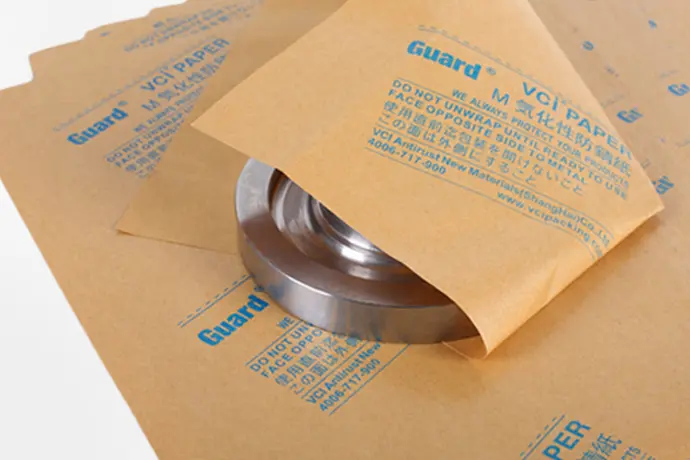
A gear tooth surface can be precise, yet still be vulnerable. Therefore, the first risk we plan for is corrosion. Wenlio’s standard step is to wrap each gear with VCI anti-corrosion paper/bag, which is widely used to protect metal during storage and shipping.
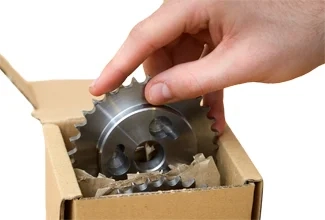
Next, we focus on impact and scratching. Even small dents or tooth-to-tooth contact in a carton can create visible marks. As a result, inner protection and fixed placement are part of the packing spec, not “extra care when we remember.”
Finally, real-world shipping is about traceability and compliance. For example, wood packaging in international trade often needs to meet ISPM 15 requirements in many countries, so we prefer plywood crates and compliant pallets when required by route or customer rules.

4. Types of Packaging We Use
Below is how we normally “build up” protection from inside to outside, depending on part size, route, and order volume.
| Packaging level | What it looks like on our packing line | Best for | Notes |
| VCI wrap (inner) | VCI paper/bag around each gear | All precision gears | Wenlio standard Step 1 |
| Inner protection | Proper placement + separators/partitions | Tooth-sensitive parts | Wenlio Step 2 |
| Export cartons | Strong cartons (logo printing optional) | Small/medium gears | Wenlio Step 3 |
| Plywood crate + pallet | Reinforced crate with partitions, fixed on pallet | Sea freight / heavy loads | Wenlio Step 4 |
| Seal + strap + label | Sealed, strapped, labeled for shipment | All export orders | Wenlio Step 5 |
5. Who Cares About Packaging Details?
Packaging decisions usually involve more than one person on the buyer side:
Procurement / Sourcing: wants stable, repeatable packing for long-term supply
Quality engineers: cares about rust prevention, part protection, and document matching
Logistics teams / forwarders: needs stackable cartons/crates, clear labels, compliant wood packaging
Warehouse & assembly operators: wants easy receiving, fast counting, and low damage rate
6. Features We Control at Wenlio’s Packing Station
| Feature | What we do in the factory | Why it helps |
| Anti-rust method | Wrap with VCI anti-corrosion paper/bag | Reduces corrosion risk during transit |
| Anti-impact layout | Place wrapped parts properly to avoid scratches/impact | Prevents tooth damage and cosmetic defects |
| Carton strength | Use export-grade cartons, stable stacking | Better safety for handling and warehouse ops |
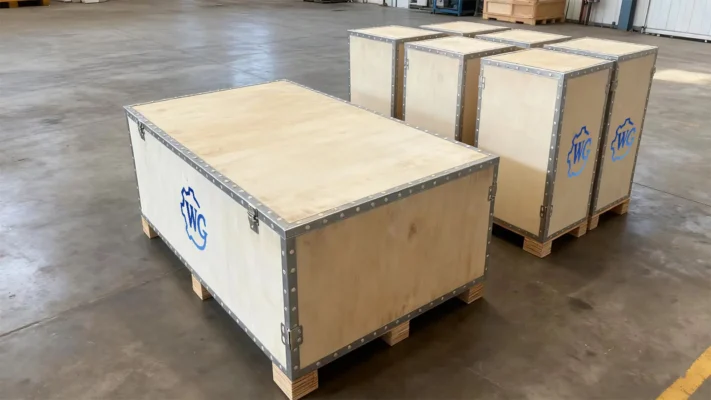
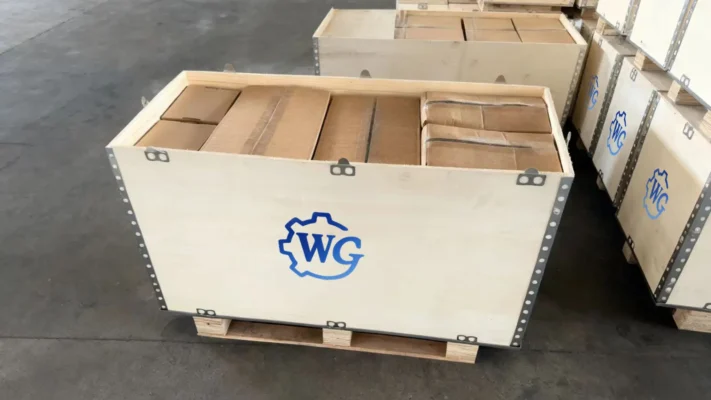
| Crate structure | Reinforced plywood crate with partitions + pallet fixing | Improves protection for sea/air shipments |
| Final securing | Seal, strap, label before dispatch | Reduces loosening and mix-ups in transit |
| Branding & IP control | Custom color box / logo options; third-party brand needs written authorization | Avoids IP risks for both sides |
7. Benefits Buyers Get
| Benefit | What you’ll notice | Where it matters most |
| Lower rust claims | Cleaner surfaces at receiving | Sea freight, humid routes |
| Less transit damage | Fewer dents/scratches | High-precision bevel sets, finished parts |
| Faster receiving | Clear labels + stable cartons | High-frequency deliveries |
| Better traceability | Easier matching to inspection reports | OEM programs, aftersales supply |
| Fewer customs delays | More predictable wood packaging compliance | US/EU/Japan-bound shipments |
8. How to Choose a Gear Supplier for Export Packing
Ask for the exact packing steps, not a generic promise. A real factory can describe inner wrap → cartons → crate/pallet → securing/labeling.
Confirm anti-rust method and storage time. VCI works best when used correctly, so clarify how parts are wrapped and sealed.
Check crate/pallet compliance for your destination. Many markets enforce ISPM 15 on wood packaging, so confirm the supplier’s practice early.
Require labeling + traceability alignment. Make sure carton/crate marks match packing list and quality reports.
Clarify logo/branding rules. If any third-party trademark is involved, written authorization should be required.
9. Why Choose Us
Bevel gear focus, production mindset. Wenlio specializes in bevel gears and related gear components, so we know what surfaces and tooth areas are most sensitive in transit.
Standardized export packaging workflow. Our 5-step packaging process (VCI → inner protection → cartons → crate/pallet → secure & label) is documented and repeatable across orders.
Customization with IP discipline. We support custom printed color boxes and logo customization, while requiring authorization for any third-party brand use to avoid IP risks.
Support for five application sectors. We ship bevel gear solutions used in agricultural machinery, heavy-duty truck, construction equipment, electric vehicle, and industrial automation—so packaging is planned with real duty environments and routes in mind.
10. FAQ
Q1: Do you always use VCI packaging for export orders?
For most export shipments, yes. We wrap each gear with VCI anti-corrosion paper/bag as our standard anti-rust step.
Q2: Can you provide custom printed cartons or color boxes?
Yes. We can provide custom printed color boxes and logo customization (carton, color box, crate marking, labels).
Q3: What if our required logo includes a third-party brand?
We will need written authorization if a third-party brand is involved, which helps avoid IP risks for both sides.
Q4: How do you reduce scratches and impacts inside the package?
We place wrapped parts properly and use partitions/structured packing so parts do not collide during handling and transport.
Q5: Do you support sea/air shipments and export documents?
Yes. Our crates are secured and labeled ready for sea/air shipment, and we support standard export documents based on your import process needs.
11. Conclusion
Export packing is where “good gears” become “safe deliveries.” Because bevel gears often work in harsh, high-load transmissions, protecting tooth surfaces and keeping batches traceable is essential.
If you want us to match a packaging setup to your route (sea/air), storage conditions, and branding rules, share your requirements through Contact Us and our team will reply with a practical packing proposal.
