
Blogs, Custom Gear
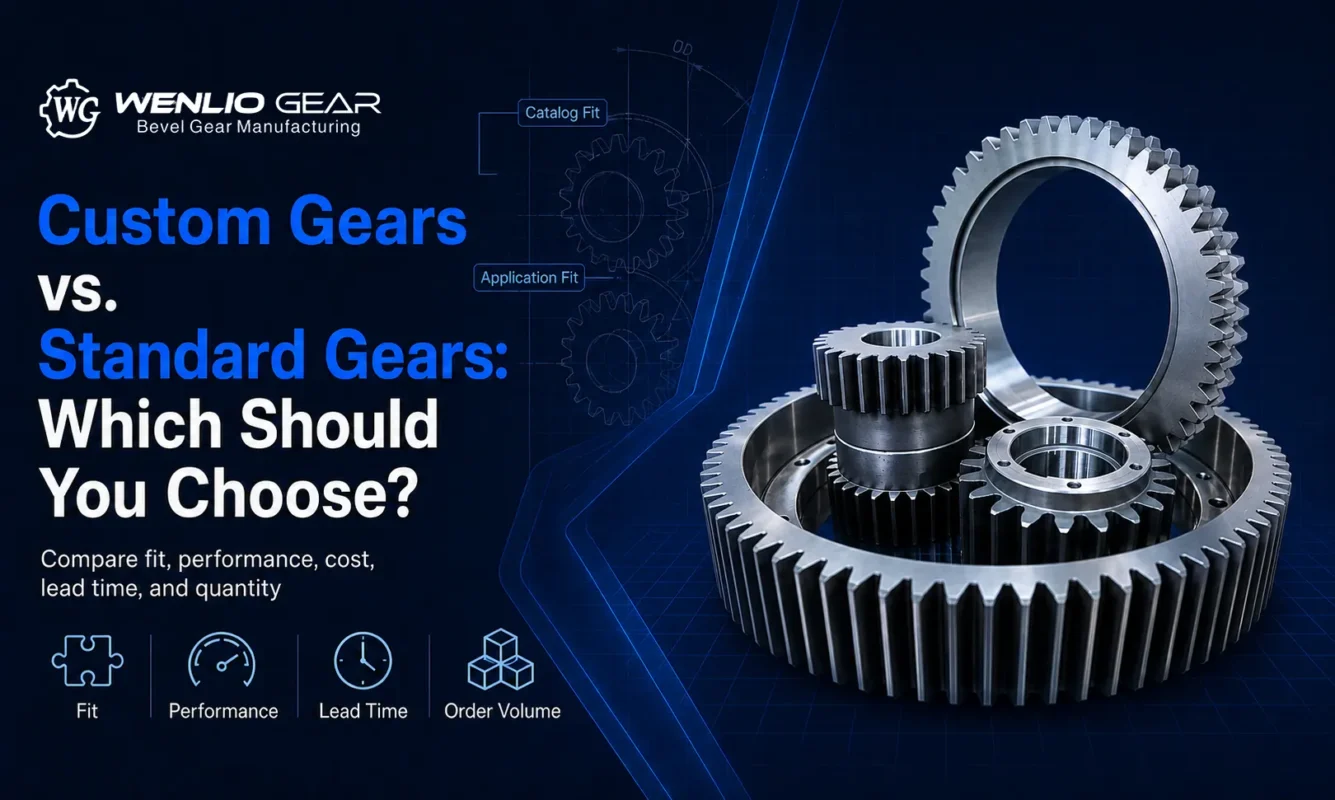
Custom Gears vs. Standard Gears: Which Should You Choose
Jul
Introduction
When selecting gears for new equipment or a replacement project, buyers often need to choose between standard gears and custom gears. Standard gears are readily available and usually have a lower initial cost, but existing catalog specifications may not meet the required center distance, gear ratio, mounting interface, or load conditions.
Custom gears require more technical review and production preparation, but they can be manufactured according to the actual installation space, material, heat treatment, accuracy, and inspection requirements. The right choice is not necessarily the more advanced option, but the one that best fits the project.
Quick Answer
Standard gears are usually the better choice when catalog products already meet the required module, tooth count, dimensions, material, accuracy, and mounting interface.
Custom gears are often more suitable when a project involves a fixed center distance, limited installation space, non-standard splines or hubs, high loads, specific service-life requirements, or compatibility with an existing mating gear.
How Do Custom Gears vs. Standard Gears Differ?
In this article, “standard gears” refers to catalog or off-the-shelf gears with predefined dimensions, materials, and specifications. It does not mean that only standard gears follow ISO, AGMA, or DIN standards. Custom gears can also be designed, manufactured, and inspected according to recognized gear standards.
| Comparison Item | Standard Gears | Custom Gears |
| Specifications | Selected from existing catalog models | Manufactured from drawings, samples, or project requirements |
| Lead time | Usually shorter when stock is available | Requires technical review, setup, and production |
| Initial cost | Usually lower | May include tooling and first-article validation costs |
| Dimensions | Limited to available catalog ranges | Can match the required center distance, ratio, and installation space |
| Material and heat treatment | Available options are relatively fixed | Can be specified according to load and service-life requirements |
| Mounting interface | Standard bore, keyway, or hub | Custom bore, spline, shaft, and hub configurations |
| Inspection scope | Usually follows the supplier’s standard inspection plan | Critical dimensions, tooth geometry, and reports can be specified |
| Replacement | Easier to reorder when the model remains available | Depends on controlled drawings, samples, or technical records |
How Do Custom Gears vs. Standard Gears Compare in Cost?
Standard gears usually have a lower initial purchase price. The supplier has already completed the design, tooling, and production setup, so the buyer does not need to pay for a separate development process.
The first quotation for a custom gear may be higher because it can include:
- Drawing and specification review;
- Process planning and tooling preparation;
- Machine setup and first-piece production;
- Heat treatment and subsequent finishing;
- First-article or matched-pair inspection.
However, the purchase price of the gear is not the only cost to consider. Adapting a machine to use a standard gear may require housing modifications, additional adapters, shaft changes, or acceptance of an unsuitable gear ratio. These changes can make the total project cost higher.
Buyers should therefore compare total project cost rather than only the unit price of the gear.
How Does Performance Differ Between Custom and Standard Gears?
Standard gears are suitable for applications with conventional operating conditions and flexible installation requirements. Their performance can usually be evaluated using the supplier’s catalog information, including rated load, speed, material, and accuracy.
Custom gears can be adapted to specific application requirements, including:
- Tooth count, module, and transmission ratio;
- Face width, outside diameter, and mounting distance;
- Material, hardness, and heat-treatment method;
- Bore, keyway, spline, and hub design;
- Backlash, accuracy, and contact requirements;
- Mating gear and inspection requirements.
Custom does not mean that every parameter should have a tighter tolerance. Accuracy, material, and inspection requirements should still match the actual load, speed, service life, and assembly conditions.
When Are Standard Gears the Better Choice?
Buyers should first consider standard gears when catalog products already meet the main technical requirements.
For example, standard gears may offer the better option when:
- A catalog model provides the required ratio and center distance;
- Engineers can design the equipment around existing gear dimensions;
- The application involves conventional loads, speeds, and operating conditions;
- The standard bore, keyway, and hub fit the assembly directly;
- The project needs rapid prototyping or a short-term replacement;
- The expected quantity does not justify custom development.
In addition, standard gears can simplify sourcing and shorten lead times because suppliers have already established the product specifications and production process.
Therefore, buyers should review available catalog models during the early design stage. This step can reduce development time, control initial costs, and help determine whether custom manufacturing is truly necessary.
Why Choose Wenlio?
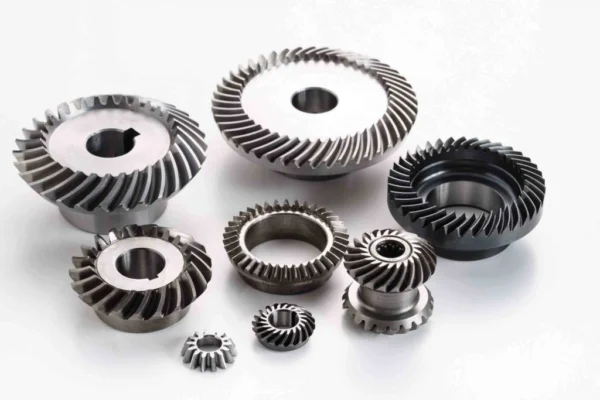
Wenlio focuses on custom bevel gears, cylindrical gears, and related gear components. Manufacturing feasibility can be evaluated according to drawings, samples, assembly conditions, and application requirements.
The project review may cover:
- Gear parameters and critical interfaces;
- Material and heat-treatment requirements;
- Gear cutting, lapping, or post-heat-treatment finishing;
- Individual or matched-pair delivery;
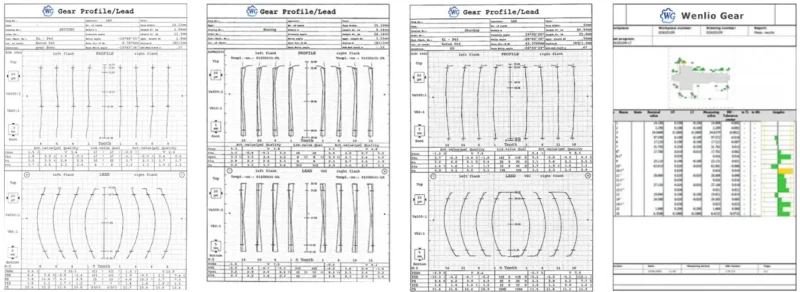
- Prototype and production inspection;
- Documentation, identification, and traceability.
When standard gears cannot directly meet the application requirements, Wenlio can help determine which features need to be customized and which can use conventional specifications, reducing unnecessary cost and overly tight tolerances.
FAQ
Q1:Are Custom Gears Always More Expensive Than Standard Gears?
The initial cost of custom gears is usually higher. However, if a standard gear requires equipment modifications, additional adapters, or compromises in service life, a custom solution may provide a lower total project cost.
Q2:Are Standard Gears Suitable for Production Equipment?
Yes. Standard gears can be used in production equipment when their dimensions, load capacity, accuracy, material, and mounting interfaces meet the application requirements.
Q3:Can a Standard Gear Be Modified for a Custom Application?
Some standard gears can be modified by machining the bore, keyway, or hub. The available machining allowance, heat-treatment condition, strength, and inspection requirements must be reviewed first.
Q4:When Is a Custom Gear Necessary?
A custom gear is normally required when the center distance, ratio, installation space, mounting interface, load, material, or mating requirements cannot be met by catalog products.
Q5:What Is Needed to Replace a Gear Without a Drawing?
Provide a sample in good condition, the mating gear, equipment model, OEM reference, mounting dimensions, and operating conditions. A damaged gear alone may not provide enough information to confirm every original parameter.
Conclusion
Standard gears are suitable when existing specifications match the application, lead time is important, and operating conditions are conventional. Custom gears are more suitable when installation space is limited, interfaces are unusual, performance requirements are specific, or compatibility with an existing system is required.
The decision should not be based on unit price alone. Equipment modifications, assembly risk, service life, inspection requirements, and future supply stability should also be considered. Contact us to send your drawings, sample information, operating conditions, and estimated quantity for a project-specific manufacturability review.
