
Blogs, Bevel Gear
What Is Module of a Bevel Gear
May
Introduction
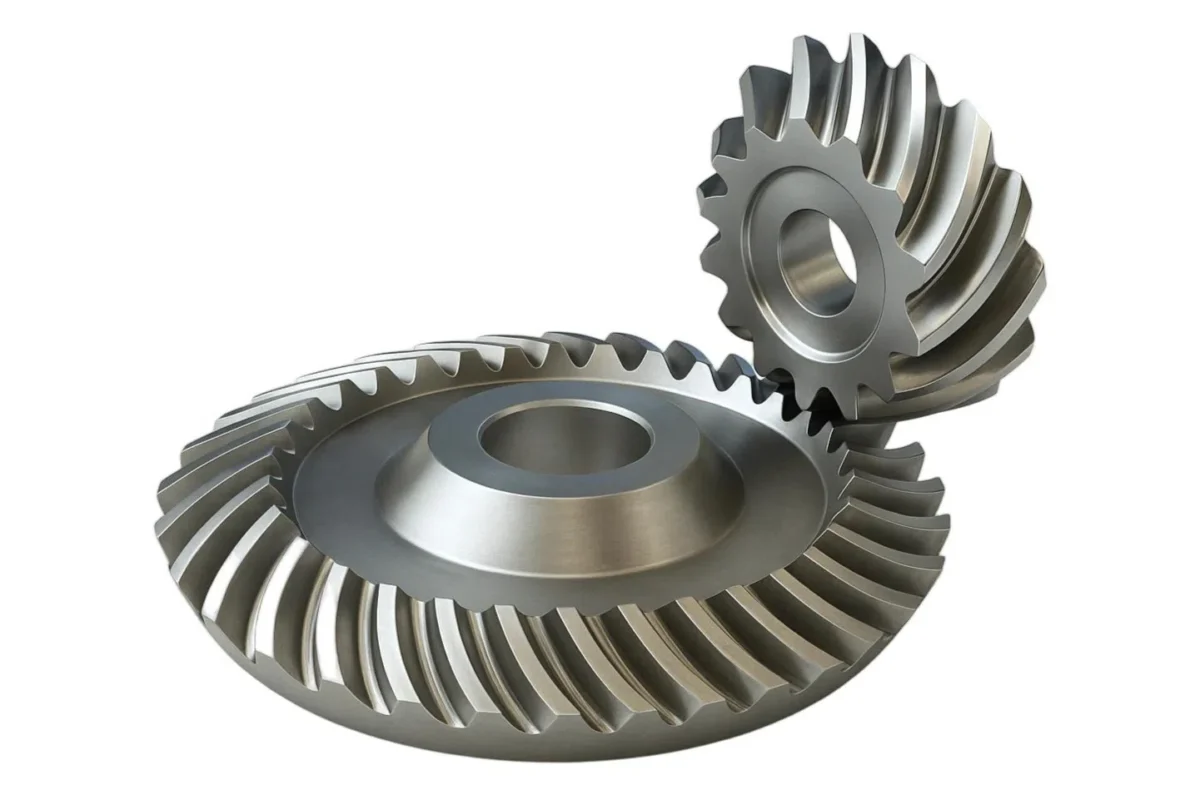
In a bevel gear project, the module is usually one of the first numbers checked on the drawing. It tells engineers how large the teeth are, but its influence goes further than size. Module also affects pitch diameter, tooth strength, machining route, contact behavior, and whether the gear pair can run smoothly after assembly.
For buyers, this small parameter can decide whether a quotation is accurate and whether a replacement gear can match the original part. Wenlio Gear works with bevel gear projects based on drawings, samples, OEM numbers, photos, and application data. This article explains what module means in bevel gears and how it should be reviewed before manufacturing.
What Is Module of a Bevel Gear?
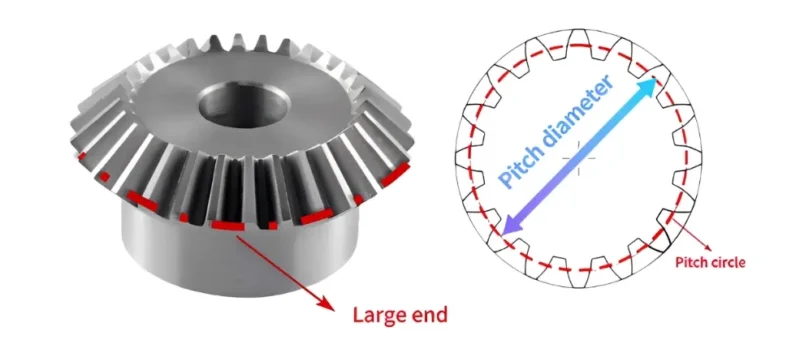
The module of a bevel gear is the tooth size parameter that describes the relationship between tooth pitch and π on the pitch cone surface.
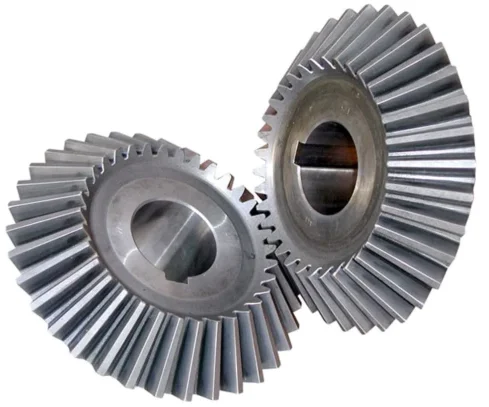
In simple terms, the module tells us how large the gear teeth are. A larger module usually means thicker and stronger teeth, while a smaller module usually means finer teeth, smoother meshing, and a more compact design. Unlike spur gears, bevel gears have teeth arranged on a conical surface, so the module must be understood together with the pitch cone, large end, small end, tooth direction, and gear type.
Why Is Bevel Gear Module Important?
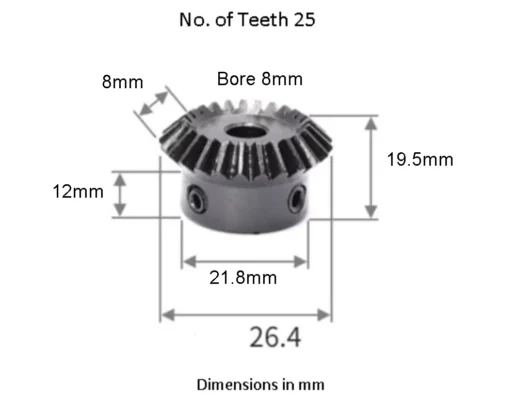
Module matters because it is tied to gear matching. A bevel gear pair cannot be selected by outside diameter alone. The module, tooth number, pressure angle, cone angle, face width, and mounting condition all need to work together. If one of these points is wrong, the result may be poor contact, high noise, fast wear, or a gear pair that cannot mesh correctly.
It also affects strength. A larger module usually gives the tooth more thickness and bending resistance, which is useful in heavy-duty applications such as agricultural machinery, construction equipment, truck transmission parts, and industrial drives. But larger is not always better.
The module also changes the size, weight, material cost, machining time, and heat treatment difficulty of the gear. A smaller module may help keep the design compact and smooth-running, but it still needs to meet the real torque, speed, lubrication, and duty-cycle requirements.
Types of Bevel Gear Module
In practice, “module” may not always refer to the same measuring position. This is why bevel gear drawings and supplier communication should make the reference clear, especially for spiral bevel and hypoid gears.
|
Module Type |
Meaning | Commonly Used For | Practical Note |
|
Normal Module |
Module measured normal to the tooth direction | Spiral bevel gears, hypoid gears | Often used in tooth design and cutting tool selection |
| Transverse Module | Module measured in the transverse plane | Straight bevel gears, spiral bevel gears | Often related to pitch diameter and gear size |
| Large-End Module | Module at the large end of the bevel gear | Most bevel gear drawings and manufacturing references | Common reference for quotation, inspection, and matching |
| Mean Module | Module at the mean cone distance | Engineering calculations and strength review | Useful for analysis but should not replace drawing reference |
| Small-End Module | Module near the small end of the gear | Rarely used as the main ordering reference |
Smaller than large-end module because the cone radius decreases |
For most sourcing and manufacturing communication, the large-end module is the safest reference unless the drawing clearly states another standard. In spiral bevel and hypoid gear projects, normal module and transverse module must be carefully distinguished because the spiral angle changes the relationship between them.
Who Uses Bevel Gear Module Information?
Bevel gear module is not only a design term. It is used across the whole project chain.
- Design engineers use module to define tooth size, pitch diameter, strength, and geometry.
- Manufacturing engineers use module to select cutting tools, machining processes, and inspection references.
- Quality engineers use module-related data to verify pitch, profile, tooth contact, backlash, and runout.
- Purchasing teams use module to compare quotations and confirm whether suppliers understand the real technical requirement.
- Maintenance teams use module to identify replacement bevel gears when only samples, photos, or partial dimensions are available.
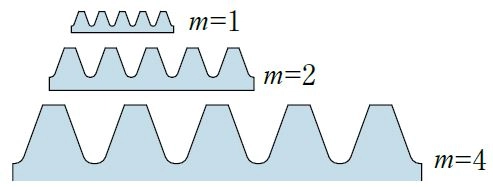
- OEM and aftermarket buyers use module together with tooth count, bore size, outside diameter, face width, and application information to avoid wrong matching.
In custom bevel gear work, module is only the starting point. A supplier still needs to check the full geometry, the mating gear, and the actual working condition before confirming production.
Key Features of Bevel Gear Module
|
Feature |
Explanation |
Impact on Gear Design |
| Defines Tooth Size | Module determines the basic tooth scale | Larger module means larger teeth |
| Affects Gear Diameter | With the same tooth count, larger module increases pitch diameter | Influences gearbox layout and installation space |
| Relates to Strength | Larger teeth usually improve bending strength | Important for high-torque applications |
| Influences Noise | Smaller modules often allow more teeth and smoother meshing | Useful for low-noise transmission systems |
| Affects Cost | Larger gears require more material and longer machining time | Impacts quotation and lead time |
| Requires Pair Matching | A bevel gear pair must have compatible module and geometry | Prevents incorrect meshing and early failure |
| Depends on Gear Type | Straight, spiral, zerol, and hypoid gears may use different module references | Important for correct drawing interpretation |
Benefits of Choosing the Right Bevel Gear Module
|
Benefit |
Why It Matters |
|
Better Load Capacity |
Correct module helps the gear teeth carry the required torque without premature bending failure |
| More Stable Meshing | Proper module selection supports better contact pattern, smoother rotation, and lower vibration |
| Lower Noise Risk | A suitable module helps balance strength, tooth count, contact ratio, and running smoothness |
| Improved Manufacturing Feasibility | Standard or reasonable module values make tooling, cutting, heat treatment, and inspection easier |
| Better Cost Control | The right module avoids overdesign, oversized blanks, unnecessary machining time, and excess material cost |
| Easier Replacement Matching | Clear module data helps suppliers identify or reverse-engineer bevel gears more accurately |
| Longer Service Life | Proper module selection reduces the risk of wear, pitting, tooth breakage, and overheating |
A common mistake is to choose a larger module simply because it looks stronger. In real gear projects, that can make the part heavier, more expensive, and harder to fit into the existing space. The better choice is the module that matches the load, speed, material, heat treatment, lubrication, and expected service life.
How to Choose a Supplier for Bevel Gear Module Projects
When module confirmation is involved, choose a supplier who can review the complete gear system, not just quote from one number.
- Confirm that the supplier understands bevel gear geometry, including cone angle, mounting distance, backlash, and tooth contact.
- Ask how they identify module from drawings or samples, especially when the original data is incomplete.
- Check whether they can manufacture the required gear type, such as straight bevel, spiral bevel, hypoid, or zerol bevel gears.
- Request inspection support, including dimensional checks, hardness results, runout data, and contact pattern review when needed.
- Compare engineering communication and process control, not only unit price.
Why Choose Us
Wenlio Gear works on custom bevel gear projects where the buyer may have a complete drawing, an old sample, an OEM number, or only partial gear information. When the module is clear, we review it against the mating gear and application. When it is not clear, we help identify it from the available dimensions, tooth count, photos, or samples.
Our work covers geometry review, material selection, machining, heat treatment, finishing, and inspection. For straight bevel gears, spiral bevel gears, hypoid gears, zerol bevel gears, and custom gear pairs, we pay close attention to contact pattern, backlash, runout, hardness, and surface quality. These details are often what decide whether the gear runs quietly, meshes correctly, and lasts in service.
FAQ
Q1: What is the module of a bevel gear?
It is the tooth size parameter of a bevel gear, used to define tooth spacing, pitch diameter, and basic gear size.
Q2: Is bevel gear module the same as spur gear module?
The concept is similar, but bevel gear teeth are arranged on a conical surface, so the reference position, usually the large end, must be clear.
Q3: Why is module important in bevel gears?
Module affects tooth strength, gear size, meshing quality, noise, manufacturing cost, and service life.
Q4: Do two bevel gears need the same module?
Yes, but module alone is not enough. Tooth count, pressure angle, cone angle, backlash, and mounting distance must also match.
Q5: Can Wenlio help if the module is unknown?
Yes. Wenlio can review drawings, samples, photos, dimensions, and application data to help confirm the module and evaluate the gear project.
Conclusion
The module of a bevel gear may look like a simple number, but it affects tooth size, load capacity, pitch diameter, meshing behavior, manufacturing cost, and long-term reliability. In real projects, it should be reviewed together with tooth count, cone angle, pressure angle, material, heat treatment, mating gear data, and working conditions.
The right module is not always the largest one. It is the one that fits the actual application and keeps the gear pair properly matched from design to inspection. If you are developing a new bevel gear, replacing an existing gear, or confirming an unknown module from a sample, you are welcome to Contact Us with your drawings, photos, dimensions, and operating conditions.
