
Blogs, Bevel Gear
When Is CNC Milling Better for Bevel Gear Prototypes?
Jul
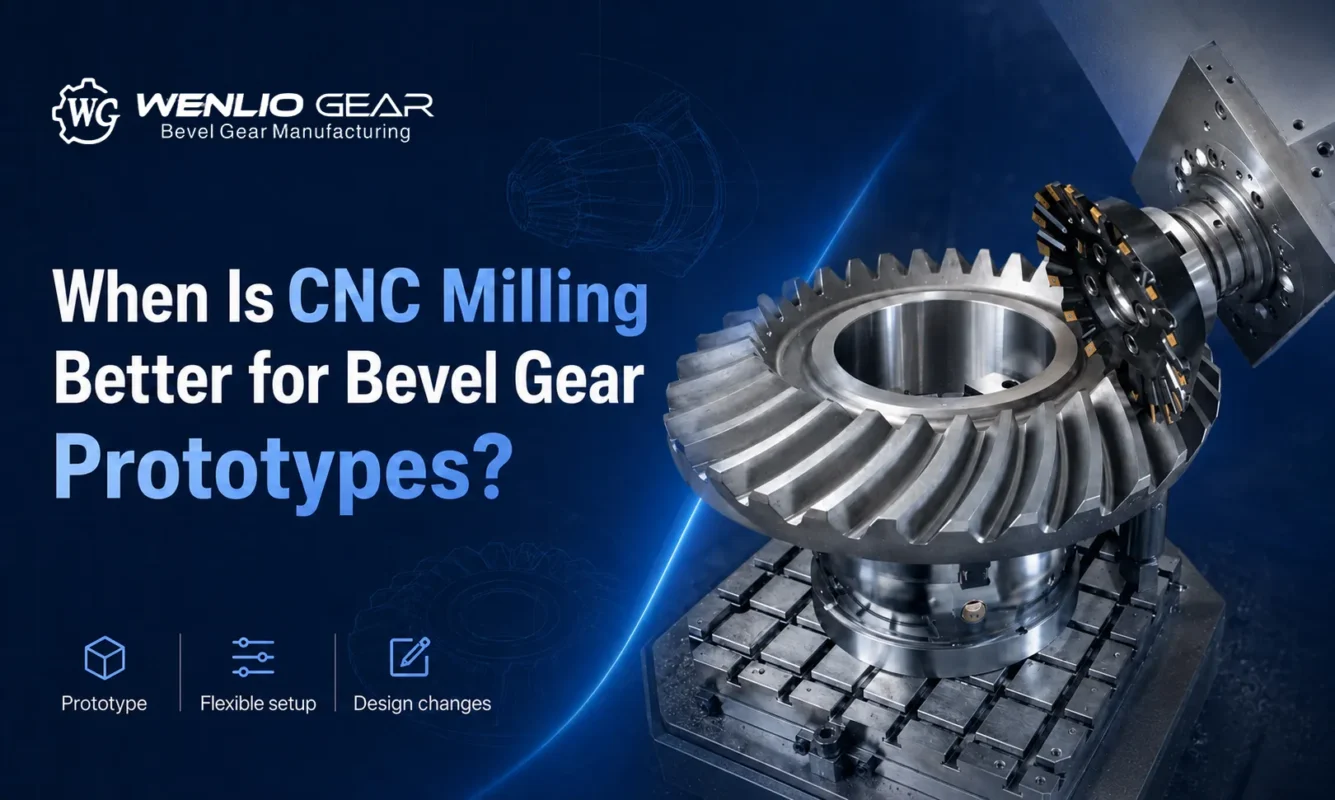
Bevel gear prototypes do not always need dedicated cutting tools from the beginning. CNC milling may offer a more flexible option when the design is still changing, only a few parts are required, or the component has an unusual structure.
At Wenlio, we review the drawing, gear type, accuracy requirements, material, quantity, and future production plan before suggesting a suitable manufacturing route.
Quick Answer
CNC bevel gear milling usually suits one-off parts, prototypes, small batches, designs that are not yet finalized, and projects where investing in dedicated cutting tools is not yet economical.
When the design is stable and the project requires continuous production, shorter cycle times, and lower unit costs, a dedicated bevel gear cutting process is usually worth evaluating.
What Is CNC Bevel Gear Milling?
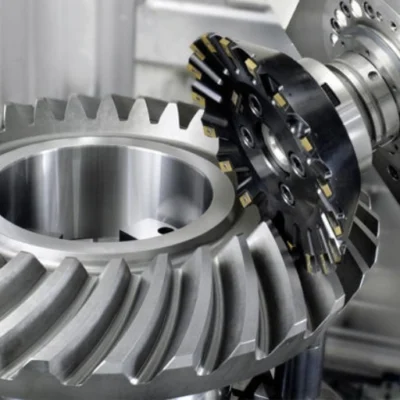
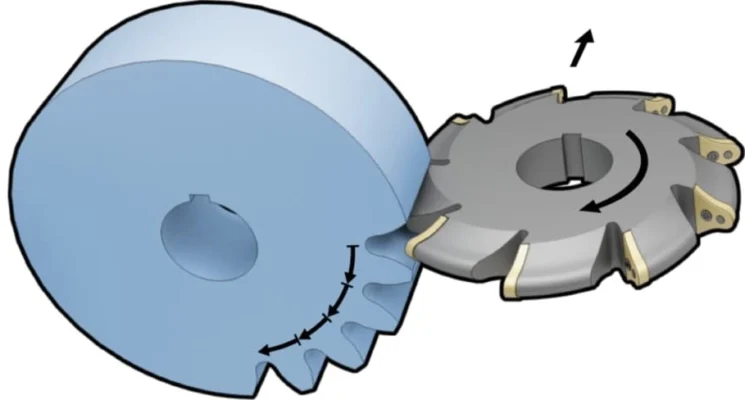
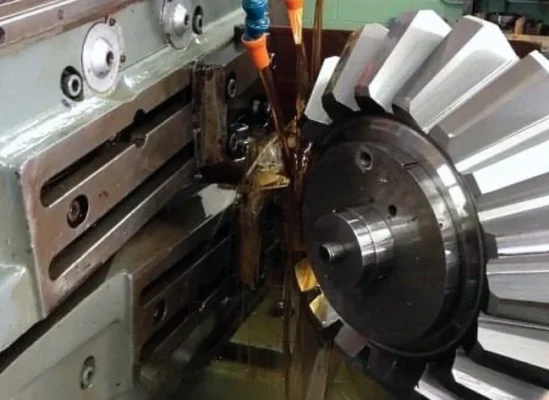
CNC bevel gear milling uses numerically controlled machines, cutting tools, and programmed toolpaths to form the gear teeth.
Unlike dedicated bevel gear cutting, this method relies more heavily on digital models, programming, and coordinated machine movement. It can therefore provide greater flexibility for design changes and low-volume production.
Its purpose is not to replace every dedicated bevel gear process. Instead, it offers another manufacturing option for selected prototype and small-batch projects.
For a broader view of the complete production route, see how different steps affect the bevel gear manufacturing process.
When Is CNC Bevel Gear Milling Suitable for Prototypes?
The Design Is Still Changing
Investing in dedicated tooling too early may increase modification costs when the gear dimensions, mounting structure, or mating relationship are still under review.
Because CNC milling relies mainly on digital models and programs, the manufacturer can reassess the toolpath after reasonable design changes. This makes the process useful for projects that have not yet reached a fully frozen design.
Only a Few Parts Are Needed
When a project requires only one or several prototypes, the cost of dedicated tooling and process setup may be difficult to spread across the order quantity.
CNC milling may suit:
- Design-validation prototypes;
- Assembly test parts;
- Functional prototypes;
- Trial replacement parts for older equipment;
- Low-volume development projects.
However, a low quantity does not always mean a low price. Programming, machining time, workholding, and inspection still affect the quotation.
Dedicated Tooling Is Not Yet Economical
Some projects may eventually move to a dedicated cutting process, but investing in the full tooling package may not make sense before the design is confirmed.
A CNC-milled prototype can first help verify mounting dimensions, mating relationships, and basic manufacturability. Once the design and expected quantity become stable, the production process can be reassessed.
The Part Has a Special Structure
Special hubs, complex bores, or limited machining access may make the part more difficult to produce on dedicated equipment.
A CNC machine may process some non-tooth features together with the gear teeth. However, the manufacturer still needs to review tool access, workholding stability, and inspection capability.
What Are the Advantages of CNC Gear Milling?
Flexible for Design Changes
CNC milling relies on digital models and programs, so the process can be adjusted more easily when prototype testing leads to reasonable design changes.
Suitable for Low Quantities
For one-off and small-batch projects, CNC milling may reduce some of the initial investment in dedicated cutters and tooling.
Useful for Complex Parts
When the gear forms part of an integrated hub, shaft, or mounting structure, CNC machining may reduce some repeated setups.
Helps Check Manufacturability
Prototype machining can reveal issues with drawings, datums, machining access, and inspection before the project moves into production.
What Are the Limits of CNC Bevel Gear Milling?
Machining Time May Be Longer
CNC milling usually forms the tooth surface through multiple tool movements. As production volume increases, longer cycle times can affect both unit cost and delivery time.
Results Depend on More Than the Machine
Final quality also depends on the digital model, program, cutting tool, workholding, machine condition, and inspection method.
Therefore, using a five-axis machine alone does not guarantee that a bevel gear will meet the required accuracy.
Inspection Is Still Necessary
A program and 3D model cannot replace final inspection. Depending on the project, the finished prototype may require checks for:
- Critical dimensions;
- Runout;
- Tooth geometry;
- Backlash;
- Contact pattern;
- Meshing with the mating gear.
Buyers can review how to read a gear inspection report before confirming which inspection items and records the project requires.
CNC Milling vs. Dedicated Bevel Gear Cutting
| Comparison Item | CNC Milling | Dedicated Bevel Gear Cutting |
| Suitable quantity | One-off parts, prototypes, and small batches | Stable batch production |
| Design changes | Programs can be adjusted relatively easily | Tooling and process changes may be required |
| Initial tooling | Lower dependence on dedicated cutting tools | Usually requires dedicated cutters and process setup |
| Cycle time | Individual machining time may be longer | Usually more efficient in batch production |
| Main advantage | Flexibility | Repeatability and production efficiency |
| Typical use | Prototypes and special low-volume parts | Long-term production after design approval |
This table shows general trends only. The final choice still depends on the gear type, size, accuracy requirements, and order quantity.
What Should Buyers Confirm Before Choosing CNC Milling?
Drawing and Gear Information
Buyers should provide:
- A 2D drawing and 3D model;
- Tooth count, module, and pressure angle;
- Critical mounting dimensions;
- Accuracy and tolerance requirements.
A basic 3D model may not contain all the information needed to define the bevel gear tooth geometry.
Mating Gear Information
Because bevel gears work as a pair, buyers should also provide the ratio, shaft angle, mounting position, backlash target, and contact requirements.
Without mating gear information, the supplier may only be able to assess the individual part rather than the complete meshing relationship.
Material and Heat Treatment
Buyers should clarify whether the prototype will use the final production material, whether heat treatment is required, and whether the part is intended for assembly validation or actual load testing.
A soft prototype used for dimensional checking may require a different process from a heat-treated functional part.
Quantity and Future Plan
The manufacturer also needs to know:
- Prototype quantity;
- Initial batch quantity;
- Estimated annual demand;
- Whether the design is frozen;
- Whether the project may move into stable production.
These details help determine whether the prototype process can remain practical for future orders.
Send your drawing, mating gear information, and required quantity to Wenlio for an assessment of whether CNC milling suits your project.
Can a CNC-Milled Prototype Move into Mass Production?
Yes, but the prototype process may not always be suitable for direct use in production.
CNC milling may continue to make sense when annual demand remains low, the component has a special structure, and the machining time and cost remain acceptable.
Once the project enters stable batch production, the buyer and supplier should reassess:
- Cycle time;
- Tool life;
- Batch consistency;
- Inspection frequency;
- Unit cost;
- Feasibility of dedicated gear cutting.
The prototype stage focuses on flexible validation. Production places greater emphasis on consistency, efficiency, and cost.
When the manufacturing route changes, the project may also require another sample, additional inspection, or renewed assembly approval.
Why Choose Wenlio?
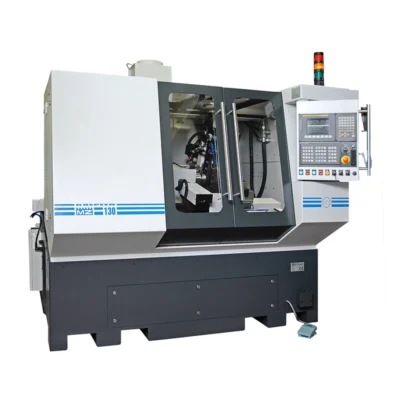
Wenlio’s custom gear capabilities support projects from prototype review and process selection to inspection and production planning.
Based on the drawing, 3D model, mating gear information, and expected quantity, the project review may cover:
- Gear parameters and machining feasibility;
- Material and heat-treatment requirements;
- CNC milling and dedicated cutting options;
- Prototype and production quantities;
- Required inspection scope.
Wenlio does not recommend the same process for every project. The manufacturing route should match the design status, quantity, accuracy requirements, and future production plan.
FAQ
Can All Bevel Gears Be Made by CNC Milling?
Not always. Suitability depends on the gear type, size, tooth geometry, machine capability, tool access, and accuracy requirements.
Is CNC Milling Cheaper for Bevel Gear Prototypes?
For a small number of prototypes, it may reduce some dedicated tooling costs. However, programming, machining, workholding, and inspection costs still need to be considered.
Can a CNC-Milled Gear Be Heat-Treated?
Yes. However, the process plan should account for heat-treatment distortion and any required finishing afterward.
Is a Five-Axis Machine Enough to Produce Accurate Bevel Gears?
Not by itself. Programming, cutting tools, workholding, machine condition, and inspection capability are also important.
Should Mass Production Use the Same Process as the Prototype?
Not always. Before production, buyers and suppliers should reassess efficiency, repeatability, tool life, inspection requirements, and unit cost.
Conclusion
CNC bevel gear milling suits prototype projects where the design is still changing, only a small quantity is required, the part has a special structure, or investing in dedicated tooling is not yet economical.
However, buyers should not choose a process simply because it uses CNC or five-axis machining. The drawing, mating relationship, material, accuracy, inspection requirements, and future quantity all affect the final decision.
Send your 2D drawing, 3D model, mating gear information, and required quantity to contact Wenlio for a manufacturability review of both the prototype stage and future production.
