
Blogs, Bevel Gear
Bevel Gear Pitch Diameter What Buyers Should Know
Apr
Introduction
In bevel gear projects, “pitch diameter” looks like a simple term, but it causes more confusion than many buyers expect. One drawing may show a large-end pitch diameter. A strength calculation may use the mean-end section instead. A field engineer may talk about the operating pitch diameter after assembly. All three are related, but they are not interchangeable.
At Wenlio Gear, this is one of the most common sources of RFQ mistakes and technical back-and-forth. A buyer may request a pitch diameter without clarifying which section or which condition they mean. The supplier may quote to the large-end reference value, while the engineering team is thinking about mean-end stress or running behavior in mesh. This article explains bevel gear pitch diameter from a buyer-friendly but engineering-correct point of view, so the same term does not lead to three different assumptions.
What bevel gear pitch diameter is
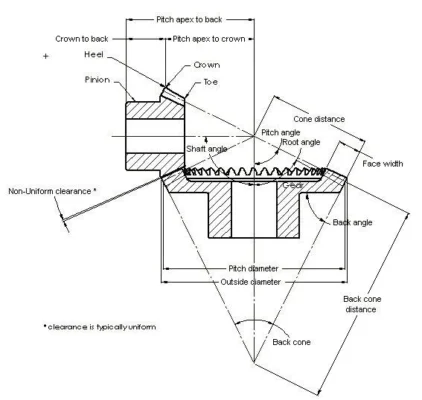
Bevel gear pitch diameter is the pitch diameter defined on a bevel gear section, most commonly at the large end, and it can refer either to a fixed reference value or to a working value that exists only during actual meshing.
Why buyers should care
Because “pitch diameter” is not always one fixed number.
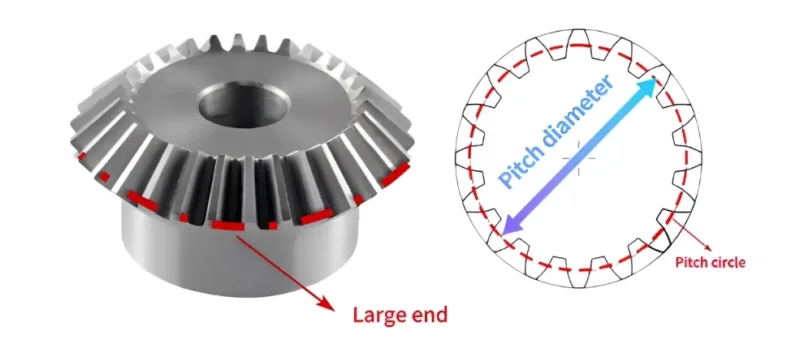
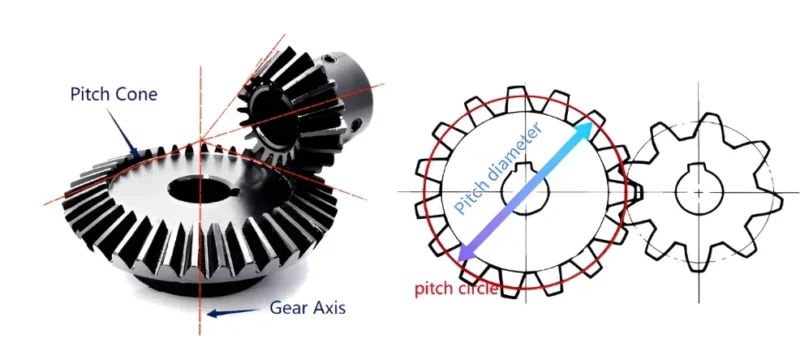
In bevel gears, the word may refer to the large-end reference pitch diameter on the drawing, the mean-end diameter used in strength work, or the operating pitch diameter that reflects real meshing after assembly. A buyer does not need to calculate all of these every day, but they do need to know which one belongs in the RFQ.
Because the wrong value can create the wrong order.
If a quote uses one section while the engineering team means another, the gear may still be manufactured, but the pairing logic, installation assumptions, or stress expectations can be wrong. This usually shows up later as fit complaints, noise questions, or confusion over whether two gears are really interchangeable.
Because quoting, analysis, and assembly use different “diameters.”
The large end usually drives ordering language. The mean end matters more in bending and contact stress analysis. The operating pitch diameter becomes relevant when the discussion moves to real assembly and running behavior. Once those roles are separated, communication becomes much cleaner.
The pitch diameter terms that should not be mixed up
| Term | What it means | Main use | Common mistake |
|---|---|---|---|
| Reference pitch diameter | Fixed design value of one gear | Drawing, quoting, machining, pairing | Confusing it with working mesh condition |
| Operating pitch diameter | Dynamic value during real meshing | Assembly review, running analysis | Treating it as the drawing value |
| Large-end pitch diameter | Default pitch diameter in most bevel gear language | RFQ, design reference, selection | Replacing it with mean-end or small-end values |
| Mean-end pitch diameter | Diameter at the middle of face width | Strength and stress analysis | Using it as the ordering diameter |
| Small-end pitch diameter | Diameter at the small end | Boundary and structural checks | Using it for pairing or quotation |
This is the first practical rule: when someone says “bevel gear pitch diameter” without more detail, they usually mean the large-end reference pitch diameter.
Who usually needs this distinction
- Buyers preparing RFQs and comparing supplier quotations
- Design engineers defining geometry and ratio
- Manufacturing engineers choosing blanks and machining references
- Quality engineers checking dimensional and strength-related reports
- Assembly engineers reviewing mounting distance and running behavior
- Field engineers troubleshooting mesh, noise, or pairing issues
Not every person on the project needs the same depth of theory, but everyone benefits when the same term means the same thing across the team.
How each diameter works in practice
| Diameter type | What defines it | Where it matters most | What it tells you |
|---|---|---|---|
| Large-end reference pitch diameter (d) | Module and tooth count at the large end | Drawings, RFQs, machining, selection | Main nominal design reference |
| Mean-end pitch diameter (dm) | Large-end geometry plus face-width position | Strength and life calculations | Better section for bending and contact analysis |
| Small-end pitch diameter (ds) | Large-end geometry plus small-end section position | Structural and boundary checks | Useful for local geometry review, not for ordering |
| Operating pitch diameter (dw) | Actual mounting and meshing condition | Assembly and running analysis | Dynamic meshing condition after installation |
In simple buying language, that means:
- Quote and order → large-end reference pitch diameter
- Check strength → mean-end diameter
- Discuss running condition → operating pitch diameter
That one distinction already removes a large part of the confusion.
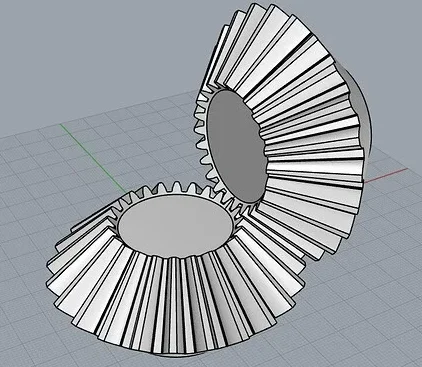
What clear pitch diameter language improves
| Project goal | What improves | Why it helps |
|---|---|---|
| Cleaner RFQs | Buyers and suppliers discuss the same section | Fewer quotation errors |
| Better strength review | Mean-end values are used where they belong | More realistic bending and contact calculations |
| Better interchangeability control | Reference geometry stays clearly defined | Less mismatch across batches or suppliers |
| Easier assembly discussions | Operating behavior is kept separate from nominal design data | Faster diagnosis of mesh-related issues |
| Better cross-team communication | Design, QC, purchasing, and service use the same terms | Fewer avoidable misunderstandings |
A useful way to remember it is this: the reference pitch diameter helps define the gear on paper, while the operating pitch diameter helps explain how the pair behaves in service.
Supplier selection tips buyers should use
- State which pitch diameter you mean. If the RFQ uses the large-end reference pitch diameter, say so directly. Do not assume every supplier will read “pitch diameter” the same way in a bevel gear project.
- Do not order from the mean-end or small-end value. Those values are useful in engineering review, but they should not replace the main reference diameter used for quotation and pairing.
- Do not treat pitch diameter as the only matching condition. Pitch diameter alone is not enough for interchangeability. Module, tooth number, pressure angle, tooth form, cone angle, and sometimes mounting assumptions also need to match.
- Ask how the supplier reviews operating condition. If the project is sensitive to noise, vibration, or assembly behavior, reference pitch diameter by itself is not enough. The supplier should also understand mounting distance and real meshing condition.
- Keep drawing language and field language separate. Many avoidable problems start when the design team is discussing a fixed reference value, while the field team is describing a running condition without making that distinction clear.
Why Choose Us
Wenlio Gear supports precision bevel gear projects with a strong focus on clear technical language, practical manufacturability, and inspection evidence that matches the real application.
For bevel gear programs, we help customers separate design reference values from operating mesh behavior so drawings, quotations, strength review, and assembly checks stay aligned. In practice, that means making the large-end reference pitch diameter clear for ordering and pairing, while keeping mean-end and operating discussions tied to the correct engineering stage.
We also value consistency across teams. That helps reduce confusion between prototype approval, batch production, and field troubleshooting, especially when one project passes through several departments before release.
FAQ
Q1: Is bevel gear pitch diameter always the large-end diameter?
A: In most drawing and ordering language, yes. That is usually the default meaning. But in analysis work, people may also use mean-end or operating pitch diameter, so the context still matters.
Q2: What is the difference between reference and operating pitch diameter?
A: Reference pitch diameter is a fixed design value of one gear. Operating pitch diameter is a dynamic value that only exists when a pair of gears is actually meshing under real mounting conditions.
Q3: Why is mean-end pitch diameter important?
A: Because many strength calculations use the mean-end section rather than the large end. That usually gives a more practical basis for bending and contact stress review.
Q4: Can two bevel gears with the same pitch diameter be interchangeable?
A: Not by pitch diameter alone. Module, tooth number, pressure angle, cone geometry, and tooth form also need to match before interchangeability becomes realistic.
Q5: Why does pitch diameter confusion show up so often in the field?
A: Because buyers, engineers, and field teams often use the same term for different sections or different conditions. Once the reference value and the operating value get mixed up, the wrong conclusion usually follows.
Conclusion
Bevel gear pitch diameter is easy to oversimplify, but it deserves more care than that. The large-end reference diameter helps define the gear on paper and in the RFQ. The mean-end diameter matters in strength work. The operating pitch diameter becomes important when the discussion shifts to actual meshing after assembly. Once those roles are kept separate, ordering gets cleaner, technical review gets easier, and troubleshooting becomes much more efficient.
If you are preparing a bevel gear RFQ, checking a drawing, or trying to understand why a gear pair behaves differently in service than it does on paper, you are welcome to Contact Us with your geometry and application details so we can help align the right pitch diameter language with a practical manufacturing and inspection plan.
