Author Archives: Jake Ni - Technical Director

Wenlio Gear Teamwork: January 2026 Outing

team building-Wenlio gear

Introduction In January 2026, the Wenlio Gear  team began the year with an outdoor teamwork at a campsite. The day combined structured coordination challenges, role-based rotations, and short debrief sessions designed to strengthen one thing we rely on every day: alignment. In manufacturing, stable results are rarely created by individual effort alone. They come from […]

Gear Blank Distortion Control: Start with Forging

Gear Blank Forging Process, Wenlio Gear Manufacturing

1. Introduction Does heat-treatment distortion start at forging? In many gear-blank projects, yes—because the furnace doesn’t “reset” a blank; it often releases and amplifies what already exists: residual stress, microstructure gradients, and geometry sensitivity. Wenlio’s forging guidance also highlights that pre-heat treatments (including isothermal normalizing, when cost permits) can improve machinability and heat-treatment deformation stability. Why does […]

Custom Gear Lead Time: How Wenlio Keeps It On Track

Custom Gear Lead Time: How Wenlio Keeps It On Track

1. Introduction When buyers ask about gear lead time, they usually want one thing: “Can you ship on the date I need?” On the factory floor, we answer that question by looking at a simple chain: review → blanks → machining → heat treatment → finishing → inspection → packing. Wenlio Gear focuses on gear […]

How Wenlio Gear Packages and Ships Precision Gears Safely

wenlio gear anti-rust bag

1. Introduction When a bevel gear leaves the inspection room, it is “finished” on paper—but it is not safe yet. Moisture, impacts, and mixed batches can still ruin a good part in transit. At Wenlio Gear, we treat packaging as the last production step. This is the same practical workflow we use for bevel gears […]

What Is a Gear Ratio? Factory Guide from Wenlio Gear

Gear Ratio

1. Introduction On a whiteboard, a gear ratio is just a number like 3.5:1 or 6:1. On our shop floor at Wenlio Gear, that same number decides whether a tractor climbs a slope smoothly, whether a truck axle runs too hot, and whether an EV angle drive stays quiet at high speed. Wenlio Gear is […]

How Wenlio Gear Matches Bevel Gear Sets

bevel gear

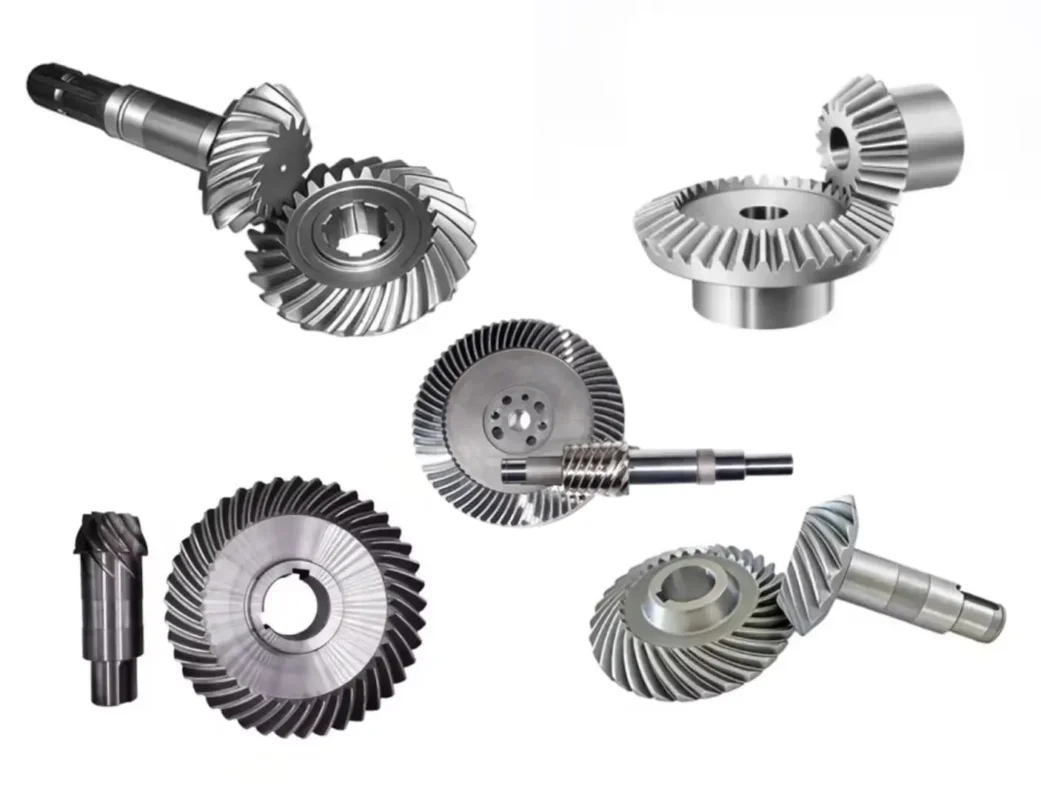
1. Introduction On a drawing, a bevel gear looks like a single part with teeth, tolerances and notes. Inside a real machine, it almost never works alone. In axles, final drives and many right-angle gearboxes, bevel gears run as matched sets—typically a ring and a pinion—sharing torque, contact pattern and noise behaviour over thousands of […]

Bevel Gear Applications in Five Industries

Bevel Gear Applications in Five Industries

1. Introduction Wherever power needs to turn a corner, you will usually find a bevel gear set doing the hard work. From tractor axles to truck differentials and compact EV drives, bevel gears help engineers move torque smoothly between intersecting shafts. Wenlio Gear is a precision gear manufacturer and custom gear supplier dedicated to providing […]

Gear Grinding vs Shaving vs Hobbing

Gear Grinding vs Shaving vs Hobbing

1.Introduction Wenlio Gear specializes in precision gears with a strong focus on bevel gears, guided by the value “precise transmission, reliable performance.” If you want to see how we manage quality from machining to finishing, explore our Manufacturing page and our Bevel Gear Manufacturing Process guide. This article is a plain-language explanation of three common processes you’ll see in […]

Bevel Gear Heat Treatment: How We Prevent Launch Risks

bevel gear Heat treatment

1. Introduction A bevel gear project usually looks fine on paper: the drawing is clear, the machining plan is set, and the lead time is agreed. The real pressure shows up later—when the gearbox is commissioned and the contact behavior becomes visible. If the gearset fails at that stage, the cost is never limited to […]

ISO Standards for Gear Manufacturing Explained

ISO

1. Introduction: Why ISO standards matter Gears do far more than simply rotate. They have to fit into a housing, run with other components, carry torque and speed, and keep doing it for years without surprise failures. Because of this, gear design and production cannot rely only on “experience” or intuition. They also need clear, […]