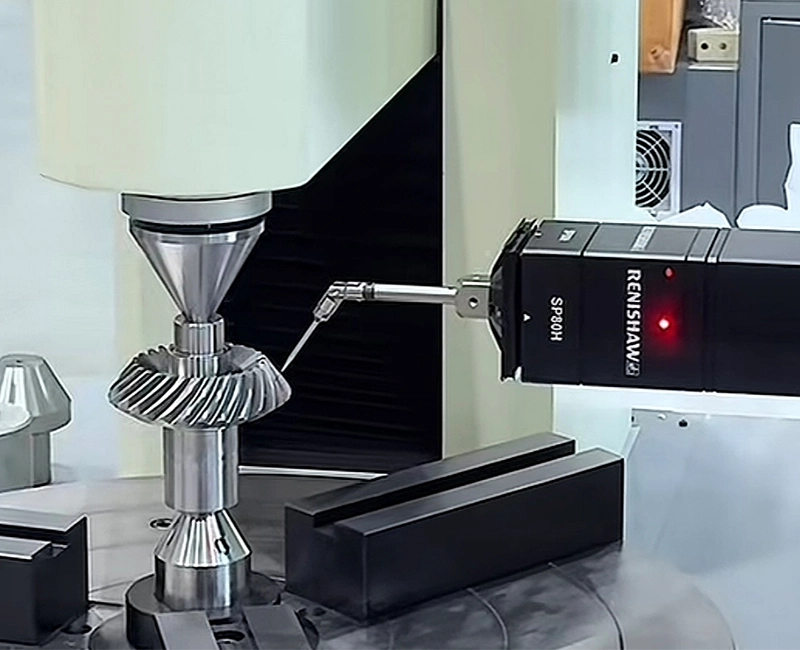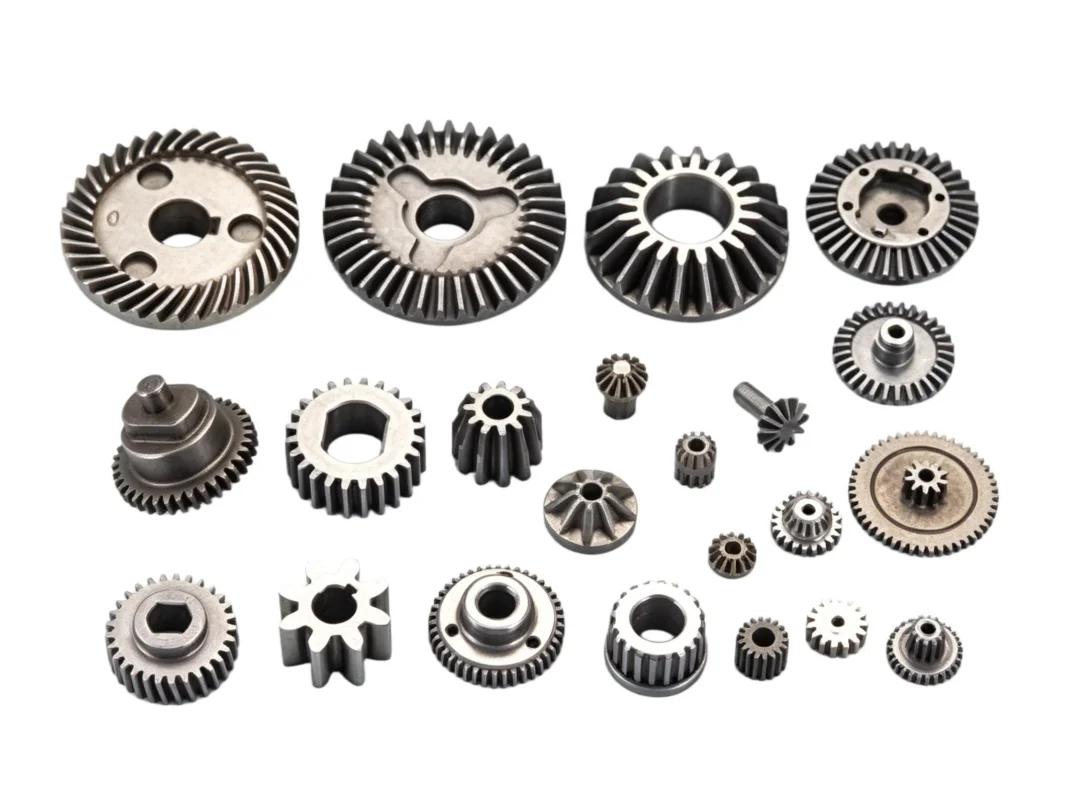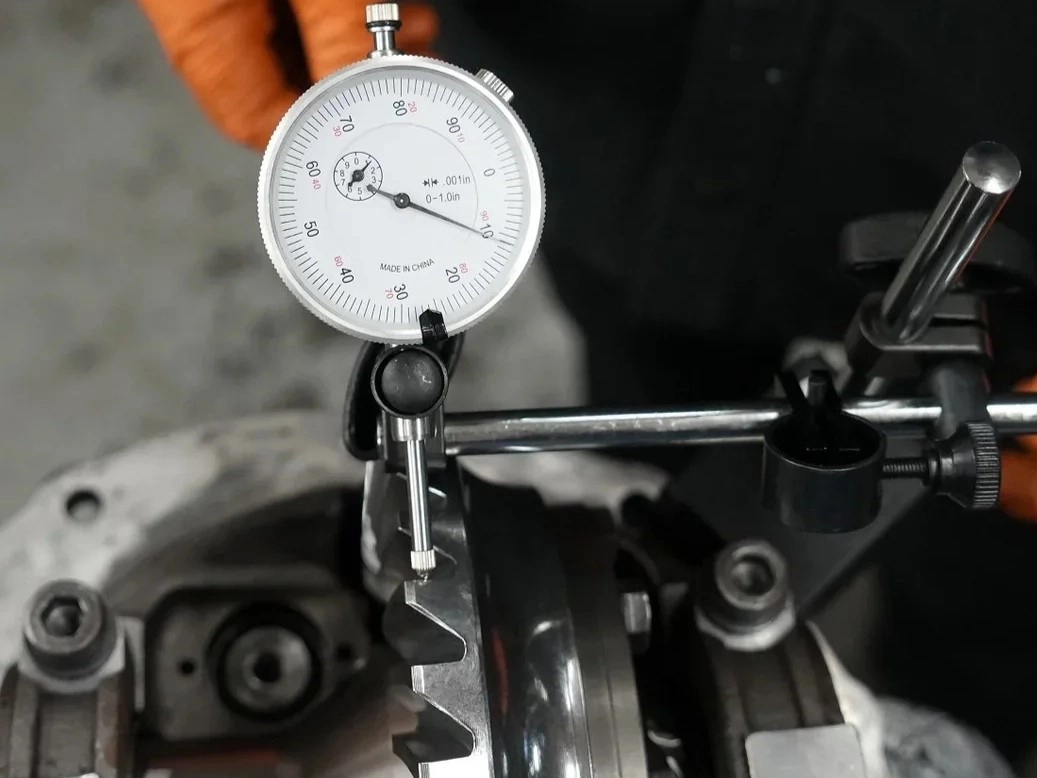
Introduction Miter gear sets are bevel gear pairs that transmit motion between intersecting shafts (most often 90 degrees) with a fixed 1:1 ratio—they change direction without changing speed. That sounds straightforward, but “runs well” depends on a small number of practical choices: tooth type, backlash, mounting references, lubrication, and the acceptance criteria used to judge fit and […]
Author Archives: wenliogear@gmail.com
Introduction Internal spline broaching is one of the fastest ways to make accurate keyways and spline profiles inside a bore. When the process is right, parts come off the machine consistent and clean. When it is not, you usually see it as chatter marks, uneven tooth thickness, tight assembly, or fast wear in service. This […]
Introduction When buyers search “hypoid gear vs bevel gear,” they are usually not looking for theory. They want to know which gear set will run cooler, last longer, carry more load, or fit a tight layout.From a supplier’s viewpoint, bevel and hypoid gear sets belong to the same family, but they behave differently because their […]
Introduction Bevel gear efficiency is easy to feel in real machines: more heat, higher noise, faster wear, or rising power consumption. In our daily production and inspection work, we often hear the same question: “The gears look fine—so why is the system getting hotter and less efficient?” This article shares a simple factory view of what […]
1. Introduction: what “custom bevel gear service” really means Custom bevel gear services help transmit power between intersecting shafts, most commonly to change direction in compact right-angle drives. In real machines, off-the-shelf gears often miss the details that decide performance: mounting distance, tooth contact pattern under load, noise targets, housing constraints, or a non-standard shaft […]
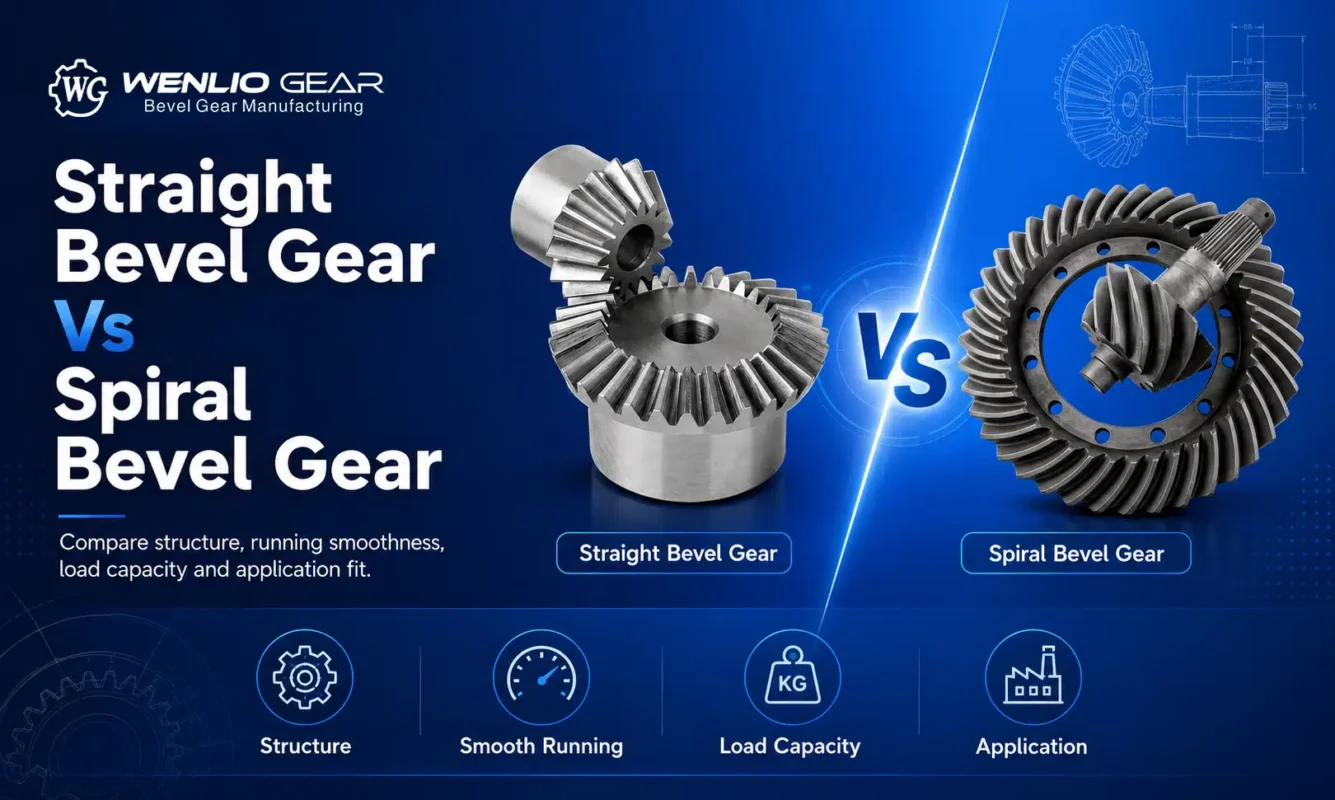
Introduction Right-angle gear stages show up everywhere: differential and axle systems, industrial reducers, printing presses, packaging lines, machine tools, and compact robotic joints. When the shafts intersect (often at 90°), bevel gears are usually the most space-efficient choice. But bevel gears are not “one-type fits all.” A straight bevel set can be cost-effective, yet it may […]
Introduction In January 2026, the Wenlio Gear team began the year with an outdoor teamwork at a campsite. The day combined structured coordination challenges, role-based rotations, and short debrief sessions designed to strengthen one thing we rely on every day: alignment. In manufacturing, stable results are rarely created by individual effort alone. They come from […]
1. Introduction Does heat-treatment distortion start at forging? In many gear-blank projects, yes—because the furnace doesn’t “reset” a blank; it often releases and amplifies what already exists: residual stress, microstructure gradients, and geometry sensitivity. Wenlio’s forging guidance also highlights that pre-heat treatments (including isothermal normalizing, when cost permits) can improve machinability and heat-treatment deformation stability. Why does […]
1. Introduction When buyers ask about gear lead time, they usually want one thing: “Can you ship on the date I need?” On the factory floor, we answer that question by looking at a simple chain: review → blanks → machining → heat treatment → finishing → inspection → packing. Wenlio Gear focuses on gear […]
1. Introduction When a bevel gear leaves the inspection room, it is “finished” on paper—but it is not safe yet. Moisture, impacts, and mixed batches can still ruin a good part in transit. At Wenlio Gear, we treat packaging as the last production step. This is the same practical workflow we use for bevel gears […]