Category Archives: Bevel Gear

Looking for a reliable bevel gear factory? Explore our offerings to find top-notch bevel gears for various applications today.

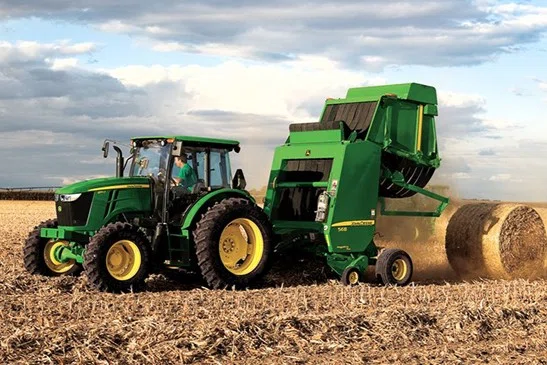
Bevel Gears for Tractors and Agricultural Machinery

Introduction Tractors, harvesters, and tillage machines demand a lot from their drivetrains. Because they run at low speed and high torque, see frequent shock loads, and operate in dust, mud, and moisture, long duty cycles are the norm. As a result, bevel gear sets often sit at key turning points in the power flow—changing direction, […]
How Does a Bevel Gear Work? Types and Contact Pattern Basics

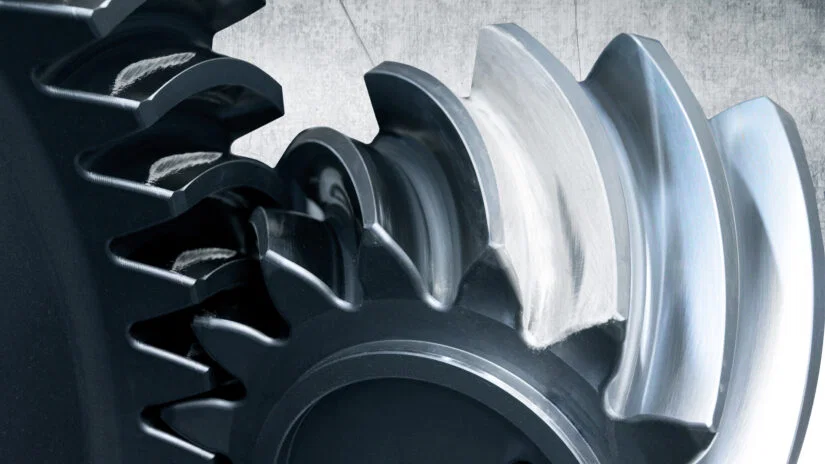
How Does a Bevel Gear Work Types and Contact Pattern Basics

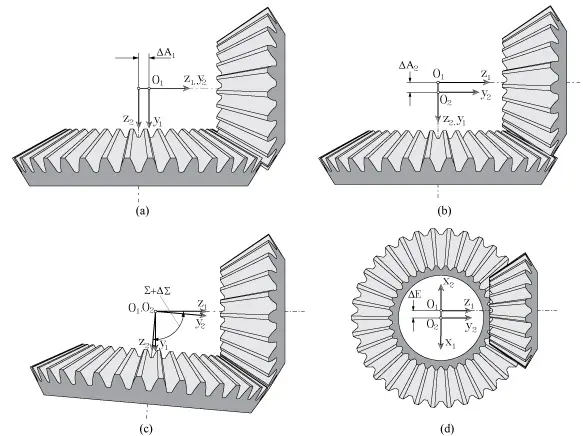
Introduction How bevel gears work looks simple on paper—two gears turn power through a 90° corner. In real machines, the details decide everything: contact pattern under load, noise targets, housing constraints, and allowable center-distance variation. That is why bevel gear sets can behave very differently even when the ratio looks the same. At Wenlio Gear, […]

Worm Gear vs Bevel Gear: Choosing a Right Angle Drive

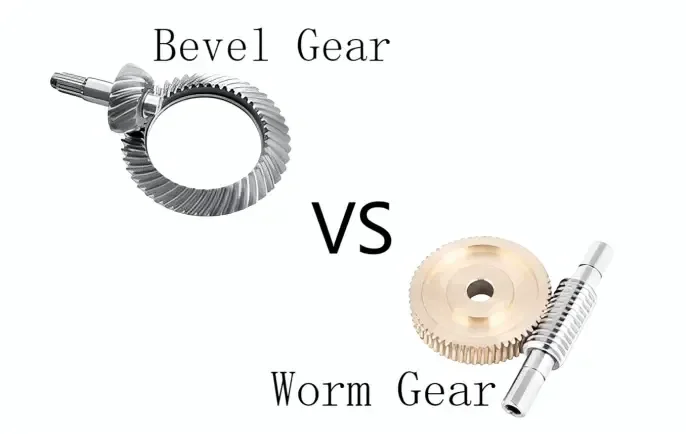
Worm Gear vs Bevel Gear

Introduction Right-angle drives show up everywhere—from compact positioning mechanisms to heavy-duty power transfer. Designers often narrow the options to two classic solutions: worm gear sets and bevel gear sets. Both can turn motion by 90°, yet they behave very differently in efficiency, heat, noise, and backdrivability. At Wenlio Gear, we see these differences surface in […]

Pinion Gear Types: 7 Common Pinion Gears Explained

Pinion Gear Types 7 Common Pinion Gears Explained

Introduction Pinion gear types can look similar on a drawing, but they behave very differently in real machines. In most gear pairs, a pinion is the gear with fewer teeth and a smaller outside diameter. A common exception is the miter gear set, where two gears are typically specified as a matched 1:1 pair. This […]

The Differences Between Bevel Gears And Planetary Gears

Introduction Bevel gears and planetary gears both transfer torque, yet they solve different design problems. Bevel gears are built for intersecting shafts and for changing the direction of power. Planetary gears, in contrast, are often chosen for compact coaxial layouts, flexible ratios, and strong torque density. At Wenlio Gear, we focus on measurable, manufacturable bevel […]

Hypoid Gear vs Bevel Gear : How to Choose

Hypoid Gear vs Bevel Gear How to Choose

Introduction When buyers search “hypoid gear vs bevel gear,” they are usually not looking for theory. They want to know which gear set will run cooler, last longer, carry more load, or fit a tight layout.From a supplier’s viewpoint, bevel and hypoid gear sets belong to the same family, but they behave differently because their […]

The Efficiency of Bevel Gears: A Factory Guide

The Efficiency of Bevel Gears A Factory Guide

Introduction Bevel gear efficiency is easy to feel in real machines: more heat, higher noise, faster wear, or rising power consumption. In our daily production and inspection work, we often hear the same question: “The gears look fine—so why is the system getting hotter and less efficient?” This article shares a simple factory view of what […]

Custom Bevel Gear Services: A Practical Guide

Custom Bevel Gear Services A Practical Project Guide

1. Introduction: what “custom bevel gear service” really means Custom bevel gear services help transmit power between intersecting shafts, most commonly to change direction in compact right-angle drives. In real machines, off-the-shelf gears often miss the details that decide performance: mounting distance, tooth contact pattern under load, noise targets, housing constraints, or a non-standard shaft […]

Zerol Bevel Gears for Quiet Right-Angle Drives

Introduction Right-angle gear stages show up everywhere: differential and axle systems, industrial reducers, printing presses, packaging lines, machine tools, and compact robotic joints. When the shafts intersect (often at 90°), bevel gears are usually the most space-efficient choice. But bevel gears are not “one-type fits all.” A straight bevel set can be cost-effective, yet it may […]

How Wenlio Gear Matches Bevel Gear Sets

bevel gear

1. Introduction On a drawing, a bevel gear looks like a single part with teeth, tolerances and notes. Inside a real machine, it almost never works alone. In axles, final drives and many right-angle gearboxes, bevel gears run as matched sets—typically a ring and a pinion—sharing torque, contact pattern and noise behaviour over thousands of […]