
Blogs, Custom Gear, Gear Shaft
Custom Gear Shafts RFQ: Tolerances and Inspection
Jun
Introduction
A custom gear shaft quote depends heavily on how complete the RFQ information is.
Some shafts may only look different in length or diameter from photos. However, the real factors that affect quotation are often bearing seats, shoulders, splines, keyways, gear sections, tolerances, heat treatment, and inspection reports. If only one photo is provided, the supplier can only judge the general structure. It is difficult to judge the real machining difficulty.
Therefore, the RFQ for custom gear shafts does not need to be complicated, but the key information should be clear. Drawings, quantity, main dimensions, torque interface, tolerances, material, heat treatment, and inspection requirements will all affect quotation, lead time, and final quality.
Why a Gear Shaft Quote Needs More Than a Photo
A simple shaft is mainly used to support rotation. A gear shaft may also need to transmit torque, locate gears, fit bearings, and control the running stability of the whole transmission system.
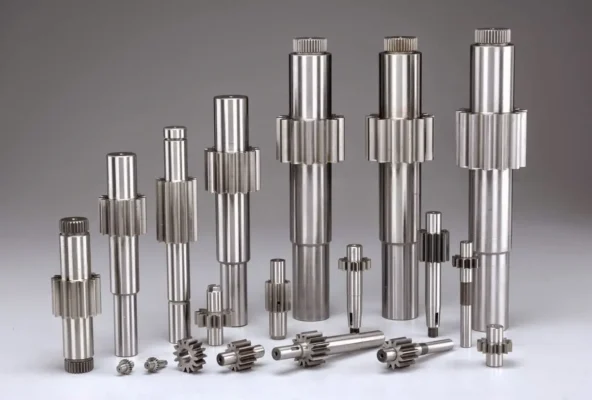
A gear shaft may have bearing seats, shoulders, threads, splines, keyways, or an integrated gear or pinion section. Different structures require different machining methods.
For example, a bearing seat may require better dimensional tolerance and surface roughness. Splines and keyways must ensure proper fit and torque transmission. If there is an integrated gear on the shaft, the tooth count, module, pressure angle, and gear inspection requirements also need to be confirmed.
Therefore, gear shafts cannot be quoted only by outside diameter, length, and quantity. They need to be reviewed together with the drawing, assembly position, and functional surfaces.
Details That Make a Gear Shaft Quote More Accurate
When requesting a quotation for custom gear shafts, the email does not need to be very long, but the following information should be prepared as much as possible. The more complete the information is, the less the quotation needs to rely on assumptions.
| RFQ Item | Recommended Information | Why It Affects Quotation |
| Drawing & Order Details | 2D/3D drawings, quantity, target lead time | Used to judge whether the part can be made, how to arrange production, and whether sampling is needed |
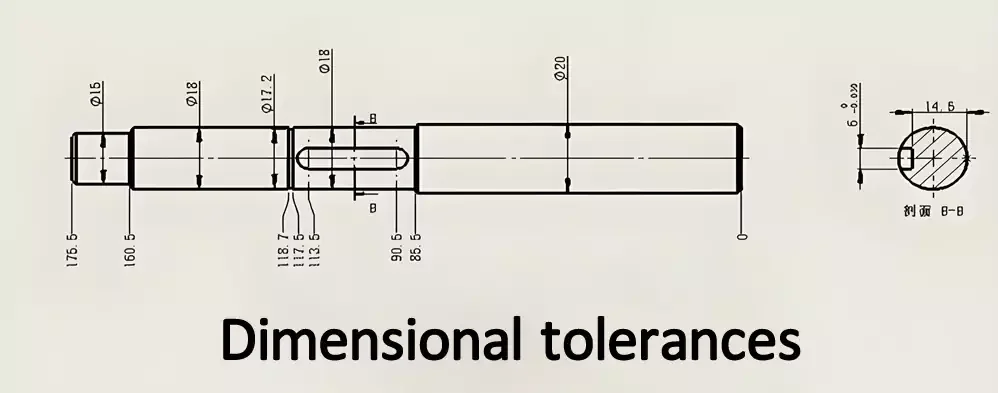
| Main Dimensions | Overall length, shaft diameter, shoulder position, bearing seats, main references | Affects turning, grinding, assembly, and inspection |
| Torque Interface | Spline, keyway, thread, pin hole, connection standard, or fitting requirement | Determines the torque connection method and machining difficulty |
| Tolerances | Runout, concentricity, straightness, bearing seat tolerance, surface roughness | Affects whether grinding, finishing, and special inspection are needed |
| Material & Heat Treatment | Material grade, hardness, quenching and tempering, carburizing, induction hardening, or nitriding requirements | Affects strength, wear resistance, distortion control, and cost |
| Deliverables | Dimensional report, hardness report, case depth report, material report | Affects inspection arrangement and shipment documents |
If there is no complete drawing, samples, clear photos, and key dimensions can be provided first. However, if the sample is already worn, bent, or broken, it cannot be fully copied according to the sample. It is better to also provide application, failure condition, assembly position, and mating part information.
Tolerances Buyers Should Not Leave Unclear
In gear shaft projects, many problems are not caused by “whether it can be made,” but by tolerances not being clearly explained in advance.
For example, if the bearing seat is too loose, the operation may be unstable. If it is too tight, it may be difficult to assemble or may affect bearing life. If the runout is too large, even when the gear section is qualified, the whole transmission may still have vibration or abnormal wear.
Therefore, it is not recommended to write only “high precision” in the RFQ. A more practical way is to point out which positions are most critical, such as bearing seats, sealing positions, spline sections, gear references, or locating end faces.
Material and heat treatment should also be confirmed in advance. Quenching and tempering are usually used to improve overall strength and toughness. Carburizing is suitable for improving surface hardness and wear resistance. Induction hardening is often used for local hardening. Nitriding can improve surface wear resistance.
If bearing seats, gear sections, or splines still need to maintain accuracy after heat treatment, it should be confirmed in advance whether grinding, polishing, or additional inspection is needed.
How the Gear Shaft Process Is Usually Reviewed
The production route of a gear shaft is not fixed. It depends on the drawing, tolerances, and heat treatment requirements. A common project may go through drawing review, material and process confirmation, blank preparation, CNC turning, spline or keyway machining, heat treatment, finishing, inspection, rust protection, and packing.
| Stage | Wenlio Focus | Buyers Should Confirm in Advance |
| Drawing Review | Check structure, references, tolerances, gear section or spline requirements | Drawing version, key dimensions, quantity |
| Material / Route Planning | Judge material, heat treatment, and machining route | Material grade, hardness, working condition |
| CNC Turning | Machine shaft diameters, shoulders, steps, and reference surfaces | Main dimensions, tolerances, surface roughness |
| Keyway / Spline Machining | Machine keyways, splines, or connection structures | Spline standard, fitting requirement, inspection method |
| Heat Treatment | Improve strength, hardness, or wear resistance | Quenching and tempering, carburizing, induction hardening, nitriding, or other requirements |
| Finishing | Grinding, polishing, or other finishing processes | Which positions need finishing after heat treatment |
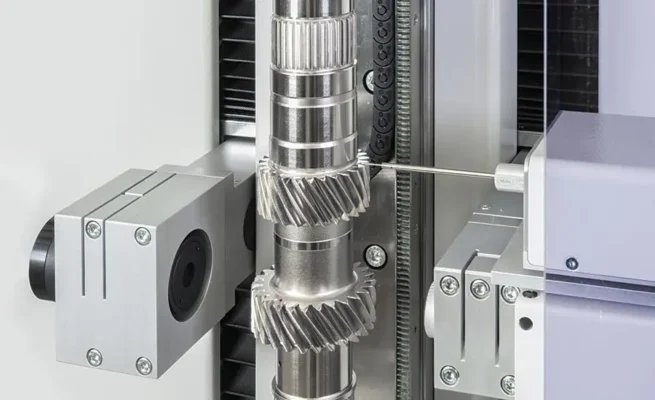
| Final Inspection | Check dimensions, runout, hardness, gear section, or spline | Whether reports are needed and what the report scope is |
| Rust Protection & Packing | Prevent rust, protect critical surfaces, and arrange packing | Shipping method, packing requirement, and whether long-term storage is needed |
This table does not mean every project must go through the full process. Simple shaft parts may not need all steps. High-precision gear shafts, pinion shafts with gear sections, or export batch projects usually need a more complete process and inspection arrangement.
What Often Delays a Gear Shaft RFQ
When a gear shaft quotation is delayed, it is often not because the supplier cannot make the part, but because the information is not enough.
Only photos are provided without key dimensions, the supplier cannot judge tolerances and fitting requirements.
If the RFQ only says “make according to sample,” but the sample is already worn or broken, it will also increase the review risk.
If buyers only ask for the lowest price without confirming the quotation scope, it can also cause misjudgment. Some quotations only include basic machining. Some quotations include material, heat treatment, grinding, inspection reports, rust protection, and shipment protection. If the scope is different, the prices cannot be compared directly.
When comparing quotations, it is recommended to check clearly whether heat treatment is included, whether grinding is included, whether inspection reports are included, and whether rust-proof packing is included.
How Wenlio Reviews Gear Shaft Drawings and Samples
When Wenlio reviews custom gear shaft projects, we first check the drawing or sample to confirm the structure, key dimensions, material, heat treatment, spline or gear section requirements, and inspection scope.
If the project involves bearing seats, splines, integrated gears, or high-precision fitting surfaces, we will focus on machining references, tolerance control, and the final inspection method.
For replacement projects without complete drawings, we will review the sample, photos, key dimensions, and application information together. If the sample is already worn or deformed, we will also remind which dimensions need further confirmation, so the failed condition will not be copied directly.
The final process route will be determined according to the drawing, tolerances, material, quantity, and lead time.
FAQ
Q1:What information is needed for a custom gear shaft quote?
It is best to provide drawings or sample photos, main dimensions, quantity, material, heat treatment, tolerances, and inspection requirements. If there are splines, keyways, or gear sections, the related parameters should also be provided.
Q2:Can a custom gear shaft be made without a drawing?
It can be evaluated first based on samples, photos, and key dimensions. However, if the sample is seriously worn or the fitting relationship is unclear, assembly and application information should also be provided.
Q3:Which tolerances are most important for gear shafts?
Common key points include bearing seat dimensions, radial runout, concentricity, straightness, shoulder position, spline or keyway dimensions, and gear section accuracy. The specific requirements should follow the drawing and actual application.
Q4:Do gear shafts always need heat treatment?
Not always. Whether heat treatment is needed depends on material, load, wear requirements, and working environment. High-load or long-service-life projects usually consider quenching and tempering, carburizing, induction hardening, or nitriding.
Q5:Can Wenlio provide inspection reports?
Wenlio can provide dimensional inspection, hardness inspection, material confirmation, gear section inspection, runout inspection, and other reports according to project requirements. The specific report scope should be confirmed before ordering.
Conclusion
The quotation for custom gear shafts depends on whether the RFQ information is clear. Drawings, main dimensions, tolerances, material, heat treatment, spline or gear section requirements, and inspection report needs will all affect the manufacturing route, cost, and lead time.
If you are preparing an RFQ for custom gear shafts, you can contact us to send drawings, sample photos, key dimensions, material requirements, heat treatment requirements, quantity, and inspection standards. We can help evaluate a more suitable manufacturing plan and quotation range according to the actual application and technical requirements.
