
Blogs, Helical Gear, Custom Gear
Custom Helical Gears: Helix Angle and Backlash Tips
Jun
Introduction
When custom helical gears, tooth count, outside diameter, and bore size are only basic information. The details that really affect quotation and manufacturing review are often helix angle, hand, backlash, bore and hub structure, material, heat treatment, and inspection requirements.
Unclear helix angle or backlash can lead to repeated communication later. After production, the same missing details may also create tight assembly, heat, unstable meshing, or faster wear.
Therefore, an RFQ for custom helical gears should not only say “make according to drawing” or “make according to sample.” Drawings, gear parameters, hand, backlash, mating gear, and application conditions should be provided as clearly as possible in advance.
Why a Helical Gear Quote Needs More Than Tooth Count
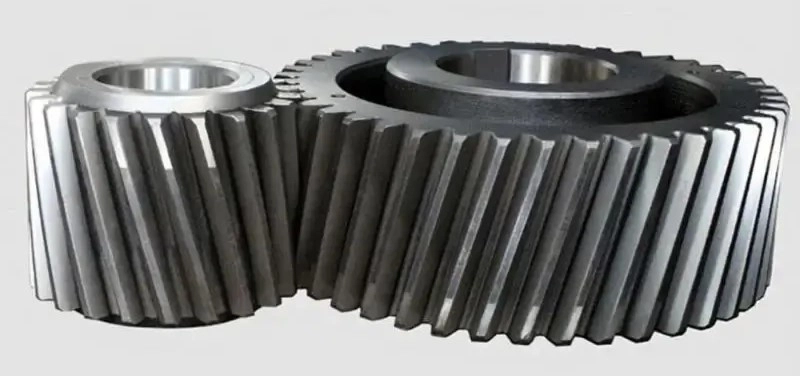
Tooth count only explains part of the requirement. For helical gears, helix angle and hand are also important.
Helix angle affects meshing, axial force, load capacity, and machining method. Hand determines whether the gear can mesh correctly with the mating part. Confusing left-hand and right-hand direction can make the gear unusable even when the module and tooth count are correct.
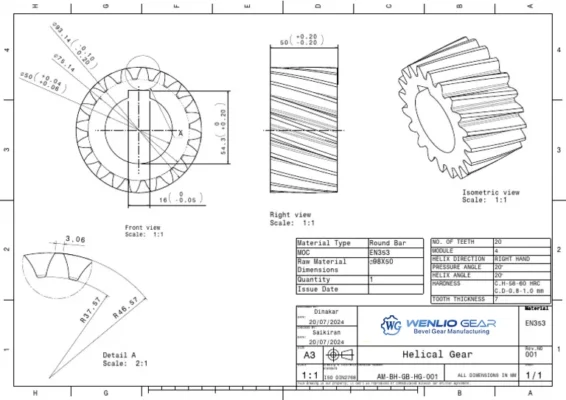
Therefore, before quoting, suppliers usually need to confirm tooth count, module or DP, pressure angle, helix angle, hand, face width, bore size, keyway or spline, and whether there is a mating gear.
What Should Buyers Confirm About Helix Angle and Hand
Helix angle cannot be guessed. It directly affects gear machining and final meshing performance.
With a complete drawing, the helix angle can usually be confirmed directly. With only a sample, the supplier needs to measure the part and check the mating relationship, which usually requires more confirmation time.
Hand should also be written clearly. Common expressions are LH or RH. For helical gears used in pairs, it is better to provide mating gear information and rotation direction at the same time, so that misjudgment will not happen by looking at only one part.
A larger helix angle may improve contact ratio in some designs, but it can also increase axial thrust. Buyers should confirm bearing support, housing stiffness, and assembly layout when the gear works under higher load or speed.
RFQ Details That Affect Price and Lead Time
The following information directly affects the quotation, lead time, and inspection arrangement for helical gears.
| RFQ Information | Recommended Information | Function |
| Gear Specifications | Tooth count, module/DP, pressure angle, face width, outside diameter | Confirms basic gear parameters |
| Helix Design | Helix angle, LH/RH hand, rotation direction | Affects meshing and mating relationship |
| Backlash Target | Drawing backlash requirement or acceptable range | Affects assembly and running stability |
| Bore & Hub Details | Bore size, tolerance, keyway, spline, thread, hub structure | Affects assembly and machining method |
| Material & Treatment | Material grade, hardness, heat treatment, working condition | Affects strength, wear resistance, and cost |
| Quality & Inspection | Tooth profile, lead, pitch, runout, hardness, or inspection report | Defines how the part will be checked before shipment |
If there is no complete drawing, samples, clear photos, and key dimensions can be provided first. For replacement projects, it is better to also provide machine application, failure condition, mating gear, and assembly position. Helical gears are sensitive to the mating relationship, and checking only one sample may easily miss problems.
Why Backlash Matters in Custom Helical Gears
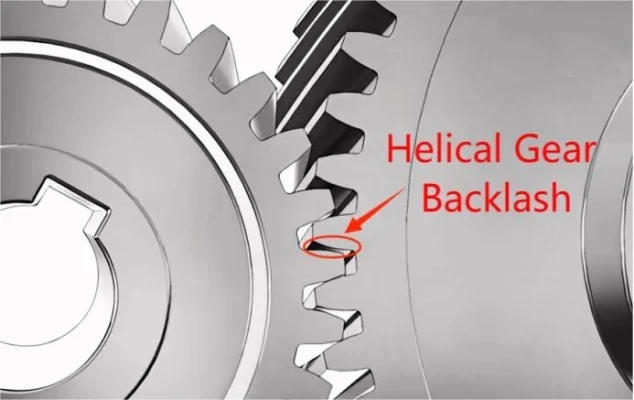
Backlash is the clearance between the mating tooth surfaces. The value is small, but it affects assembly, heat generation, running stability, and service life.
Too little backlash may make the gear mesh too tightly, heat up during operation, and become difficult to assemble. Too much backlash may cause impact, unstable running, or poor transmission feel.
A drawing with a clear backlash requirement should be provided directly. When there is no confirmed value, speed, load, lubrication method, and assembly conditions can help the supplier judge whether special control is needed.
What Bore, Hub, and Runout Details Are Easy to Miss
In many helical gear projects, the problem is not necessarily in the teeth, but in the bore, hub, keyway, or runout.
Bore tolerance affects the fit between the gear and shaft. Keyway or spline affects torque transmission. Hub structure affects assembly space. Excessive radial runout can still cause unstable operation even when the tooth profile is acceptable.
Therefore, the RFQ should not only state the bore size. Bore tolerance, keyway size, spline requirement, locating surface, and runout requirement should also be explained as much as possible.
How Material, Heat Treatment, and Inspection Affect the Project
Material and heat treatment should be selected according to the actual working condition. Low-load and high-load projects have different requirements for hardness, wear resistance, and process route.
If the gear carries a higher load or needs a longer service life, alloy steel, quenching and tempering, carburizing, induction hardening, or other heat treatment methods are usually considered. After heat treatment, if tooth surface accuracy or bore accuracy still needs to be controlled, further finishing and inspection may be needed.
| Project Condition | Key Point to Confirm | Possible Impact |
| High-load transmission | Material, hardness, heat treatment | Strength and wear resistance |
| High-speed running | Tooth profile, lead, runout | Noise and stability |
| Compact assembly space | Bore, hub, keyway, locating surface | Assembly risk |
| Used as a pair | Hand, backlash, center distance, mating gear | Meshing performance |
| Export or batch project | Dimensional report, hardness report, tooth inspection report | Acceptance and traceability |
| Replacement project | Sample wear, failure reason, mating parts | Avoid copying old problems |
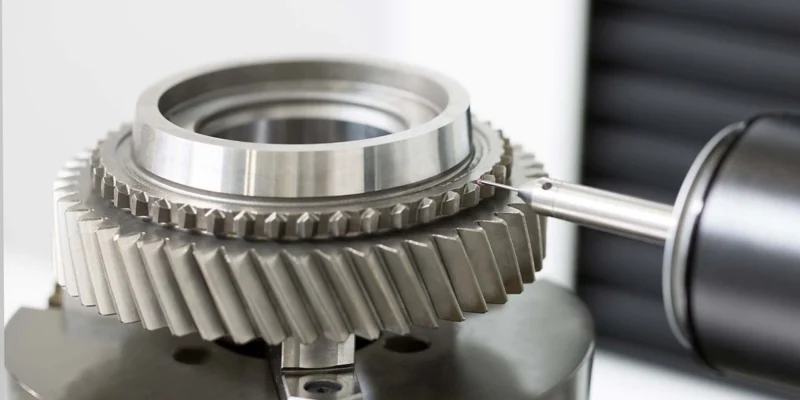
Inspection does not need to be more than necessary, but it should match the project risk. Common inspections include dimension, bore size, keyway, radial runout, tooth profile, lead, pitch, hardness, and material confirmation. The report scope is best confirmed before ordering.
What Often Delays a Helical Gear RFQ
When a helical gear quotation is delayed, the common reason is missing key parameters.
Photos alone are often not enough. Without helix angle and hand, the supplier cannot confirm the tooth direction. A single sample without mating gear information can also make backlash and meshing review less reliable.
Some inquiries only ask for price, but do not explain material, heat treatment, bore, and keyway requirements. In this case, a rough price may be quoted first, and then it has to be revised many times later.
When comparing quotations, the scope should also be checked clearly. Some quotations only include gear cutting, while others include material, heat treatment, gear grinding, tooth inspection, hardness report, and packing. If the scope is different, the prices cannot be compared directly.
How Wenlio Reviews Custom Helical Gear RFQs
When Wenlio reviews custom helical gear projects, we first check the drawing or sample to confirm gear parameters, helix angle, hand, bore and hub structure, material, heat treatment, and inspection requirements.
For projects involving mating gears, strict backlash, higher speed, or high load, Wenlio will focus on tooth parameters, machining references, accuracy control after heat treatment, axial thrust considerations, and inspection method.
For sample-based projects without complete drawings, Wenlio will review samples, photos, key dimensions, mating part information, and application conditions together. A worn or failed sample may also require further confirmation so that the old problem is not copied directly.
The final process route will be determined according to the drawing, tolerances, material, quantity, and lead time requirements.
FAQ
Q1: What parameters are needed for a custom helical gear quote?
It is recommended to provide tooth count, module/DP, pressure angle, helix angle, hand, face width, bore size, keyway or spline, material, heat treatment, quantity, and inspection requirements.
Q2: Can a quote be made without the helix angle?
A preliminary evaluation can be made based on samples and photos, but the helix angle and hand usually still need to be confirmed before a formal quotation.
Q3: Why is backlash important?
Backlash affects assembly, noise, heat, and running stability. Too little or too much backlash can both affect gear performance.
Q4: Do helical gears always need heat treatment?
Not always. Whether heat treatment is needed depends on material, load, speed, wear requirements, and working environment.
Q5: Can Wenlio provide helical gear inspection reports?
Wenlio can provide dimensional inspection, hardness inspection, tooth profile and lead inspection, runout inspection, material confirmation, and other reports according to project requirements. The specific scope should be confirmed before ordering.
Conclusion
The quotation accuracy of custom helical gears depends on whether the RFQ information is clear. Tooth count and outside diameter are only basic information. Helix angle, hand, backlash, bore details, material, heat treatment, and inspection requirements are also important.
If you are preparing an RFQ for custom helical gears, you can contact us to send drawings, sample photos, key dimensions, helix angle, hand, material requirements, heat treatment requirements, quantity, and inspection standards. We can help evaluate a more suitable manufacturing plan and quotation range according to the actual application and technical requirements.
