
Blogs, Custom Gear
What Should Buyers Approve Before Gear Mass Production?
Jul
A gear sample may pass inspection and still not be ready for mass production. Before placing a batch order, buyers need to confirm not only whether the sample works, but also which drawing revision, material, heat treatment, inspection plan, and packaging requirements will apply to future production.
As a precision gear manufacturer, Wenlio reviews these details before production release so that the approved sample, technical documents, and batch requirements follow the same standard. A clear approval process helps both sides avoid misunderstandings when the project moves from one sample to repeated production.
Quick Answer
Before gear mass production begins, buyers should approve the final drawing, sample or first article, material and heat treatment, manufacturing route, accuracy and inspection plan, quality documents, traceability, and packaging requirements.
The required approval scope depends on the gear application, project risk, customer quality system, and whether the project requires FAI, PPAP, or other formal documentation.
Why Does Approval Matter Before Gear Mass Production?
Sample approval answers one main question:
▶ Does this gear meet the current dimensional, assembly, and functional requirements?
Production approval must answer another question:
▶ Which drawing revision, manufacturing route, and acceptance criteria should the supplier follow for future batches?
During prototype development, the supplier may adjust dimensions, perform manual fitting, or use temporary process corrections. If the team does not record these changes in the final drawing and technical documents, the production batch may not reproduce the approved sample.
In addition, prototypes often receive more comprehensive inspection than production parts. During mass production, manufacturers may inspect critical characteristics on every part and apply sampling inspection to other features. Therefore, buyers and suppliers should agree on the inspection scope and sampling rules before releasing production.
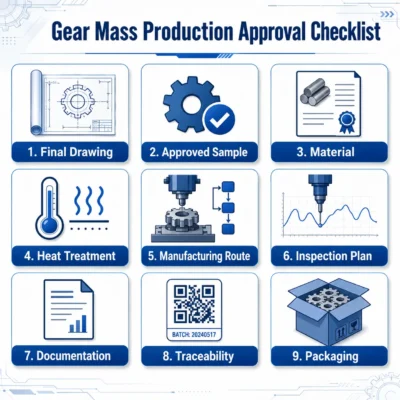
Buyer Checklist Before Gear Mass Production
| Approval Item | What Buyers Should Confirm |
| Final drawing | Drawing number, final revision, critical tolerances, and prototype-stage changes |
| Approved sample | Sample identification, related inspection report, and approval basis |
| Material | Material grade, applicable standard, and certificate requirements |
| Heat treatment | Process, hardness, case depth, and final delivery condition |
| Manufacturing route | Gear cutting, heat treatment, lapping, grinding, and other finishing operations |
| Inspection plan | Full-inspection items, sampling items, frequency, and acceptance standard |
| Documentation | FAI, PPAP, material, heat-treatment, and dimensional reports |
| Pairing and traceability | Pair identification, batch records, and mixing restrictions |
| Packaging | Rust protection, labeling, individual or set packaging |
| Change control | Design or process changes that require renewed approval |
The purpose of this checklist is not to create unnecessary paperwork. Instead, it ensures that the buyer and supplier understand the production scope in the same way.
Technical Considerations Before Gear Mass Production
Final Drawing and Revision Control
First, buyers should confirm that the final drawing includes every approved change made during prototype development.
Key items may include:
- Tooth count, module, and pressure angle;
- Bore, spline, keyway, and hub configuration;
- Critical mounting dimensions;
- Dimensional and geometric tolerances;
- Accuracy standard and grade;
- Material, heat treatment, and surface treatment;
- Inspection and documentation requirements.
If the supplier still holds an outdated drawing, previously resolved issues may return during mass production. Therefore, the approved revision number should appear clearly on the purchase order, inspection documents, and other controlled records.
Approved Sample or First Article
Next, the approved sample should correspond to a specific drawing revision and inspection record.
Buyers should also define why they approved the sample. For example:
- Dimensional inspection passed;
- Assembly testing passed;
- The gear meshed correctly with the mating component;
- Functional or operating tests passed;
- The buyer approved the first-article inspection report.
A simple “sample approved” message often leaves too much room for interpretation. Instead, both parties should record the sample number, report number, drawing revision, and approval basis.
Material and Heat Treatment
Material and heat treatment directly affect gear strength, wear resistance, and dimensional stability. Buyers who have not finalized the process can review this guide to bevel gear heat treatment before approving the production specification.
Buyers should confirm:
- Material grade and applicable standard;
- Heat-treatment method;
- Surface and core hardness;
- Effective case depth, when required;
- Material certificate requirements;
- Heat-treatment report requirements.
Moreover, these requirements should apply to the final delivered condition rather than only to a semi-finished part before heat treatment.
Accuracy and Inspection Plan
Buyers should clearly define the final acceptance criteria for the gears.For bevel gear projects, the specification should identify the standard, revision, grade, pairing method, and required inspection items. See bevel gear accuracy grades for a practical RFQ checklist.
A production inspection plan may specify:
- Dimensions that require 100% inspection;
- Characteristics that use sampling inspection;
- Sampling frequency or percentage;
- Profile, lead, pitch, and runout requirements;
- Whether backlash and contact pattern results must be recorded;
- Hardness and case-depth inspection frequency;
- Reports required for each production batch.
Prototype and production inspection scopes do not need to be identical. However, buyers and suppliers should approve any differences before mass production starts.
Pairing, Traceability, and Packaging
For bevel gears supplied as matched sets, buyers should also confirm:
- Whether the gear and pinion must remain as a fixed pair;
- Whether the supplier must perform roll testing;
- Whether backlash and contact patterns require records;
- How each matched set will be identified;
- Whether parts from different pairs or batches may be mixed;
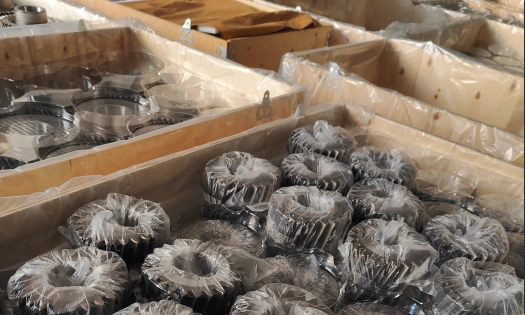
- How packaging will preserve the matched relationship.
For more details on roll testing, contact pattern checks, pair identification, and set traceability, see how Wenlio controls matched bevel gear sets.
Change Control and Reapproval
Production approval does not mean that the manufacturing process can never change. Nevertheless, both parties should evaluate any change that may affect dimensions, performance, or batch consistency.
Changes that may require a new sample or additional approval include:
- A change to the drawing or a critical dimension;
- A different material grade;
- A change in heat-treatment route;
- A different critical finishing process;
- A transfer to another production location or key machine;
- A change to the mating gear.
The project does not necessarily require a complete PPAP after every minor adjustment. Instead, the buyer and supplier should determine the approval level according to customer requirements and project risk.
Send the final drawing, approved-sample information, inspection requirements, and expected quantity to Wenlio for a pre-production technical review.
How Does the Wenlio Gear Production Process Work?
1. Drawing or Sample Review
Wenlio first reviews the drawing, sample, mating component, and application information to determine whether the available data can support manufacturing.
2. Technical Clarification
Next, the team confirms the material, heat treatment, accuracy, critical dimensions, pairing requirements, inspection scope, and documentation needs.
3. Process Planning
Based on the confirmed technical requirements, Wenlio plans the blank preparation, datum machining, gear cutting, heat treatment, finishing, and inspection route.
4. Prototype or First Article
Wenlio then produces the prototype or first article and completes the agreed dimensional, tooth-geometry, or matched-pair inspection.
5. Inspection and Customer Approval
After inspection, Wenlio submits the agreed records so that the buyer can complete dimensional, assembly, or functional validation.
6. Approval and Production
Once both parties confirm the final drawing, approved sample, manufacturing route, and inspection scope, the project can move into mass production.
What Evidence Should Buyers Review?
Production approval should not rely only on verbal confirmation. Depending on the project, buyers may review:
- A redacted first-article or dimensional inspection report;
- A material certificate;
- Heat-treatment and hardness records;
- Profile, lead, pitch, or runout inspection results;
- Contact pattern records for matched bevel gears;
- Batch label and traceability examples;
- Records linking the approved sample to the correct drawing revision.
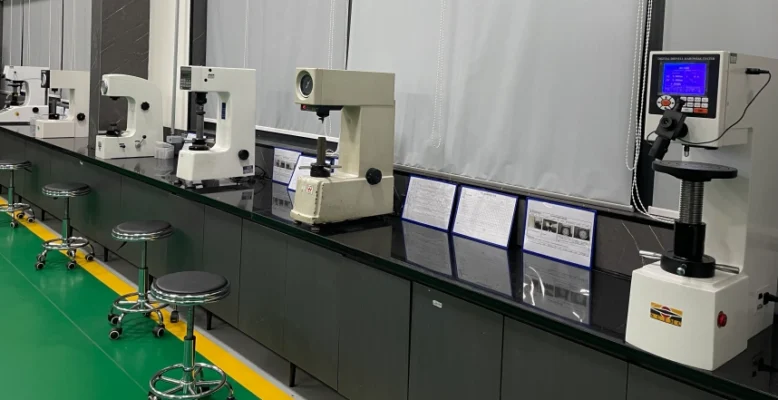
Not every project needs every document. The evidence package should match the gear application, quality risk, and customer acceptance requirements.Buyers can also review how to read a gear inspection report when checking dimensional results, tooth geometry, runout, hardness, case depth, and material records.
Why Choose Wenlio?
Wenlio supports custom gear projects from drawing or sample review through first-article validation and production release. The main objective is to confirm the manufacturing and acceptance scope before batch production begins.
Project support may include:
- Drawing and revision review;
- Prototype and first-article inspection;
- Material and heat-treatment document review;
- Matched-pair identification and batch traceability;
- Production inspection scope confirmation.
A clearly defined production basis helps reduce drawing-revision errors, missing inspection requirements, and variation between production batches.
FAQ
Does Sample Approval Automatically Authorize Gear Mass Production?
Not always. Sample approval usually confirms dimensions, assembly, or function. Before mass production, buyers should also confirm the final drawing, manufacturing route, inspection plan, documentation, and packaging requirements.
Is PPAP Required for Every Custom Gear Project?
No. PPAP requirements depend on the industry, customer quality system, and project risk. Some industrial projects only require an approved sample, final drawing, and first-article report.
Should Production Gears Receive the Same Inspection as Prototypes?
Not necessarily. Prototypes often receive more comprehensive inspection. During production, the supplier may inspect critical characteristics on every part and use sampling inspection for other features according to the approved inspection plan.
What Changes Require New Approval?
Important changes to the drawing, material, heat treatment, critical process, production location, or mating relationship may require a new sample or additional validation.
What Documents Should Buyers Approve Before Production?
Buyers normally approve the final drawing, sample or first-article records, inspection plan, material and heat-treatment requirements, quality-document list, packaging requirements, and traceability rules.
Conclusion
Gear production approval is not only a signature. Its purpose is to ensure that the buyer and supplier follow the same manufacturing, inspection, and delivery requirements during future production.
The clearer the final drawing, approved sample, material and heat treatment, manufacturing route, inspection plan, quality documents, traceability, and packaging requirements are, the easier it becomes to maintain consistency across production batches.
Contact us to send your drawings, sample photos, approved-part information, or OEM part number for a pre-production technical review and project quotation.
