
Blogs, Bevel Gear
What Affects an E-Drive Bevel Gear Quote?
Jun
Introduction
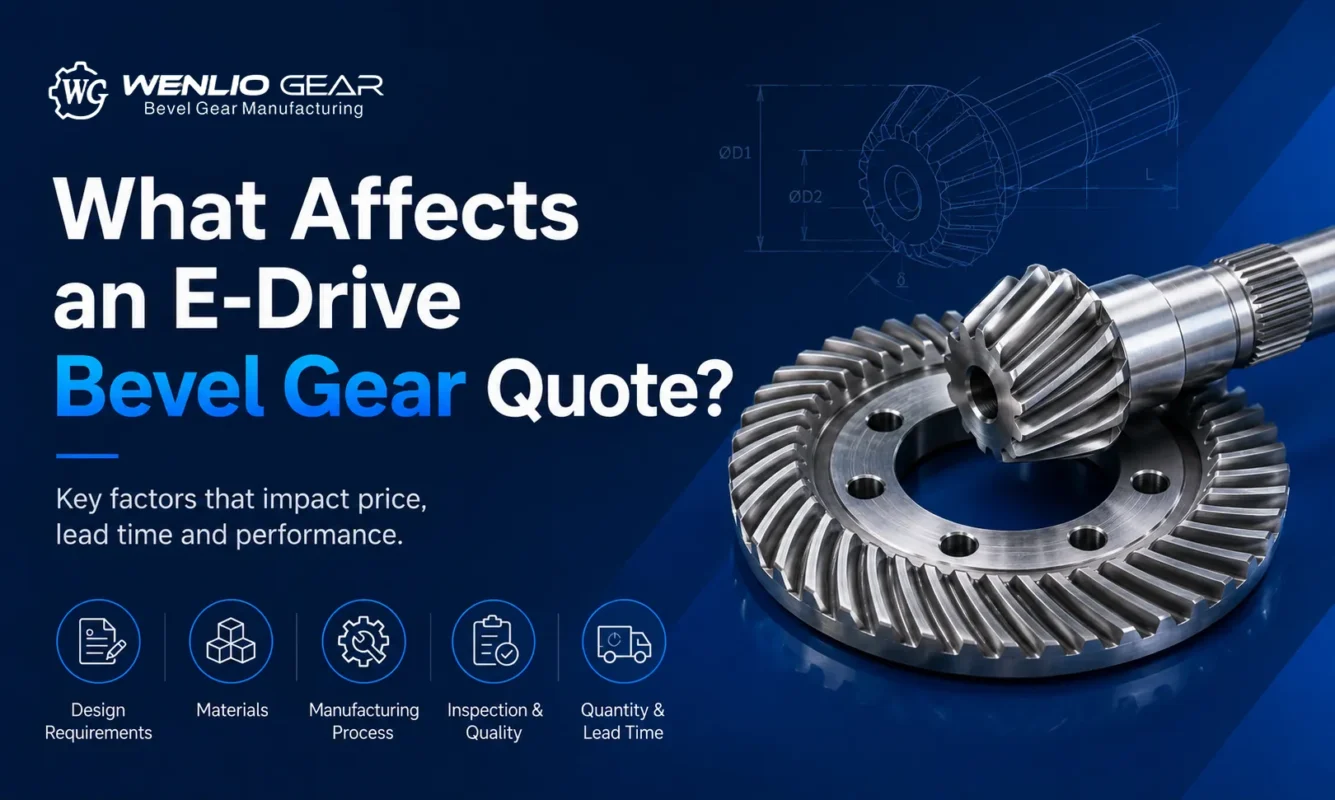
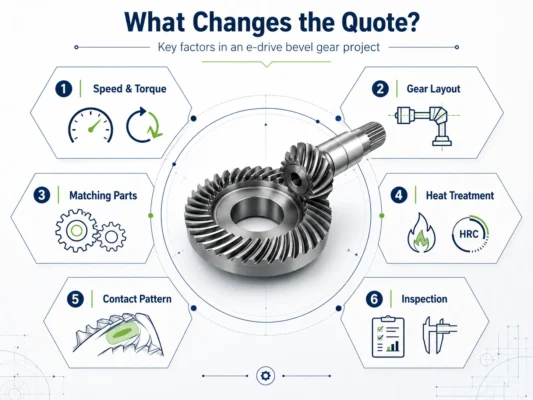
A quote for an e-drive bevel gear can change for several reasons, not only because of outside diameter, bore size or tooth count. E-drive systems are often compact, and the gear may need to meet higher requirements for speed, torque, contact pattern, material control and inspection.
Some buyers send a drawing or a sample photo first and ask for a quick price. That can be enough for an initial check. But if the working condition, mating gear, heat treatment and acceptance requirements are missing, the quote may only be a rough range.
To help suppliers review the project more accurately, the RFQ should include speed, torque, gear type, contact pattern, backlash and inspection requirements.
Quick Answer
An e-drive bevel gear quote is affected by more than the gear drawing. Suppliers also need to review how the gear works in the drive system, whether it is quoted as a single part or a matched set, and what level of finishing and inspection is required before delivery.
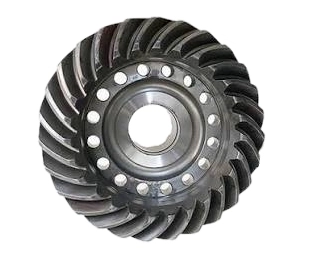
E-Drive Bevel Gear Conditions Come Before Size
This type of project usually needs stable transmission in limited space. Gear size is important, but it is only one part of the review. The supplier also needs to understand how the gear will work inside the drive system.
Speed Range
For higher-speed projects, tooth surface quality, runout and finishing become more important. If the speed range is unclear, the supplier may not know whether basic machining is enough or whether more finishing and inspection should be considered.
Torque and Load
Torque affects material selection, hardness and tooth strength. A gear used in a light-duty drive and a gear used under higher load may look similar from a photo, but the process route can be different.
Available Space
When the installation space is tight, outside diameter, face width, bore, hub and mounting direction should be confirmed early. Small layout changes may affect machining, assembly and the matching gear.
Instead of writing only “used for e-drive,” it is better to provide speed range, torque range, mounting position, mating gear, quantity and target lead time.
Gear Layout Changes the Quoting Method
The gear layout may involve spiral bevel gears, hypoid gears or another right-angle structure. Each type has different manufacturing and inspection points.
Spiral Bevel or Hypoid
For a spiral bevel gear, suppliers need to confirm module, tooth count, pressure angle, spiral angle, shaft angle, hand and mating relationship. For a hypoid gear, offset and contact condition also need to be reviewed.
| Project Detail | Recommended Information | Purpose |
| Gear Type | Spiral bevel, hypoid, matched set, or sample type | Helps define the manufacturing method |
| Gear Geometry | Tooth count, module/DP, pressure angle, spiral angle, shaft angle | Confirms tooth data |
| Layout | Input/output direction, mounting space, center distance or offset | Helps review the assembly relationship |
| Matching Parts | Mating gear, shaft, housing or sample | Helps review contact pattern and backlash |
| Quantity | Sample, trial order or production volume | Affects production planning |
| Drawing Version | Latest drawing, old drawing or sample difference notes | Avoids quoting from the wrong version |
If only an old sample is available and there is no complete drawing, it is better to explain whether the sample is worn, whether it came from a failed part and whether it still represents the original size.
Matching Parts Can Change the Scope of Work
Bevel gears usually do not work alone. A single gear, a paired gear set and a matched bevel gear set may require different review steps.
Single Part or Matched Gear Set
When the buyer only needs a single replacement part, the supplier must clearly understand how it fits the existing mating gear. If the project requires a matched set, the team should also evaluate contact pattern, backlash, and pair marking to ensure proper pairing performance.
Sending only one sample is often not sufficient when the gear works closely with another bevel gear. Mating gear information allows the supplier to decide whether the quotation should include pairing review, contact pattern inspection, or additional quality checks.
Heat Treatment and Finishing Add Real Cost
Material and heat treatment are key elements in a gear quotation because different material grades, hardness levels, and heat treatment routes directly affect both cost and lead time.
For bevel gears with higher load requirements, projects often use alloy steel and involve processes such as carburizing, quenching, tempering, and gear grinding. In these cases, tooth surfaces, bore alignment, and reference faces may also require careful distortion control after heat treatment to ensure stable performance.
If the drawing already defines material and hardness, the quotation should strictly follow those requirements. However, when specifications are unclear, buyers can share operating load, speed, working environment, and expected service life. Based on this information, the supplier can evaluate whether material upgrades or heat treatment adjustments are necessary.
Instead of using vague terms like “high strength” or “good quality,” it is more effective to specify material grade, hardness range, heat treatment method, key inspection items, and required test reports.
Contact Pattern Is Part of the Quote Review
Contact pattern shows whether the tooth contact area is reasonable. For gears used in e-drive applications, this can affect the way the project is reviewed, especially when the part belongs to a paired set.
Backlash Requirement
Backlash affects assembly feel, running stability and wear. If backlash is too small, assembly may become tight. If it is too large, the transmission may have impact or unstable movement.
There is a target backlash, contact area requirement or assembly test standard, it should be mentioned at the RFQ stage. This helps the supplier understand whether the quote should include basic machining only or a more complete mating and inspection process.
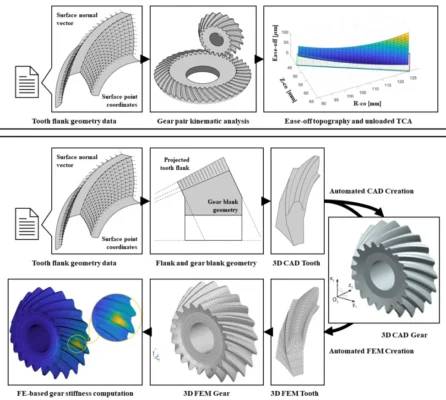
Inspection Scope Should Be Clear Before Pricing
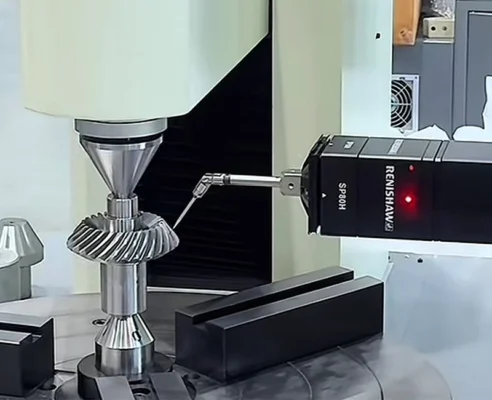
Inspection requirements affect the quote scope. A basic machining quote and a quote with full inspection reports should not be compared as the same thing.
| Inspection Item | Suitable Situation | Purpose |
| Dimensional Inspection | Most projects | Checks bore, outside diameter, face width and mounting dimensions |
| Tooth Inspection | Projects with clear tooth requirements | Checks tooth profile, lead, pitch and related data |
| Runout Check | Higher-speed or assembly-sensitive projects | Helps review running stability |
| Hardness Check | Projects with heat treatment requirements | Confirms hardness |
| Contact Pattern Review | Gear pairs or matched sets | Checks the meshing contact condition |
| Backlash Check | Projects with mating or assembly requirements | Confirms backlash range |
| Material Report | Batch, export or higher-quality projects | Supports traceability and acceptance |
| Packing Check | Long-distance shipment or higher rust prevention needs | Protects tooth surfaces and key fitting areas |
Not every project needs a full report package. Sample development, small-batch validation and production orders may use different inspection documents. Buyers should state the acceptance requirements during RFQ, so the quote scope is clear from the beginning.
RFQ Gaps That Slow Down E-Drive Bevel Gear Quotes
How Wenlio Reviews E-Drive Bevel Gear Requests
When Wenlio reviews this type of request, we first check the drawing, sample or photos to confirm the gear type, tooth data, material, heat treatment, mating relationship and inspection requirements.
If the project involves a spiral bevel gear, hypoid gear or matched bevel gear set, we pay close attention to machining references, contact condition, backlash requirements and accuracy control after heat treatment.
For projects without complete drawings, Wenlio reviews the sample together with key dimensions, mating parts and application details. If the sample is worn or failed, we will point out which dimensions need further confirmation, so the old problem is not copied into the new part.
The final quote is based on drawing completeness, process route, material, heat treatment, inspection requirements, quantity and lead time.
FAQ
1. What information is needed for an e-drive bevel gear quote?
It is recommended to provide drawings or sample photos, tooth count, module/DP, pressure angle, shaft angle, spiral angle, material, heat treatment, quantity, speed, torque, mating gear and inspection requirements.
2. Can a quote be made with only a sample and no drawing?
A preliminary review can be made. But if the sample is worn, or if the gear needs to work with a mating gear, key dimensions, application details and mating part information should also be provided.
3. Why does contact pattern affect the quote?
Contact pattern is related to gear matching and meshing condition. If the project needs matching review or contact area verification, extra inspection and adjustment time may be needed.
4. Do e-drive bevel gears always need heat treatment?
Not always. Heat treatment depends on material, load, speed, service life requirements and drawing standards.
5. Can Wenlio provide inspection reports?
Wenlio can provide dimensional inspection, hardness inspection, tooth inspection, runout check, contact pattern review, backlash check and material confirmation according to project requirements.
Conclusion
Gear size alone does not decide the final quote. Speed, torque, gear layout, material, heat treatment, contact pattern, backlash and inspection requirements all change how the project is reviewed.
If you are preparing an RFQ for an e-drive bevel gear, you can contact us to send drawings, sample photos, key dimensions, material requirements, heat treatment requirements, quantity, application details and inspection standards. We can help review the project and suggest a suitable manufacturing plan and quotation range.
